Key Findings
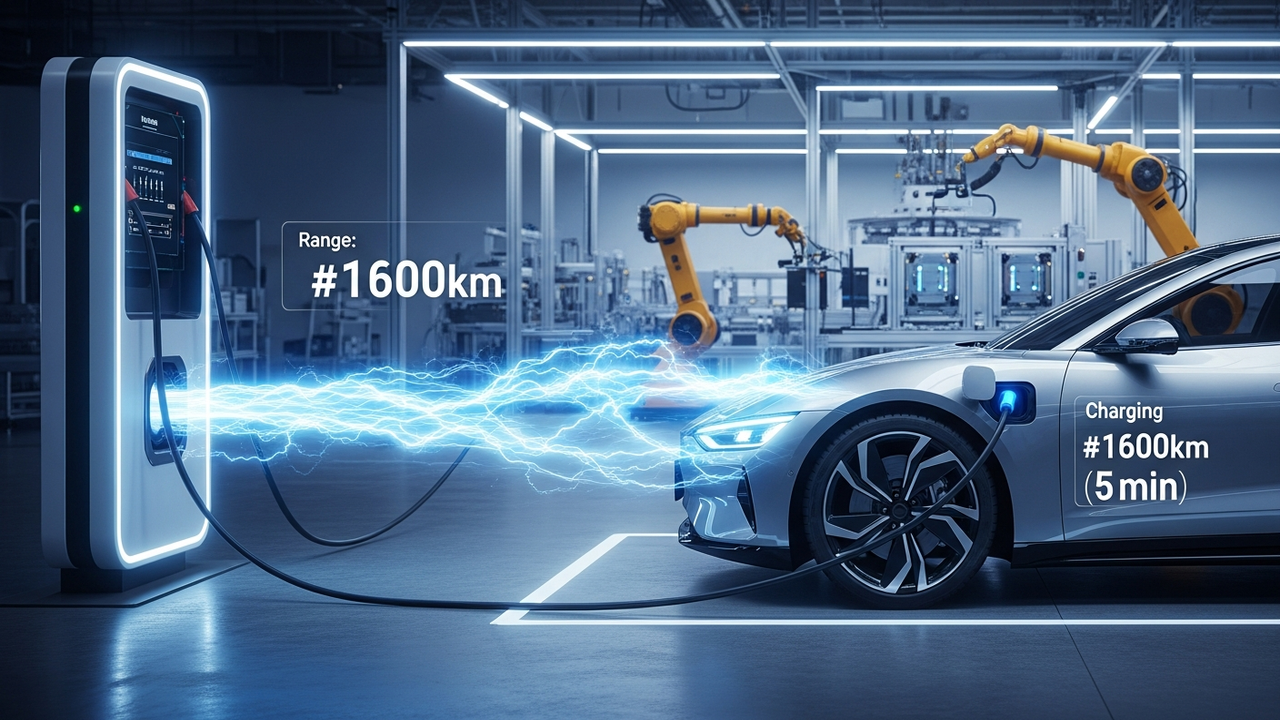
Toyota Motor Corporation has achieved groundbreaking performance in its next-generation solid-state battery technology, demonstrating an electric vehicle (EV) range of 1,600 km (approximately 1,000 miles) and a full charge in just 5 minutes. This represents a significant leap forward compared to conventional EV batteries, with Toyota aiming for mass production in hybrid vehicles starting 2027-2028, followed by a broader rollout into EVs.
Technical Details
Toyota’s solid-state battery utilizes a solid electrolyte instead of a liquid one, balancing high energy density with enhanced safety. The adoption of a sulfide-based solid electrolyte facilitates rapid lithium-ion movement, enabling the ultra-fast 5-minute charging. This fundamentally addresses the fire risks associated with traditional liquid electrolytes, leading to a substantial improvement in safety. Furthermore, the technology allows for smaller and lighter battery packs, increasing design flexibility for vehicles and contributing to overall performance enhancements. The development involves close collaboration with Idemitsu Kosan for sulfide lithium solid electrolytes and Sumitomo Metal Mining for cathode materials.
Background & Context
Solid-state batteries are widely regarded as a ‘game-changer’ for EVs, with automotive manufacturers and battery developers globally engaged in intense competition. Extended range, reduced charging times, and improved safety are crucial for increasing consumer adoption of EVs. Toyota’s announcement significantly impacts the global competitive landscape, particularly in terms of energy density (targeting over 700 Wh/kg) and fast-charging capability. The target of mass production by 2027-2028, considerably earlier than many competitors aiming for the 2030s, underscores Toyota’s strong technological lead.
Strategic Significance & Outlook
Toyota is focusing on simplifying manufacturing processes and reducing costs to establish mass production technology for solid-state batteries. The strategy involves an initial rollout in hybrid vehicles to mature the technology, followed by broad application across EV models. If successfully commercialized, this technology could dramatically accelerate EV adoption and trigger a major transformation in the global automotive and energy industries. Potential applications extend beyond passenger vehicles to long-haul transport, commercial vehicles, and even aerospace sectors, indicating a wide-ranging impact.
Get our weekly technology intelligence — free
Receive an infographic that lets you judge at a glance whether each field’s analysis report is worth reading.
Subscribe Free — Weekly Tech Intelligence
By subscribing, you’ll receive Troy-Technical’s weekly technology intelligence newsletter.
- Your email and selected fields are used only to deliver the newsletter.
- We never share your information with third parties.
- You can unsubscribe anytime via the link in each email.
See our Privacy Policy for details.
Takes about a minute · Unsubscribe anytime