


Key Findings
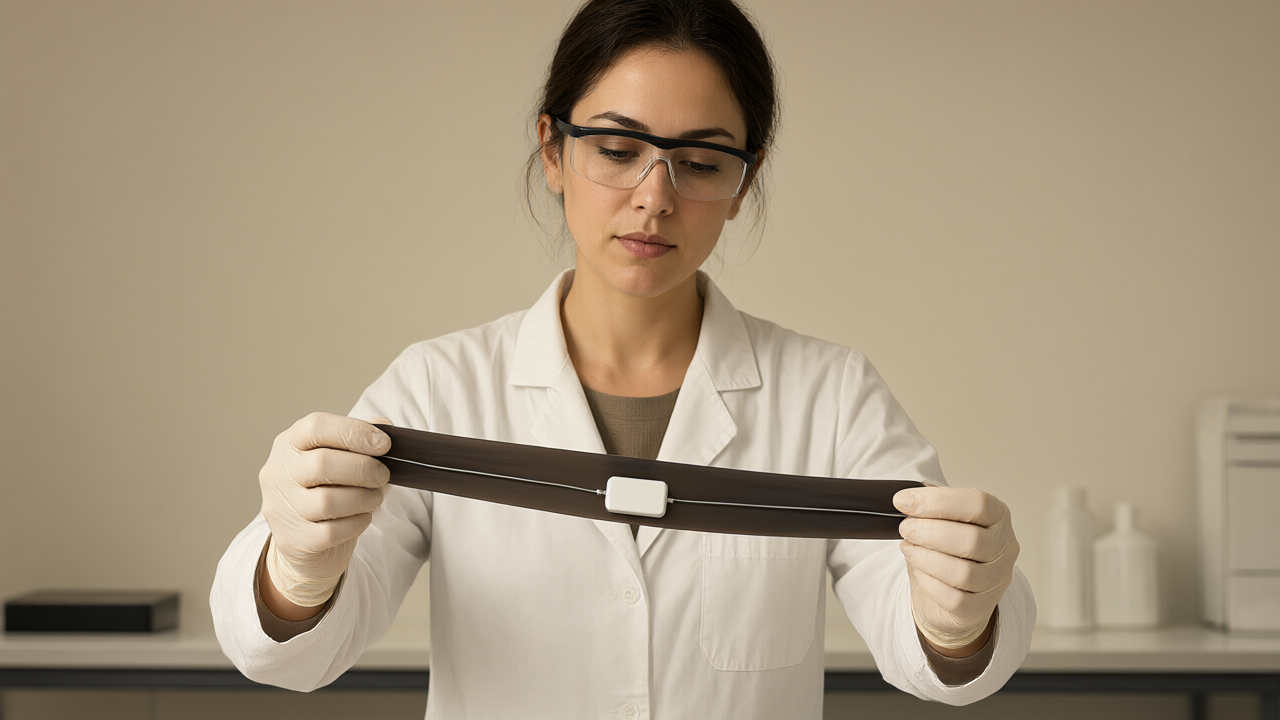
The developed composite hydrogel sensing layer enables continuous, wireless recording of sweat pH during sustained physical exercise. In electrochemical evaluations across buffer solutions from pH 2.00 to 8.00, the electrode demonstrated a high potentiometric sensitivity of 85.62 ± 0.79 millivolts per pH unit. Mechanical testing confirmed significant flexibility, with the material reaching an elongation at break of 285 percent. Notably, the electrode maintained a linear potentiometric response even when subjected to mechanical bending under stress.
Technical Details
The sensing layer, designated as CPN-AB + PVA, was fabricated using an in situ chemical oxidative polymerization approach. The material is a multicomponent composite consisting of three functional elements:
- Boronic acid-functionalized polyaniline (the proton-responsive component).
- Porous carbon derived from agricultural corn stalks.
- A polyvinyl alcohol (PVA) network.
The stretchable properties are achieved through the direct connection between the boronic acid-functionalized polyaniline and the PVA network. To facilitate real-world application, the flexible electrode was coupled with an integrated Bluetooth readout module, removing the need for tethered connections during data collection.
Background & Context
Flexible sweat pH electrodes typically require sensing layers that can simultaneously provide an active proton response and mechanical deformability. Previous constraints in wearable electronics often involved a trade-off between these two requirements. This research addresses these demands by engineering a composite hydrogel that integrates potentiometric sensitivity and stretchability into a single wearable platform.
Significance & Outlook
By combining biomass-derived carbon with a conductive polymer network, this sensor provides a practical solution for monitoring biofluids during active body motion. The ability to maintain calibrated responses across acidic to alkaline conditions while undergoing physical deformation allows for dependable, real-time health monitoring during exercise.
Get our weekly technology intelligence — free
Receive an infographic that lets you judge at a glance whether each field’s analysis report is worth reading.
Subscribe Free — Weekly Tech Intelligence
By subscribing, you’ll receive Troy-Technical’s weekly technology intelligence newsletter.
- Your email and selected fields are used only to deliver the newsletter.
- We never share your information with third parties.
- You can unsubscribe anytime via the link in each email.
See our Privacy Policy for details.
Takes about a minute · Unsubscribe anytime