


Key Findings
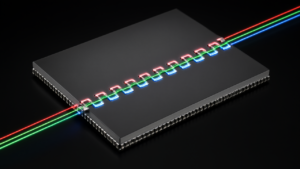
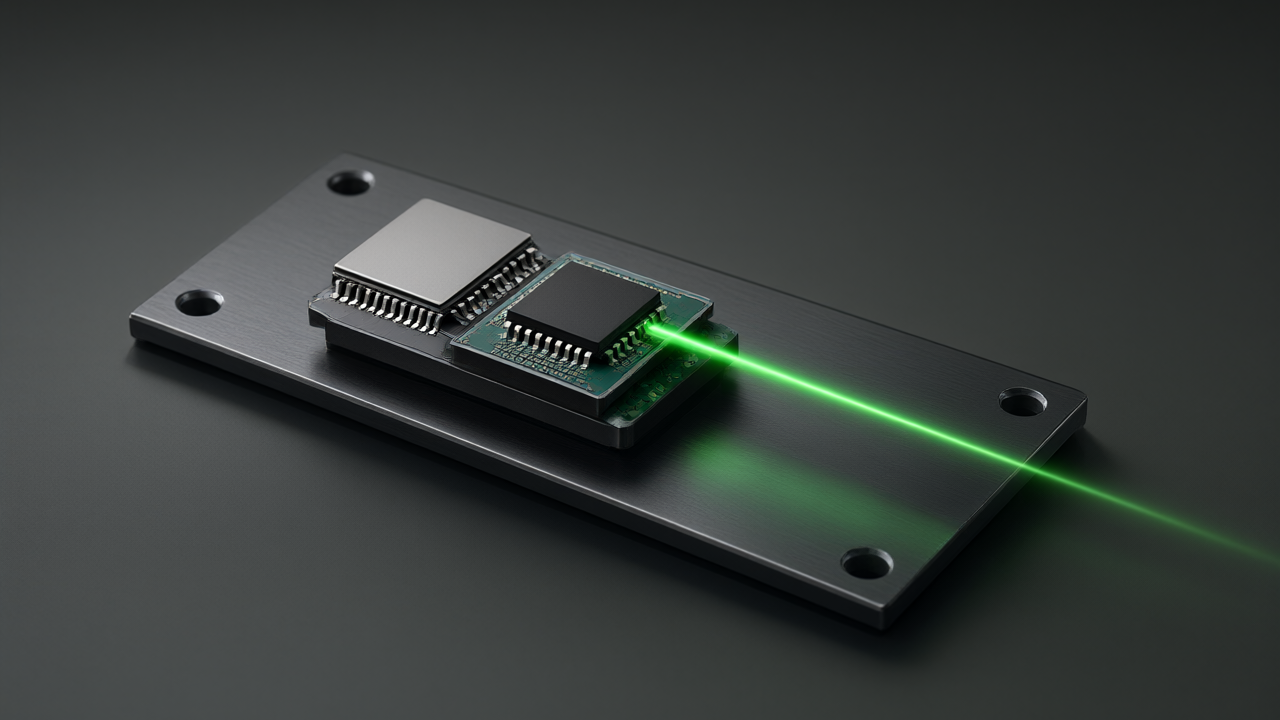
A research team led by Tomohiro Kita at Waseda University has developed an optical transmitter that achieves data transmission rates of 180 gigabits per second. The primary breakthrough is the elimination of the optical isolator, a component typically required to shield the laser from reflected light that can degrade communication stability. The system maintained stable operation in a single mode across a tunable wavelength range of approximately 67 nanometers, even without active temperature control.
Technical Details
The transmitter utilizes a coordinated design across different photonic platforms to manage optical feedback. The architecture integrates three primary elements:
- A tunable laser for light generation.
- Silicon nitride ring resonators to select the laser wavelength.
- A thin-film lithium niobate modulator to encode data through rapid changes.
Rather than using a physical barrier to block reflections, the researchers designed the wavelength-dependent responses of these components to work in tandem. This joint design shapes the feedback returning to the laser, limiting its destabilizing effects and allowing the system to function without an isolator.
Background & Context
High-speed links between data centers are facing increased demand due to AI workloads and cloud services. Standard optical transmitters often combine components from different technology platforms, creating interfaces where light can travel backward. Conventionally, an optical isolator is added to block these signals, but this increases the device footprint and adds complexity to the integrated assembly.
Significance & Outlook
The ability to tune wavelengths over a broad range suggests potential utility for wavelength-division multiplexing, allowing multiple data channels to share a single fiber. While the 180 gigabits per second rate is the highest investigated in this experiment, the researchers note that this is a demonstration of architecture rather than a finished product. Future development must account for practical operating conditions and full network connections to determine the performance of the system in a deployed data-center environment.
Get our weekly technology intelligence — free
Receive an infographic that lets you judge at a glance whether each field’s analysis report is worth reading.
Subscribe Free — Weekly Tech Intelligence
By subscribing, you’ll receive Troy-Technical’s weekly technology intelligence newsletter.
- Your email and selected fields are used only to deliver the newsletter.
- We never share your information with third parties.
- You can unsubscribe anytime via the link in each email.
See our Privacy Policy for details.
Takes about a minute · Unsubscribe anytime