Key Findings
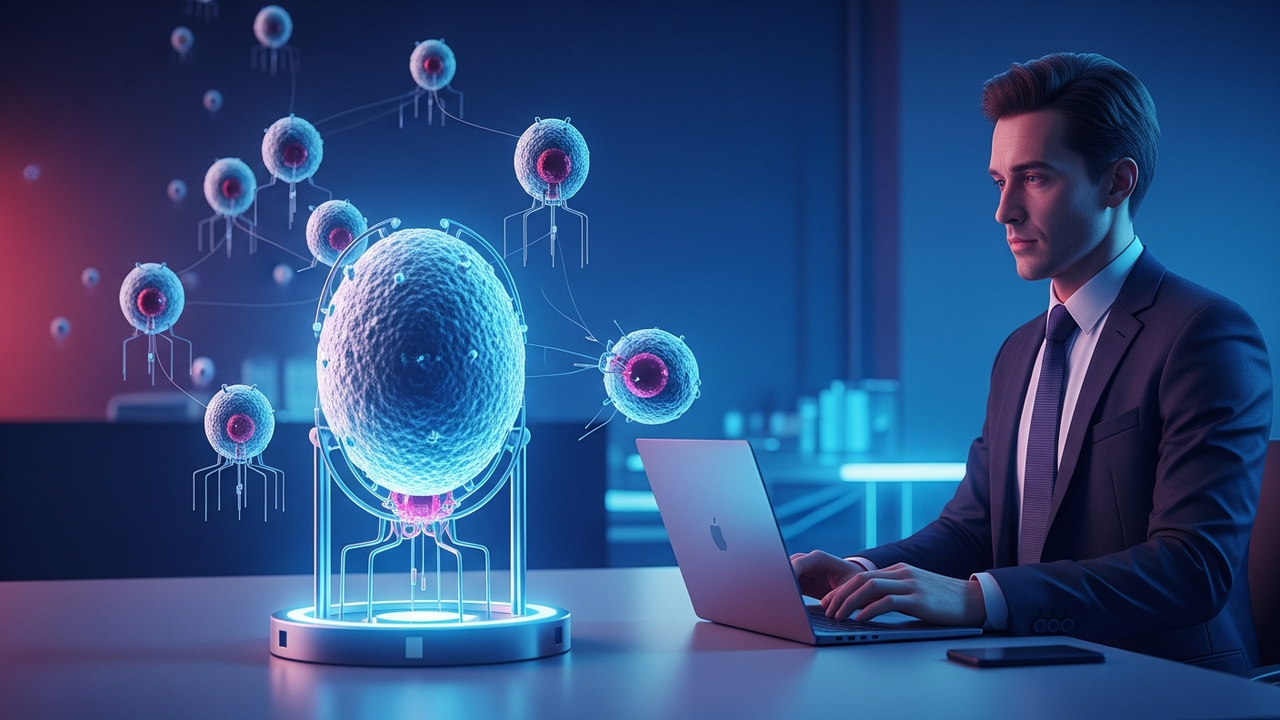
A new review paper discusses the immense promise of integrating bacteriophages (bacterial viruses) with synthetic biology, interface engineering, and Artificial Intelligence (AI) to develop a new generation of intelligent pathogen sensors. These innovative biosensors possess the capability to detect pathogens with remarkable speed and high sensitivity—providing results within minutes to hours, a significant improvement over conventional bacterial culture methods that often take days. This advancement holds the potential to fundamentally transform infectious disease diagnosis and management, offering substantial contributions to early intervention and public health protection.
Technical & Clinical Details
- Bacteriophage Properties: Bacteriophages are viruses that specifically bind to and infect particular bacteria. This extremely high specificity is a crucial advantage in pathogen sensors, as it reduces false positives. By utilizing phages as recognition elements within sensors, it becomes possible to selectively detect and differentiate various bacterial species.
- Synthetic Biology for Phage Modification: Through synthetic biology techniques, phage genomes can be modified to produce specific signals (e.g., fluorescence emission or electrochemical signals). This enables the development of “reporter phages” that emit directly detectable and rapid signals upon binding to bacteria.
- Interface Engineering and Sensor Platforms: Advanced interface engineering is essential for efficiently immobilizing phages onto solid surfaces (e.g., electrodes, optical fibers) while maintaining their functional stability. When combined with nanomaterials and microfluidic devices, sensor sensitivity and portability are enhanced, facilitating applications in point-of-care (POCT) diagnostics.
- Integration of Artificial Intelligence (AI): AI enhances the ability to analyze complex signals from sensors, distinguishing target pathogen signals from background noise. In multiplex sensors that use multiple types of phages simultaneously, AI is indispensable for identifying multiple signal patterns and accurately pinpointing different pathogens. AI-driven data analysis further improves detection accuracy and speed, while reducing false alarms.
- Rapidity and High Sensitivity: Conventional bacterial detection methods, such as culture, require time for bacterial growth, often taking 24-48 hours or more to yield results. Phage-based sensors, leveraging the rapid binding or infection process of phages, can provide results in minutes to hours. This enables early diagnosis of infections and prompt initiation of treatment.
Background & Industry Context
Infectious diseases remain one of the leading causes of death worldwide, and the emergence of antibiotic-resistant bacteria poses a severe threat to public health. Rapid and accurate pathogen detection is critical for selecting appropriate antibiotic treatments, preventing disease spread, and preparing for pandemics. However, existing rapid diagnostic methods have limitations in sensitivity, specificity, or the range of pathogens they can detect. Bacteriophage-based sensors offer a novel approach to overcome these challenges, gaining attention across diverse fields including healthcare, food safety, and environmental monitoring.
Strategic Significance & Outlook
Next-generation pathogen sensors integrating bacteriophages and AI hold significant promise for profoundly changing the future of infectious disease diagnostics. In the future, these sensors may not only detect pathogens but also simultaneously profile antibiotic resistance genes, or even release phages with antibacterial activity, evolving into “theranostic” devices that combine diagnosis and therapy. This opens up broad applications, such as rapid identification and control of hospital-acquired infections, early warning for foodborne illnesses, and biodefense. The optimization of sensors and improvement in autonomous operation capabilities through AI will further accelerate the practical implementation of these technologies.
Source: https://www.eurekalert.org/news-releases/1049281
Get our weekly technology intelligence — free
Receive an infographic that lets you judge at a glance whether each field’s analysis report is worth reading.
Subscribe Free — Weekly Tech Intelligence
By subscribing, you’ll receive Troy-Technical’s weekly technology intelligence newsletter.
- Your email and selected fields are used only to deliver the newsletter.
- We never share your information with third parties.
- You can unsubscribe anytime via the link in each email.
See our Privacy Policy for details.
Takes about a minute · Unsubscribe anytime







Comments