Background
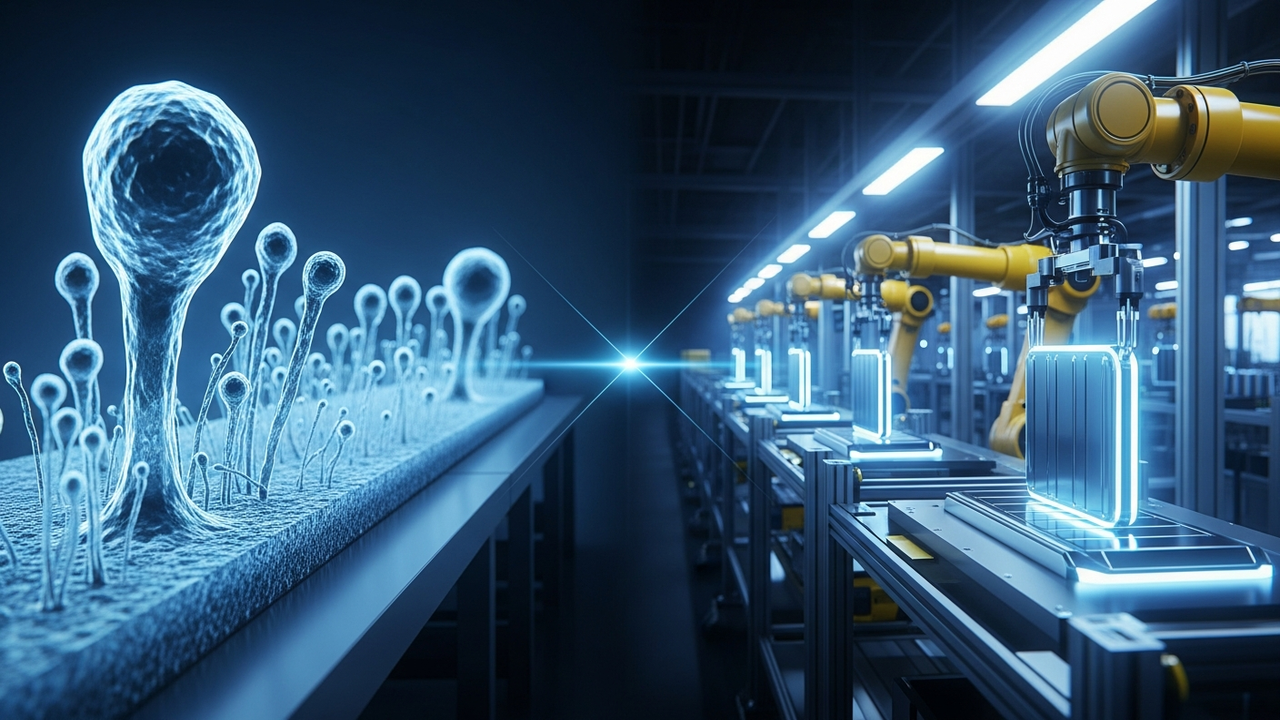
All-solid-state batteries are at the forefront of global competition, promising significant advancements in electric vehicle (EV) range, safety, and performance. However, a major hurdle to their commercialization and long-term stability has been the formation of lithium dendrites, needle-like structures that can penetrate solid electrolytes, leading to short circuits and battery degradation. Effective dendrite suppression technologies are therefore paramount for realizing the full potential of this next-generation battery chemistry.
Globally, research and development in solid-state batteries are intensifying, with China emerging as a significant player. Leveraging robust government support and aggressive corporate investments, Chinese companies are rapidly accelerating both R&D and manufacturing capacity in this critical sector. Industry giants like CATL and BYD, already global powerhouses in conventional battery production, are heavily invested, as is major automotive manufacturer GAC, which is also pursuing substantial in-house battery technology development.
Key Scientific Discovery: Hydrostatic Pressure in Dendrite Fracture
In a pivotal breakthrough, researchers at the Max Planck Institute for Sustainable Materials have fundamentally altered our understanding of how lithium dendrites damage solid electrolytes. Challenging long-held assumptions, their work demonstrates that the primary mechanism for electrolyte fracture is not, as previously thought, stress concentration from lithium accumulation at grain boundaries—the interfaces between crystalline grains. Instead, the Max Planck team revealed that the dominant factor is the “self-pressure,” or hydrostatic pressure, generated within the growing lithium metal crystals as the dendrite penetrates the solid electrolyte.
This internal pressure, exerted by the expanding dendrite itself, creates insidious microcracks within the electrolyte, which eventually propagate and lead to short circuits and battery degradation. This groundbreaking insight not only necessitates a re-evaluation of current dendrite suppression strategies—moving beyond simple physical blocking—but also opens entirely new avenues for innovative material designs and sophisticated interfacial engineering. These new approaches could focus on controlling the internal structure and and growth behavior of dendrites, specifically targeting the mitigation of this newly identified hydrostatic pressure generation.
The Chinese Manufacturing Push
While scientific understanding progresses, the industrial landscape for solid-state batteries is undergoing rapid transformation, particularly in China. Major Chinese players like CATL, BYD, and GAC are aggressively accelerating their solid-state battery production initiatives. GAC, a prominent automotive manufacturer, has notably completed a high-capacity solid-state cell production line, with ambitious targets for mass production between 2027 and 2030.
This aggressive ramp-up by Chinese firms underscores a critical shift: solid-state batteries are no longer a distant theoretical technology but a tangible product poised for market introduction within the next few years. GAC’s ambitious mass production timeline of 2027-2030 is set to not only redefine performance and safety benchmarks for electric vehicles but also significantly intensify competition across the global EV market. This rapid scaling of manufacturing capacity signals a profound commitment to leading the next generation of battery technology.
Strategic Significance & Outlook
The Max Planck Institute’s scientific discovery is a significant stride forward, deepening our fundamental understanding of the lithium dendrite challenge. This newfound knowledge is crucial for developing far more effective and targeted dendrite suppression strategies, which will directly enhance the safety, longevity, and overall reliability of solid-state batteries. By revealing the true mechanism of fracture, researchers can now design materials and interfaces that specifically counteract hydrostatic pressure, rather than merely attempting to block dendrite growth.
Concurrently, the aggressive manufacturing push from Chinese companies, highlighted by GAC’s 2027-2030 mass production target, indicates that solid-state batteries are on a fast track to commercial viability. This dual progress—breakthrough science enabling better design, combined with rapid industrial scaling—is poised to have a profound impact on the entire battery industry. It promises to accelerate the global transition towards sustainable mobility by delivering higher-performing, safer electric vehicles and establishing new competitive landscapes for battery manufacturers worldwide.
Get our weekly technology intelligence — free
Receive an infographic that lets you judge at a glance whether each field’s analysis report is worth reading.
Subscribe Free — Weekly Tech Intelligence
By subscribing, you’ll receive Troy-Technical’s weekly technology intelligence newsletter.
- Your email and selected fields are used only to deliver the newsletter.
- We never share your information with third parties.
- You can unsubscribe anytime via the link in each email.
See our Privacy Policy for details.
Takes about a minute · Unsubscribe anytime







Comments