
Key Findings
Samsung SDI is making a substantial commitment to the future of battery technology, announcing a ₩16 trillion (approximately $11.7 billion USD) investment in its Ulsan plant in South Korea. This investment is earmarked for the mass production of its all-solid-state batteries (ASB) by 2027. The core innovation lies in Samsung SDI’s ASB design, which incorporates a sulfide-based solid electrolyte and a groundbreaking anode-free structure utilizing a thin, ~5-micrometer silver-carbon (Ag-C) composite layer. This configuration is reported to achieve a volumetric energy density of approximately 900 Wh/L, representing a significant ~40% increase compared to conventional NMC (nickel-manganese-cobalt) cells, poised to set a new performance standard in the battery industry.
Technical / Clinical Details
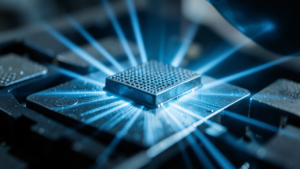
The sulfide-based solid electrolyte is a critical component, chosen for its high ionic conductivity and inherent stability, which are vital for solid-state battery performance. The most striking design feature is the “anode-free” architecture, where a thin, roughly 5-micrometer silver-carbon composite layer serves as the negative electrode. This eliminates the need for a traditional anode material, drastically reducing the battery’s volume and weight, thereby boosting its volumetric energy density to an unprecedented 900 Wh/L. This density far surpasses current lithium-ion batteries and promises to extend EV ranges significantly while allowing for more compact battery packs and greater vehicle design flexibility. Furthermore, the solid electrolyte inherently enhances safety by mitigating risks associated with liquid electrolyte leakage and thermal runaway.
Background & Context
Solid-state batteries are at the forefront of the global race to develop next-generation energy storage solutions for electric vehicles (EVs), prized for their superior energy density, enhanced safety, and potential for faster charging and longer lifespan. Samsung SDI’s monumental ₩16 trillion investment signals the company’s serious intent to dominate the solid-state battery market and seize a leadership position. This strategic move intensifies competition with other major players like Toyota and BYD, who are also actively pursuing solid-state battery commercialization. With strong governmental backing for battery industrialization in South Korea, Samsung SDI’s initiative is strategically aligned with national technological ambitions.
Strategic Significance & Outlook
The successful mass production of Samsung SDI’s solid-state batteries by 2027 could catalyze a transformative shift in the EV market. The dramatic increase in volumetric energy density will enable smaller, lighter, and longer-range EVs, potentially accelerating consumer adoption of electric vehicles. The anode-free design with a silver-carbon composite layer could also lead to optimized material costs. Should this technology prove successful at scale, Samsung SDI would secure a commanding position in the next-generation battery market and further solidify its influence within the global EV supply chain. Other battery manufacturers and automakers will be closely observing Samsung SDI’s technological advancements and production scale-up, likely prompting adjustments to their own solid-state battery development strategies to remain competitive.
Get our weekly technology intelligence — free
Receive an infographic that lets you judge at a glance whether each field’s analysis report is worth reading.
Subscribe Free — Weekly Tech Intelligence
By subscribing, you’ll receive Troy-Technical’s weekly technology intelligence newsletter.
- Your email and selected fields are used only to deliver the newsletter.
- We never share your information with third parties.
- You can unsubscribe anytime via the link in each email.
See our Privacy Policy for details.
Takes about a minute · Unsubscribe anytime







Comments