Background
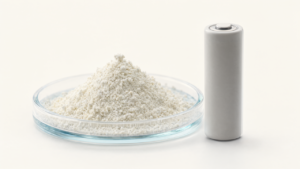
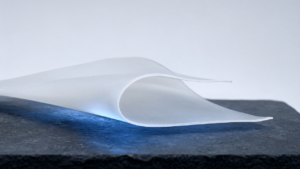
The commercialization of all-solid-state batteries (ASSBs) critically depends on the development of solid electrolytes (SEs) that offer a combination of high ionic conductivity, excellent chemical and electrochemical stability, and cost-effectiveness. Traditional research in solid electrolytes has primarily focused on sulfide and oxide systems. However, each presents inherent challenges: sulfides often suffer from moisture sensitivity, while oxides typically exhibit lower ionic conductivity or higher interfacial resistance. The amorphous ZrCl4-based halide solid electrolyte proposed in this study emerges as a novel and compelling solution, with halide-based systems holding particular promise for achieving both high ionic conductivity and oxidative stability, positioning them at the forefront of next-generation solid electrolyte research.
Key Findings
In a significant advancement for the commercialization of all-solid-state batteries (ASSBs), a study published in ACS Energy Letters has identified a new class of cost-effective amorphous ZrCl4-based electrolytes as highly promising solid electrolytes capable of superfast ion transport. This innovative material employs a design strategy that generates a highly disordered amorphous structure, which is key to its exceptional rate performance and long-term cycling stability. Specifically, the material demonstrated outstanding durability by retaining 81.1% of its initial capacity after an impressive 5000 cycles at a high discharge rate of 2 C. Furthermore, it maintained 61% of its initial capacity after 2000 cycles under a practical stack pressure of 20 MPa, showcasing high reliability with an average Coulombic efficiency of 99.75%.
Technical Details
- The core technology of this research centers on zirconium (Zr)-based electrolytes, specifically ZrCl4, within the emerging halide solid electrolyte class. This material is engineered through a unique synthetic pathway to possess a highly disordered amorphous structure, which stands in contrast to conventional crystalline solid electrolytes. This amorphous character is crucial as it provides numerous pathways for lithium-ion migration, facilitating faster ion transport with significantly lower activation energy compared to more highly ordered crystalline structures.
- The performance data underscore its potential:
- Rate Performance: The electrolyte maintained 81.1% of its initial capacity after 5000 cycles at a high discharge rate of 2 C. A 2 C rate signifies a full discharge in two hours, indicating its robust capability for rapid charging and high-power applications, which are essential for electric vehicles and portable electronics.
- Cycling Stability: Under a stack pressure of 20 MPa, a condition typically applied in commercial pouch cells to ensure good contact and suppress dendrite formation, the material retained 61% of its initial capacity after 2000 cycles. This stability under relevant mechanical stress is a critical benchmark for real-world applicability and longevity.
- Coulombic Efficiency: An exceptionally high average Coulombic efficiency of 99.75% was achieved. This metric signifies minimal energy loss during repeated charge-discharge cycles, highlighting excellent battery efficiency and overall durability over extended operation.
- A significant advantage of these electrolytes is their cost-effectiveness. The use of relatively inexpensive and abundant elements for ZrCl4 offers a substantial benefit for large-scale production, presenting a competitive edge over other solid electrolytes that often rely on more costly or rare materials.
Strategic Significance & Outlook
The superior performance and inherent cost-effectiveness demonstrated by this amorphous ZrCl4-based solid electrolyte represent a significant acceleration in the development pathway for solid-state battery breakthroughs. If this technology can be further developed to ensure robust reproducibility and seamless integration at manufacturing scales, it holds the potential to pave the way for safer, higher-performing batteries that transcend the current limitations of conventional lithium-ion chemistries. Applications requiring paramount safety and extended cycle life, such as electric vehicles (EVs), grid-scale energy storage systems, and aerospace, are particularly well-suited for this technology. Ongoing research focused on optimizing this novel material and its integration into complete solid-state cells is expected to bring the widespread commercialization of ASSBs closer to reality, marking a new era in energy storage solutions.
Source: https://pubs.acs.org/doi/10.1021/acsenergylett.6c01352
Get our weekly technology intelligence — free
Receive an infographic that lets you judge at a glance whether each field’s analysis report is worth reading.
Subscribe Free — Weekly Tech Intelligence
By subscribing, you’ll receive Troy-Technical’s weekly technology intelligence newsletter.
- Your email and selected fields are used only to deliver the newsletter.
- We never share your information with third parties.
- You can unsubscribe anytime via the link in each email.
See our Privacy Policy for details.
Takes about a minute · Unsubscribe anytime