
Key Findings
According to a recent report by Nomura Securities, the semiconductor packaging substrate industry is experiencing a robust recovery driven by Artificial Intelligence (AI) demand. Global packaging substrate shipments recorded a significant 36% year-on-year increase in June 2026. This growth is primarily accelerated by ABF (Ajinomoto Build-up Film) carrier boards, essential for high-performance AI chips such as AI GPUs, ASICs (Application-Specific Integrated Circuits), and HBM (High Bandwidth Memory).
Technical and Clinical Details
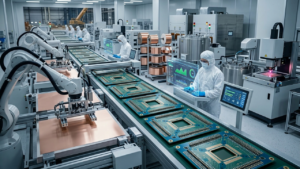
ABF carrier boards are critical materials for forming the complex circuits of high-performance AI chips and connecting multiple semiconductor components like chiplets and HBM. Their multi-layered structure and fine wiring technology are paramount for ensuring high-speed data transfer and signal integrity between chips. However, the manufacturing of ABF carrier boards demands advanced technology, substantial capital investment, and long lead times, limiting the pace of production capacity expansion to approximately 15% to 20% annually. This constrained expansion cannot keep up with the explosive growth in AI chip demand, resulting in a continuously widening supply-demand gap. Key ABF carrier board suppliers like Xinxing Electronics (Unimicron), Ibiden, and AT&S are in an advantageous position regarding both product volume and pricing in this tight supply environment, expanding their revenue opportunities.
Background and Industry Context
The increasing demand for high-performance semiconductors across AI, High-Performance Computing (HPC), 5G, and automotive sectors is pushing the limits of traditional packaging technologies, driving a shift towards advanced packaging solutions. ABF carrier boards are one of the core materials for this advanced packaging, becoming key to achieving performance improvements through chiplet technology and 3D stacking, particularly as Moore’s Law slows. Given that Ajinomoto dominates over 95% of the global ABF film market, this market relies on a few specialized companies, leading to a severe material shortage across the supply chain. The surge in AI demand has further exposed this existing structural challenge, enhancing the strategic importance of ABF substrates.
Strategic Significance and Outlook
The surge in AI-driven advanced packaging demand and the consequent widening of the ABF carrier board supply-demand gap are projected to continue for several years. This situation will allow major suppliers like Unimicron, Ibiden, and AT&S to maintain strong pricing power and stable order backlogs, ensuring continued robust growth. Semiconductor manufacturers will find it imperative to strengthen long-term strategic partnerships with these substrate material suppliers to ensure a stable supply. This scenario is expected to drive further large-scale investment and technological innovation in ABF carrier board production capacity, remaining a crucial factor in supporting the evolution of AI chips and the construction of AI infrastructure. For researchers, engineers, and investors, this sector will continue to be a significant point of interest.
Source: https://kgwv.com/tweets/posts/2026-07-15/ima-daily5min-0715-46-fa182f298e/
Get our weekly technology intelligence — free
Receive an infographic that lets you judge at a glance whether each field’s analysis report is worth reading.
Subscribe Free — Weekly Tech Intelligence
By subscribing, you’ll receive Troy-Technical’s weekly technology intelligence newsletter.
- Your email and selected fields are used only to deliver the newsletter.
- We never share your information with third parties.
- You can unsubscribe anytime via the link in each email.
See our Privacy Policy for details.
Takes about a minute · Unsubscribe anytime






Comments