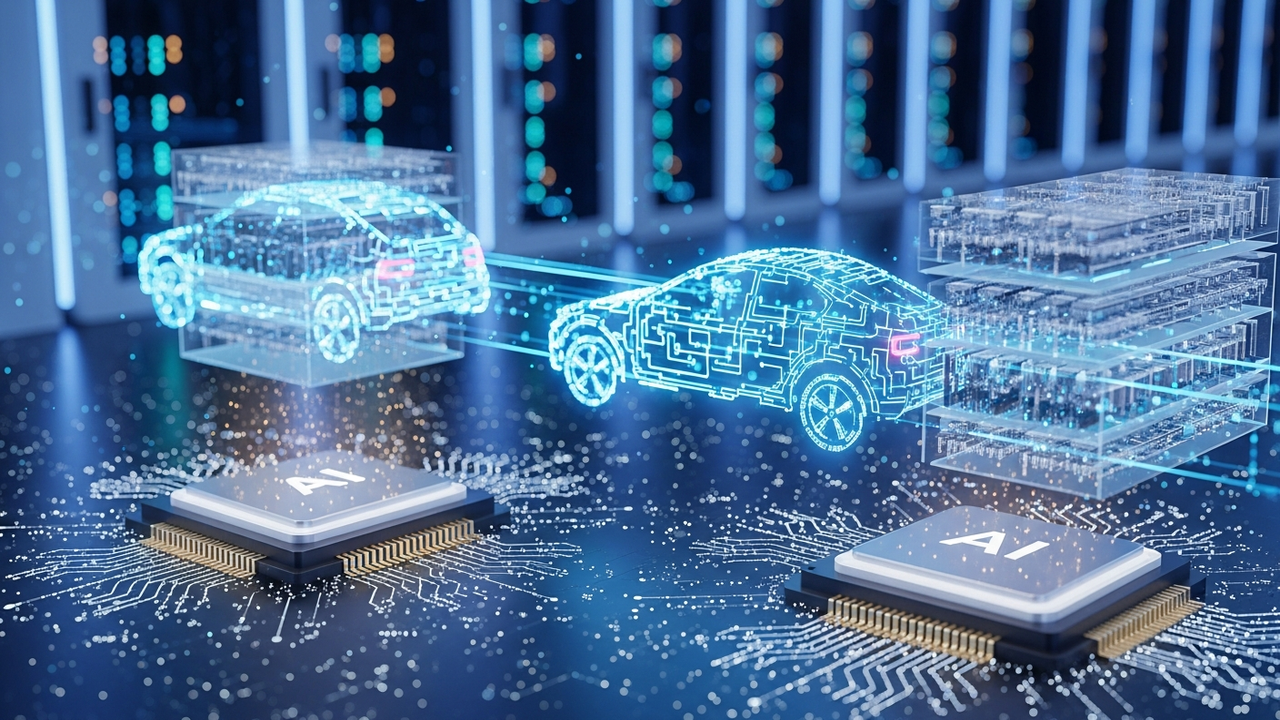
Key Findings: AI and EVs are Primary Growth Drivers for 2026 Semiconductor Market, with HBM and Advanced Manufacturing Nodes Leading Innovation
In 2026, the semiconductor industry is experiencing a highly dynamic growth phase, driven by three powerful technological megatrends: the explosive expansion of AI infrastructure, the continuous augmentation of data centers, and the pervasive electrification of the automotive sector (EVs). This market surge is particularly fueled by the escalating demand for High-Bandwidth Memory (HBM) and the ongoing transition to advanced manufacturing nodes, which enable finer process technologies. These advancements are indispensable for maximizing AI chip performance and dramatically boosting data processing capabilities, serving as powerful catalysts for innovation and market expansion across the entire semiconductor industry.
Technical & Business Details
- High-Bandwidth Memory (HBM): HBM is an innovative memory technology that stacks multiple DRAM dies vertically and connects them to a processor via a silicon interposer, achieving orders of magnitude higher data transfer speeds than conventional DDR memory. In AI training and inference, High-Performance Computing (HPC), and graphics processing, HBM is key to unlocking the full potential of GPUs and overcoming critical memory bandwidth bottlenecks.
- Advanced Manufacturing Nodes: The transition to cutting-edge process nodes, such as 3nm and 2nm, enables the miniaturization of transistors and increased integration density, leading to substantial improvements in chip performance and power efficiency. This allows for the efficient processing of more complex and larger AI models, while also contributing to device miniaturization and reduced power consumption.
- Synergistic Effects of AI and EVs: The evolution of AI necessitates massive data processing and learning, accelerating demand for high-performance chips equipped with HBM and advanced process technologies. Concurrently, the proliferation of EVs is dramatically increasing the demand for automotive semiconductors in power management units, sensors, infotainment systems, and other critical components.
Background & Industry Context
The global semiconductor market continues to enjoy structural growth driven by pervasive megatrends including AI, 5G, IoT, and autonomous driving. Particularly in the AI sector, the relentless growth in model size and data volume demands constant innovation to break through performance and power efficiency limits. Consequently, not only chip design but also packaging and memory technologies have become critical determinants of overall system performance.
Strategic Significance & Outlook
HBM and advanced manufacturing nodes will continue to drive growth in the semiconductor industry. This will lead to enhanced data center processing capabilities, accelerated adoption of edge AI devices, and the closer realization of fully autonomous vehicles. From the perspective of adhesives and sealants, demand is projected to surge for ultra-thin die-attach materials, high-performance underfills for HBM stacking and heterogeneous integration packaging, and thermally conductive adhesives and encapsulants for thermal management in high-heat environments. These materials are indispensable for ensuring the reliability and performance of next-generation semiconductor components, shaping the future of computing.
Source: https://www.kraken.com/in/learn/semiconductor-stocks-to-watch
Get our weekly technology intelligence — free
Receive an infographic that lets you judge at a glance whether each field’s analysis report is worth reading.
Subscribe Free — Weekly Tech Intelligence
By subscribing, you’ll receive Troy-Technical’s weekly technology intelligence newsletter.
- Your email and selected fields are used only to deliver the newsletter.
- We never share your information with third parties.
- You can unsubscribe anytime via the link in each email.
See our Privacy Policy for details.
Takes about a minute · Unsubscribe anytime





Comments