Key Findings
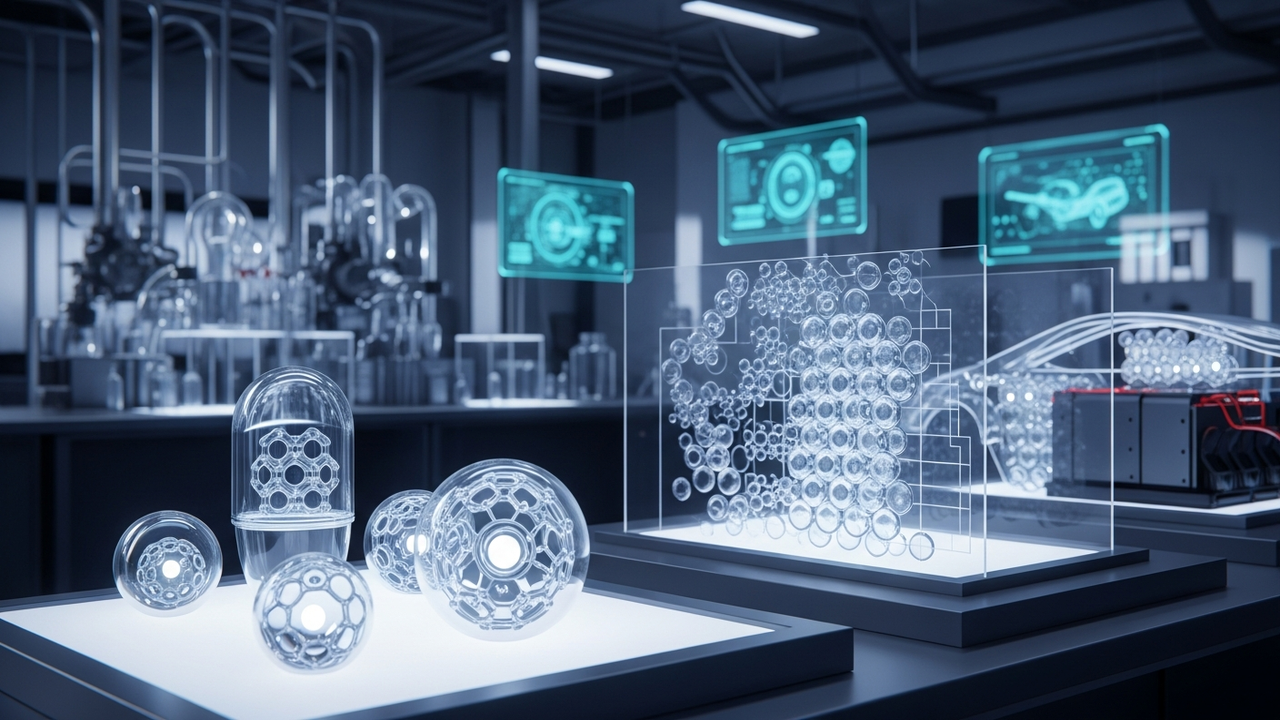
A comprehensive review has unveiled significant progress in phase change materials (PCMs) for thermal energy storage, underscoring their vast potential. The spotlight is on novel materials, including eco-friendly, microencapsulated, bio-based, and metal-organic framework (MOF)-derived PCMs, which are substantially enhancing heat storage capacity and stability. This evolution is crucial for developing sustainable energy management solutions globally.
Technical / Clinical Details
The review meticulously discusses various strategies to boost PCM’s thermal properties, stability, and durability. Cryogenic treatment and photo-switching dopants are highlighted as groundbreaking methods to optimize PCM’s latent heat storage and thermal conductivity. Microencapsulation techniques provide physical and chemical protection, preventing leakage and degradation while increasing surface area for improved heat transfer efficiency. MOF-based PCMs, with their porous structures and tunable characteristics, offer high storage density and selective thermal responsiveness, paving the way for next-generation smart thermal management systems.
Background & Context
Improving energy efficiency and integrating renewable energy sources are pressing global challenges. PCMs, with their high energy storage density and nearly isothermal charging/discharging processes, are recognized as a promising solution. Their applications span various sectors, including reducing energy consumption in building heating and cooling, efficient utilization of solar thermal energy, thermal management of electronic devices, and temperature control for electric vehicle (EV) batteries. These technological advancements are set to add new value to existing energy systems, contributing to a more sustainable and efficient society.
Strategic Significance & Outlook
Future research must prioritize cost reduction, scalability improvements, and ensuring long-term reliability for practical implementation of PCMs. Specifically, the development of high-performance hybrid PCMs and composite materials will enable broader applications and accelerate the growth of the thermal energy storage market. Establishing regulatory standards and safety evaluations is also essential for the widespread adoption of new-generation PCMs, necessitating collaborative efforts across the industry. Ultimately, these materials are expected to become key components in smart cities and advanced energy grids.
Get our weekly technology intelligence — free
Receive an infographic that lets you judge at a glance whether each field’s analysis report is worth reading.
Subscribe Free — Weekly Tech Intelligence
By subscribing, you’ll receive Troy-Technical’s weekly technology intelligence newsletter.
- Your email and selected fields are used only to deliver the newsletter.
- We never share your information with third parties.
- You can unsubscribe anytime via the link in each email.
See our Privacy Policy for details.
Takes about a minute · Unsubscribe anytime








Comments