Key Findings
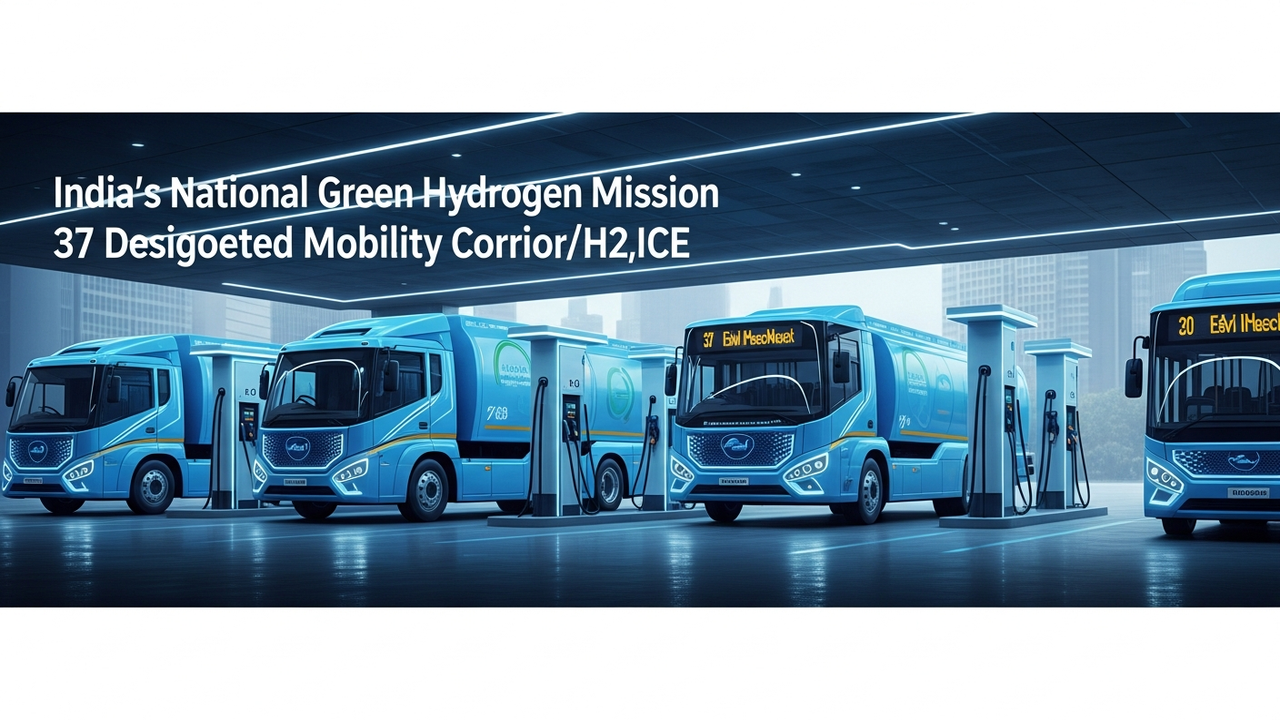
The Indian government has launched a significant pilot program by identifying 10 green hydrogen mobility corridors across the nation, a crucial step under its National Green Hydrogen Mission. This initiative involves the deployment of 37 fuel cell electric vehicles (FCEVs) and hydrogen internal combustion engine (H2-ICE) trucks and buses, marking India’s inaugural large-scale demonstration of hydrogen-fueled transport.
Technical & Operational Details
The pilot program is designed to rigorously test the feasibility and operational efficiency of hydrogen fuel in commercial vehicles. By simultaneously deploying FCEVs, which produce electricity from hydrogen and oxygen with water as the sole emission, and H2-ICE vehicles, which adapt existing internal combustion engines to run on hydrogen for significant carbon reductions, the program will gather vital data on both technologies. The selected corridors consider factors such as geographical conditions, traffic volume, and potential for integration with existing infrastructure. This practical application will provide crucial insights into performance under diverse Indian operating conditions, including aspects like refueling infrastructure, maintenance, and vehicle durability.
Background & Industry Context
This initiative is integral to India’s ambitious goal of establishing 5 million tons of green hydrogen production capacity annually by 2030. The transport sector is a major contributor to India’s CO2 emissions, accounting for approximately 13% of the total, making its decarbonization a priority for the nation’s climate targets. Hydrogen is emerging as a promising alternative for long-haul and heavy-duty transport, where battery electric vehicles (BEVs) face limitations regarding range and payload. Globally, countries are increasingly exploring hydrogen’s role in heavy transport, with India positioning itself as a leader in this domain within emerging economies.
Future Outlook
The successful execution of this pilot program is expected to lay the groundwork for a broader transition towards hydrogen-based transport infrastructure across India. This will likely spur investments in hydrogen production, storage, and distribution networks, fostering growth in related industries. India aims to become a global supplier of green hydrogen and its derivatives, and these domestic demonstrations are critical steps toward achieving that international standing. Furthermore, the insights gained from this project will be valuable for other developing nations contemplating similar hydrogen mobility strategies, setting a precedent for scalable and sustainable transport solutions.
Source: https://www.bypardeep.in/blog/hydrogen-energy-india-2026
Get our weekly technology intelligence — free
Receive an infographic that lets you judge at a glance whether each field’s analysis report is worth reading.
Subscribe Free — Weekly Tech Intelligence
By subscribing, you’ll receive Troy-Technical’s weekly technology intelligence newsletter.
- Your email and selected fields are used only to deliver the newsletter.
- We never share your information with third parties.
- You can unsubscribe anytime via the link in each email.
See our Privacy Policy for details.
Takes about a minute · Unsubscribe anytime






Comments