Key Findings
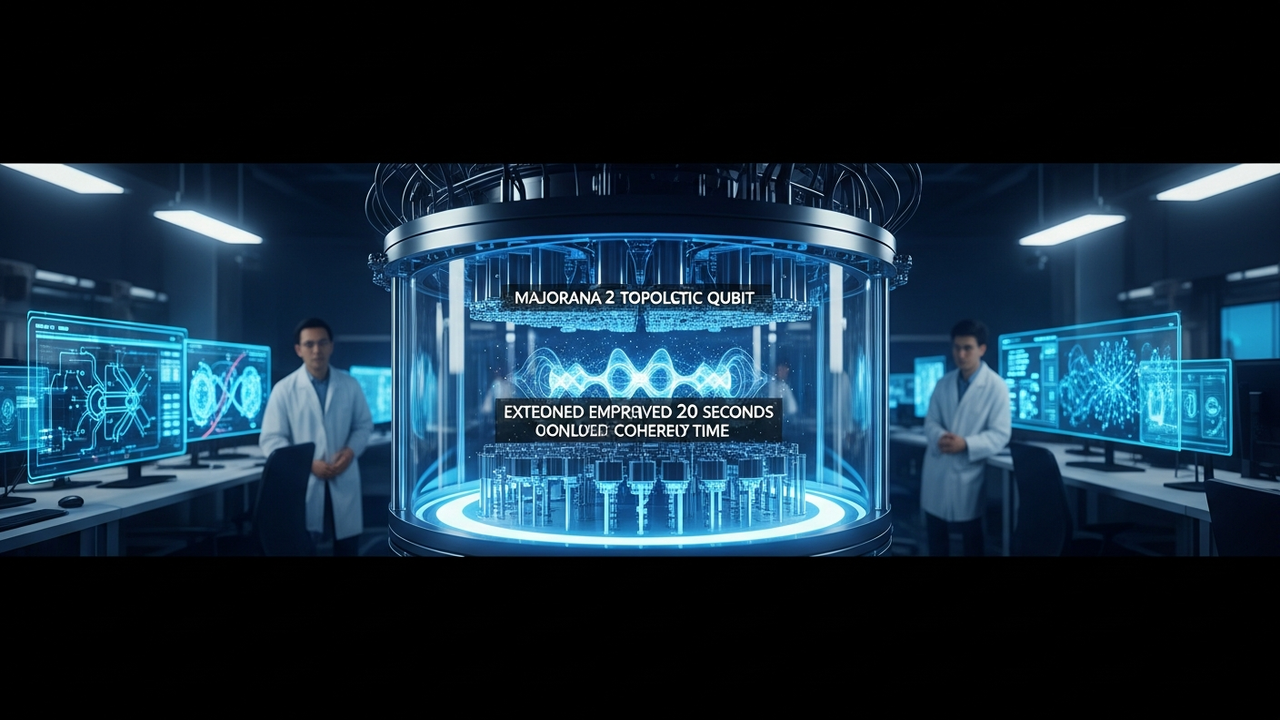
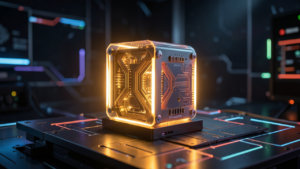
Microsoft has announced its ‘Majorana 2’ quantum chip, marking a significant leap forward in topological quantum computing. The new chip has successfully increased qubit coherence times by a factor of 1,000, extending them from milliseconds to an unprecedented 20 seconds. This dramatic improvement has allowed Microsoft to accelerate its timeline for delivering the first fault-tolerant quantum computer from 2033 to 2029, signaling a major shift in the industry’s race towards practical quantum advantage.
Technical / Clinical Details
The Majorana 2 chip deviates from its predecessor, Majorana 1, by employing a lead-based superconductor in conjunction with an advanced semiconductor compound. This material innovation is critical to achieving the extended coherence times, which are essential for robust quantum operations. Topological qubits encode quantum information in exotic states of matter that are inherently protected from local noise, reducing the burden on error correction mechanisms. Microsoft’s strategy aims for a hardware-protected, single-chip solution that is scalable to potentially a million qubits, providing a resilient foundation for future quantum computation.
Background & Context
Decoherence, the loss of quantum information due to environmental interference, remains a central challenge in quantum computing. Topological quantum computing has been a long-pursued theoretical solution due to its intrinsic error resistance. Microsoft’s sustained investment in this complex field has culminated in this experimental breakthrough, validating the potential of topological protection. This progress suggests that the industry is moving closer to overcoming the fragility of current qubit architectures, which is a prerequisite for building large-scale, reliable quantum systems.
Strategic Significance & Outlook
The acceleration of Microsoft’s fault-tolerant quantum computing roadmap to 2029 has profound implications for the quantum industry and beyond. A robust, fault-tolerant quantum computer could unlock solutions to problems currently intractable for classical supercomputers, including advanced drug discovery, novel materials design, and the optimization of complex logistical networks. Microsoft’s commitment to topological qubits and their ‘Majorana 2’ chip positions the company as a leading contender in the race for scalable quantum computing, promising to drive innovation and create new economic opportunities globally.
Get our weekly technology intelligence — free
Receive an infographic that lets you judge at a glance whether each field’s analysis report is worth reading.
Subscribe Free — Weekly Tech Intelligence
By subscribing, you’ll receive Troy-Technical’s weekly technology intelligence newsletter.
- Your email and selected fields are used only to deliver the newsletter.
- We never share your information with third parties.
- You can unsubscribe anytime via the link in each email.
See our Privacy Policy for details.
Takes about a minute · Unsubscribe anytime





Comments