Key Findings
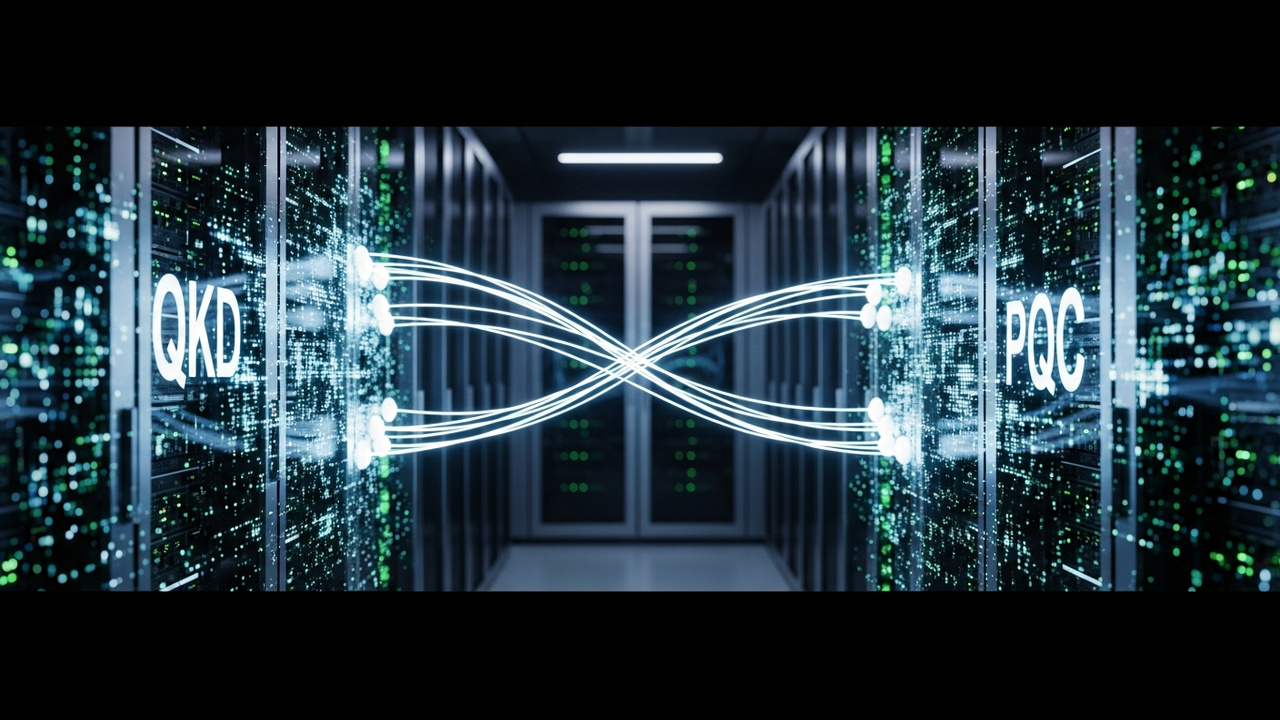
According to Fortinet, quantum cryptography encompasses two primary and complementary technological approaches: Quantum Key Distribution (QKD) and Post-Quantum Cryptography (PQC). Each plays a crucial role in protecting information from future cyber threats posed by quantum computing, together offering a comprehensive strategy for securing digital information.
Technical / Clinical Details
Quantum Key Distribution (QKD) leverages principles of quantum mechanics, specifically the uncertainty principle and the no-cloning theorem, to enable theoretically eavesdrop-proof cryptographic key sharing. In a QKD system, any attempt at eavesdropping on the communication channel inevitably alters the quantum state, which is then detected by the communicating parties, thus physically guaranteeing key security. QKD is the most mature of the quantum cryptographic technologies currently available, providing an extremely high level of security in specific environments. However, it requires dedicated hardware and the development of repeaters or quantum relays for long-distance communication.
Conversely, Post-Quantum Cryptography (PQC) refers to algorithms that run on classical computers but are designed to be computationally secure against attacks by future quantum computers. The PQC algorithms standardized by NIST (e.g., ML-KEM, ML-DSA, SLH-DSA) are based on mathematical problems—such as lattice-based or hash-based cryptography—that are believed to be intractable for even the most powerful quantum computers. The major advantage of PQC is its relative ease of integration into existing network infrastructures and software stacks, making it the most practical near-to-mid-term migration path for many enterprises and government agencies to mitigate quantum threats.
Background & Context
The public-key cryptographic systems (RSA, elliptic curve cryptography, etc.) that underpin current internet security face a potential risk of being broken by the advent of quantum computers. To counter this ‘quantum threat,’ governments, standardization bodies, and companies worldwide are accelerating the development and deployment of quantum-safe cryptographic technologies. While QKD provides physical-layer security, PQC offers a software-based solution with widespread deployability. Combining both approaches allows for a multi-layered defense strategy against future quantum adversaries.
Strategic Significance & Outlook
QKD and PQC are mutually complementary, and both technologies are expected to play significant roles in building future quantum-safe infrastructure. PQC is positioned as the immediate solution for rapidly upgrading existing infrastructure and protecting a wide range of applications. QKD, on the other hand, is anticipated to evolve as a foundation for point-to-point communications with high-security requirements and as a building block for a future quantum internet. Many organizations are likely to adopt a hybrid approach, prioritizing PQC migration to reduce the risk of data compromise by quantum computers, while simultaneously exploring QKD for strategic high-security applications where its unique properties offer unparalleled protection.
Source: https://www.fortinet.com/fr/resources/cyberglossary/quantum-cryptography
Get our weekly technology intelligence — free
Receive an infographic that lets you judge at a glance whether each field’s analysis report is worth reading.
Subscribe Free — Weekly Tech Intelligence
By subscribing, you’ll receive Troy-Technical’s weekly technology intelligence newsletter.
- Your email and selected fields are used only to deliver the newsletter.
- We never share your information with third parties.
- You can unsubscribe anytime via the link in each email.
See our Privacy Policy for details.
Takes about a minute · Unsubscribe anytime









Comments