Key Findings
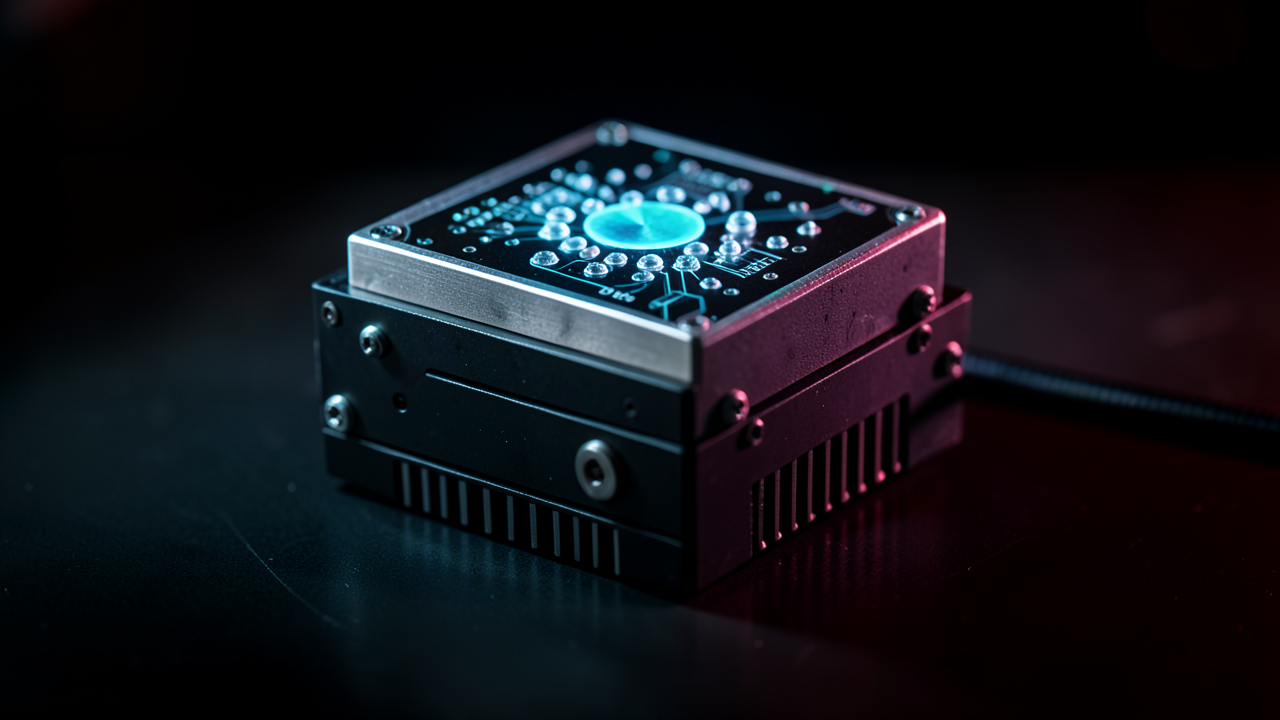
Quobly, a company specializing in silicon spin qubit hardware development, has successfully demonstrated the execution of all three fundamental quantum operations—qubit readout, single-qubit gates, and two-qubit gates—on a single chip utilizing its proprietary QSOI® architecture. This Quantum Processing Unit (QPU) was fabricated on an industrial 300-millimeter semiconductor production line at a STMicroelectronics manufacturing facility. This achievement validates the feasibility of co-integrating these critical quantum operations with classical control circuitry on commercial 300mm FD-SOI silicon, marking a significant step towards manufacturing large-scale, commercially viable quantum computers.
Technical Details
Quobly’s QSOI® (Quantum Silicon-On-Insulator) architecture is specifically designed for compatibility with existing industrial semiconductor manufacturing technologies. The recent demonstration involved a chip produced on a 300-millimeter wafer that proved capable of performing all essential quantum operations: qubit initialization, information readout, and the fundamental elements of quantum computation—single-qubit gates (e.g., Pauli X, Y, Z, and Hadamard gates) and two-qubit gates (e.g., controlled-NOT gates). A particularly noteworthy aspect is the physical integration of these quantum operations with classical electronic circuits on the same chip. This integration is crucial for reducing the vast number of interconnects and external components typically required for qubit control and readout, thereby addressing key scalability challenges. The use of STMicroelectronics’ industrial 300mm FD-SOI (Fully Depleted Silicon-On-Insulator) process harnesses state-of-the-art CMOS technology, enabling high-quality fabrication and high-density integration of qubits.
Background & Context
Silicon spin qubits are a prominent technology in quantum computing due to their potential for miniaturization and their compatibility with existing semiconductor manufacturing infrastructure. However, realizing qubit control, readout, and especially entanglement between multiple qubits on a single chip at an industrial scale has been a significant technical hurdle. Quobly’s achievement of demonstrating all these fundamental operations on an industrial 300mm silicon process strongly suggests that this technology is moving beyond the laboratory experimental phase into a commercial, mass-production capable stage. This milestone unequivocally indicates that silicon qubit technology is making steady progress towards the realization of fault-tolerant quantum computing, which will require a much larger number of physical qubits.
Strategic Significance & Outlook
The successful demonstration of comprehensive quantum operations on a single chip validates Quobly’s technology as highly promising for constructing large-scale quantum computing platforms. The confirmed manufacturability on an industrial 300mm semiconductor production line suggests the potential for future mass production, which could lead to reduced costs and increased supply stability for quantum chips. This will accelerate the development of high-performance QPUs with a greater number of qubits, significantly shortening the path to quantum computing commercialization. Quobly, building on this technology, aims to contribute to a future where quantum computers can solve complex problems currently intractable for even the most powerful supercomputers, potentially driving innovation across diverse fields such as materials science, drug discovery, and financial modeling.
Get our weekly technology intelligence — free
Receive an infographic that lets you judge at a glance whether each field’s analysis report is worth reading.
Subscribe Free — Weekly Tech Intelligence
By subscribing, you’ll receive Troy-Technical’s weekly technology intelligence newsletter.
- Your email and selected fields are used only to deliver the newsletter.
- We never share your information with third parties.
- You can unsubscribe anytime via the link in each email.
See our Privacy Policy for details.
Takes about a minute · Unsubscribe anytime







Comments