Key Findings
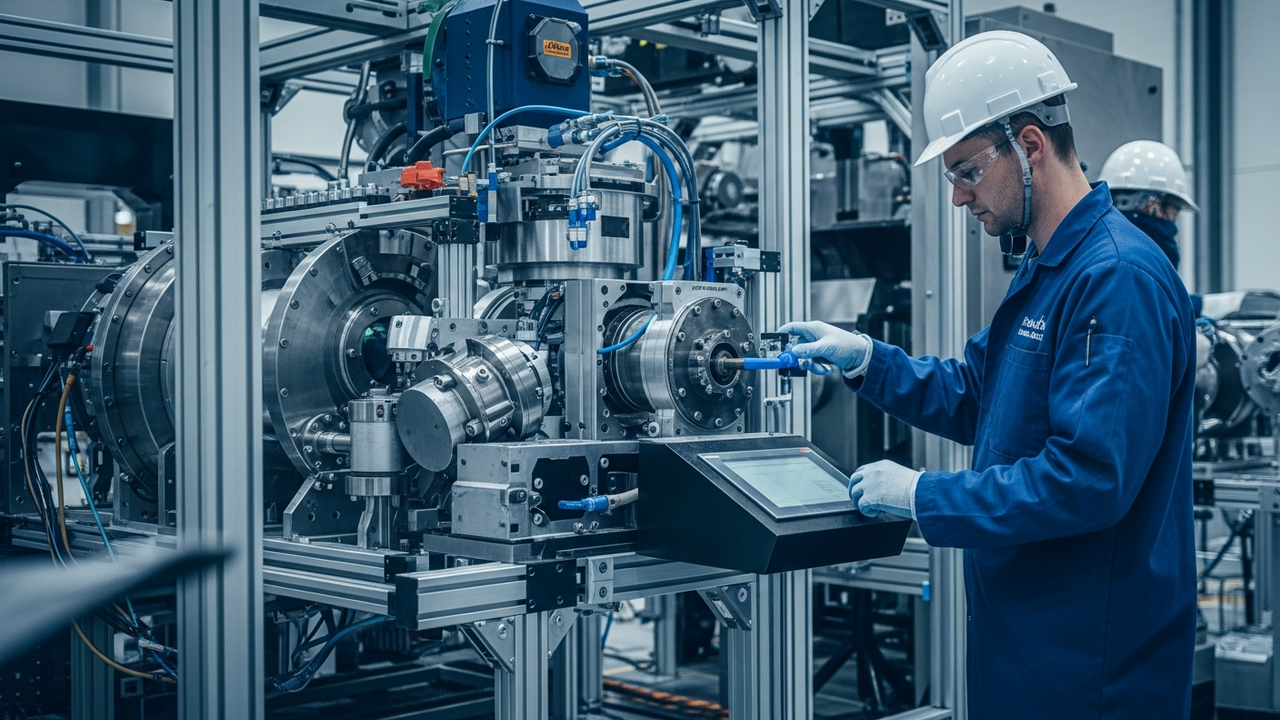
A recent research paper published on advances in forming processes for Carbon Fiber-Reinforced Thermoplastic Composites (CFRTPs) details critical breakthroughs that enhance their applicability in high-stakes sectors such as aerospace, transportation, and marine engineering. The study specifically addresses two major fabrication challenges: the high melt viscosity of thermoplastic matrices and the chemical inertness of carbon fiber surfaces. By overcoming these hurdles, CFRTPs can fully leverage their exceptional properties, including high specific strength, impact resistance, weldability, re-processability, and recyclability, thereby accelerating their substitution for traditional metal materials.
Technical Details
CFRTPs are widely regarded as next-generation high-performance materials due to their superior mechanical properties and processing advantages. However, the high melt viscosity of thermoplastic resins has historically hindered adequate impregnation of carbon fibers, leading to reduced composite quality. Additionally, the chemical inertness of carbon fiber surfaces results in poor interfacial adhesion with the resin, limiting the overall performance of the composite. The reported advances in this research tackle these issues through several innovative approaches:
- Utilization of High-Performance Thermoplastics: Advances in high-performance thermoplastic resins like PEEK (Polyether Ether Ketone) and PEKK (Polyetherketoneketone) offer better control over melt viscosity, enabling improved processability. These resins also provide excellent mechanical properties under high-temperature conditions.
- Interface Engineering: Significant progress has been made in interface engineering techniques, involving chemical treatments and modifications of carbon fiber surfaces. This dramatically enhances adhesion between the fibers and the resin, leading to improved stress transfer efficiency within the composite and boosting properties such as impact resistance and interlaminar strength.
- Development of Advanced Forming Processes: Optimized manufacturing techniques across various forming processes, including injection molding, compression molding, and automated fiber placement (AFP), are being developed to maximize CFRTP performance. Novel processes such as in-situ polymerization and co-solvent treatment are improving resin impregnation into fibers, enabling the production of high-quality, void-free composites.
Background & Industry Context
The aerospace industry continuously seeks lightweighting solutions to improve fuel efficiency and reduce emissions. CFRTPs offer substantial weight savings compared to conventional metal alloys. Furthermore, their ability to be joined by welding simplifies manufacturing processes and reduces costs. The re-processability and recyclability of CFRTPs also make them an attractive, sustainable option for industries striving for a circular economy, aligning with global environmental goals.
Strategic Significance & Outlook
These research advancements significantly broaden the potential application scope for CFRTPs, extending to primary structural components in aircraft, automotive chassis, and lightweight marine structures. Anticipated reductions in manufacturing costs and improved reliability, stemming from enhanced forming processes and interfacial adhesion, are expected to accelerate the commercialization and large-scale deployment of CFRTPs. The ongoing synergy between materials science and manufacturing technology promises to yield even more advanced, sustainable composite solutions in the future.
Source: https://www.mdpi.com/1996-1944/19/14/2988
Get our weekly technology intelligence — free
Receive an infographic that lets you judge at a glance whether each field’s analysis report is worth reading.
Subscribe Free — Weekly Tech Intelligence
By subscribing, you’ll receive Troy-Technical’s weekly technology intelligence newsletter.
- Your email and selected fields are used only to deliver the newsletter.
- We never share your information with third parties.
- You can unsubscribe anytime via the link in each email.
See our Privacy Policy for details.
Takes about a minute · Unsubscribe anytime








Comments