Key Findings
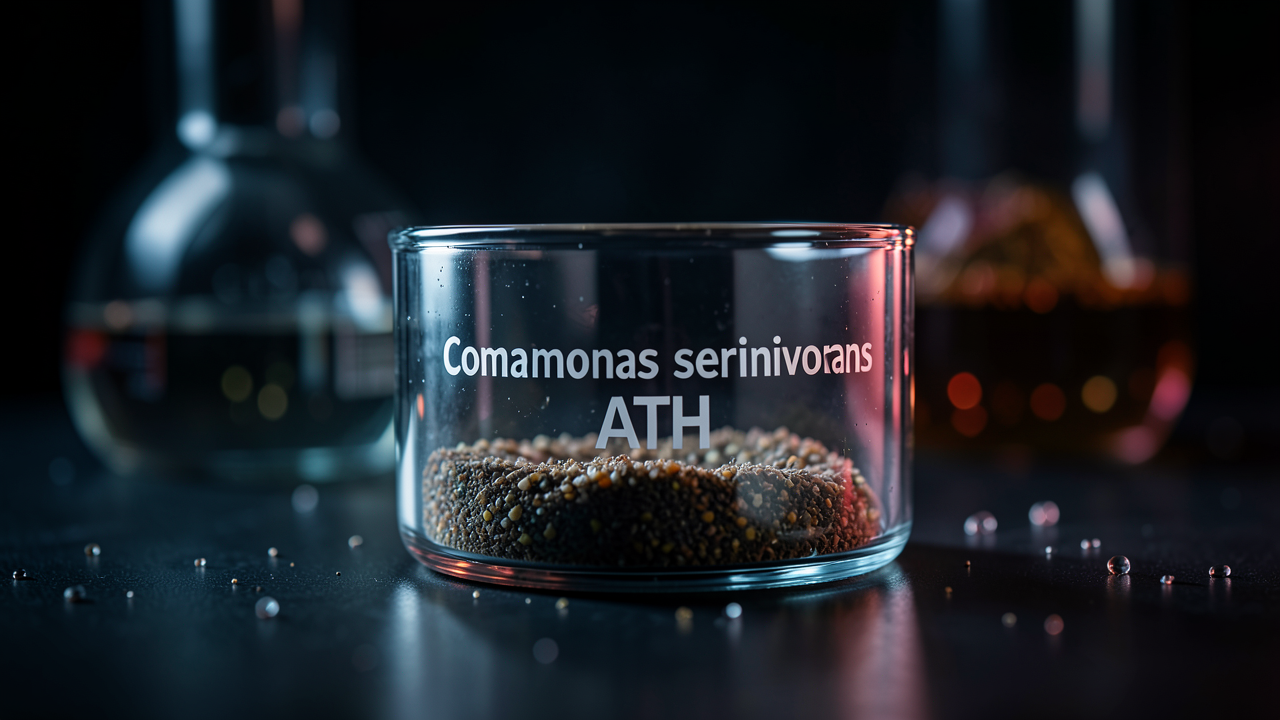
Research has demonstrated that a newly identified strain, Comamonas serinivorans ATH, possesses the capability to efficiently produce polyhydroxyalkanoates (PHA) from volatile fatty acids (VFAs) derived from sterile-filtered dark fermentation. This breakthrough establishes a crucial pillar for the circular economy: sustainable bioplastic production from organic waste.
Technical / Clinical Details
The study evaluated the ability of Comamonas serinivorans ATH to accumulate PHA intracellularly using VFAs as a substrate. VFAs, which are complex mixtures of various carbon sources, are readily obtainable as intermediate products from the dark fermentation of food and agricultural waste. This strain demonstrated promising PHA yields under specific conditions, highlighting its potential for efficient PHA production. PHAs are highly attractive biopolymers due to their biodegradability, biocompatibility, and tunable mechanical properties, making them suitable as replacements for petroleum-based plastics in diverse applications such as packaging, medical implants, and agricultural materials.
Background & Context
Against the backdrop of global plastic pollution and increasing reliance on fossil resources, the demand for biodegradable bioplastics is rapidly growing. PHAs, being microbially produced, are renewable and degrade naturally in the environment after use. Technologies that convert waste into PHA offer dual benefits of waste management and resource recovery, making them essential components for building a sustainable society. Market forecasts indicate that PHA is projected to be one of the fastest-growing major bioplastic groups by 2030, with significant increases in production capacity anticipated.
Strategic Significance & Outlook
The technology for PHA production from VFAs using Comamonas serinivorans ATH holds immense promise for the bioplastics industry. As research progresses towards optimizing production processes, improving cost-efficiency, and scaling up operations, this technology is expected to contribute significantly to the valorization of organic waste and the widespread adoption of bioplastics. This marks a critical step towards realizing a circular bioeconomy that promotes resource circulation and reduces environmental impact.
Source: https://peercommunityjournal.org/item/10.24072/pcjournal.785.pdf
Get our weekly technology intelligence — free
Receive an infographic that lets you judge at a glance whether each field’s analysis report is worth reading.
Subscribe Free — Weekly Tech Intelligence
By subscribing, you’ll receive Troy-Technical’s weekly technology intelligence newsletter.
- Your email and selected fields are used only to deliver the newsletter.
- We never share your information with third parties.
- You can unsubscribe anytime via the link in each email.
See our Privacy Policy for details.
Takes about a minute · Unsubscribe anytime








Comments