Key Findings
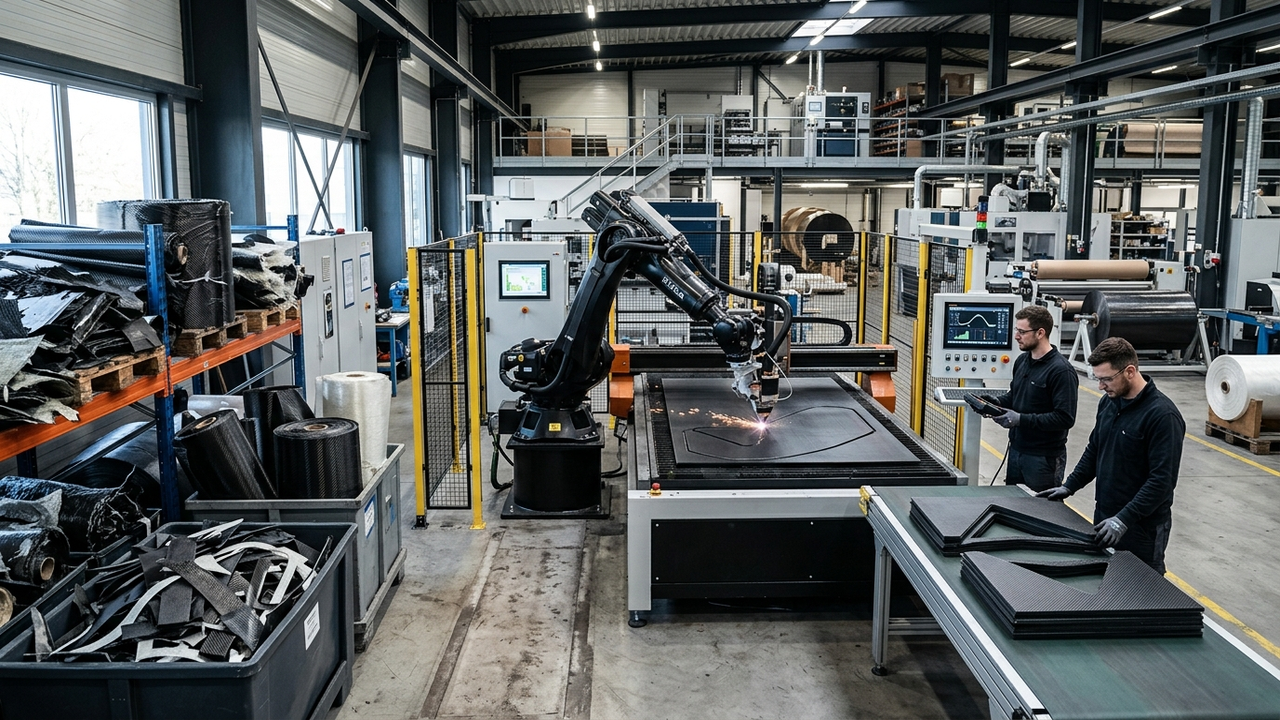
Kim Sjödahl of Exel Composites has underscored that the sustainability of composite materials cannot be achieved through a single ‘silver bullet’ recycling solution but necessitates a multifaceted approach across the entire lifecycle, from material design and manufacturing to end-of-life management. Special attention is being given to innovative efforts to repurpose manufacturing waste as new, high-performance building blocks for composites, exemplified by Fairmat’s robotic cutting technology for ‘CFRP chips.’
Technical / Clinical Details
To enhance composite sustainability, it is crucial to consider recyclability and reusability from the design stage. Sjödahl highlighted examples such as expanding the use of thermoplastic composites, developing degradable matrix resins, and innovating dissimilar material joining techniques. Regarding the reuse of manufacturing waste, Fairmat’s robotic cutting technology plays a vital role. This technology precisely processes CFRP offcuts and rejects generated during manufacturing into ‘CFRP chips’ of specific sizes and shapes. These chips are then reintegrated into new composite products (e.g., injection molded parts or sheet molding compounds) not as random waste, but as engineered materials, capable of yielding products with properties close to those of virgin materials. This offers a dual benefit of reducing manufacturing costs and decreasing the consumption of virgin materials.
Background & Context
High-performance composite materials, including carbon fiber reinforced plastics (CFRP), are widely adopted in industries like aerospace, automotive, and wind energy due to their lightweight and strength. However, manufacturing waste and end-of-life product disposal have been long-standing challenges. Thermoset composites, in particular, are difficult to reuse once cured, with many ending up in landfills. With the urgent drive towards a circular economy, particularly in Europe, the composite industry is focusing on developing various recycling technologies and reuse strategies to fulfill its responsibilities. Sjödahl’s statement underscores the need for a comprehensive and practical approach to this complex issue.
Strategic Significance & Outlook
The multifaceted efforts toward improving composite industry sustainability are expected to accelerate. Collaborations between innovative technology companies like Fairmat and established manufacturers like Exel Composites are indispensable for maximizing the value of manufacturing waste and building a circular economy for composites. In the future, these initiatives are expected to become standardized, leading to a significant reduction in environmental impact across the entire lifecycle of composite products. This will establish composites as ‘sustainable’ as well as ‘high-performance’ materials, driving broader adoption across industries and significantly contributing to global environmental goals.
Source: https://mepca-engineering.com/sustainable-composites-require-more-than-end-of-life-solutions/
Get our weekly technology intelligence — free
Receive an infographic that lets you judge at a glance whether each field’s analysis report is worth reading.
Subscribe Free — Weekly Tech Intelligence
By subscribing, you’ll receive Troy-Technical’s weekly technology intelligence newsletter.
- Your email and selected fields are used only to deliver the newsletter.
- We never share your information with third parties.
- You can unsubscribe anytime via the link in each email.
See our Privacy Policy for details.
Takes about a minute · Unsubscribe anytime









Comments