Key Findings
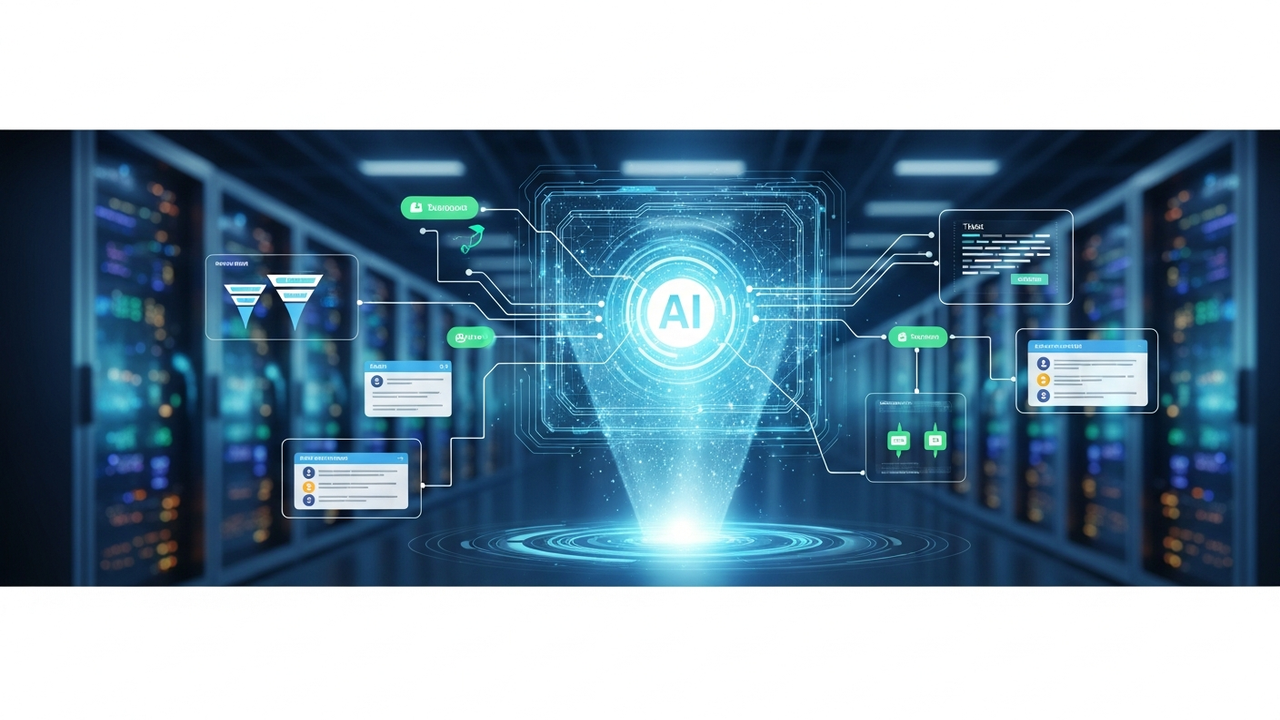
Enterprise AI agents are emerging as transformative solutions, delivering measurable impact by autonomously understanding business objectives, analyzing data from diverse sources, and automating complex business processes. These sophisticated agents transcend mere information retrieval; they are equipped to identify missing information, access corporate knowledge bases, recommend concrete actions, and even initiate subsequent stages of business workflows, becoming proactive contributors to organizational efficiency.
Capabilities & Application Details
- Comprehensive Business Process Automation: Enterprise AI agents can automate end-to-end routine and complex operations such as invoice processing, document verification, employee onboarding, procurement workflows, and internal approval management, which are typically time-consuming and labor-intensive. This automation significantly reduces human error and accelerates processing speeds.
- Advanced Data Analysis and Decision Support: By collecting and analyzing data from multiple sources, these agents empower organizations to make more data-driven decisions. Agents perform tasks like classifying and routing incoming requests, summarizing and analyzing documents, extracting critical information, formulating optimal responses and recommendations, thereby augmenting the capabilities of human operators and analysts.
- Integration with Existing Systems and Action Execution: These AI agents seamlessly integrate with existing enterprise applications (CRM, ERP, knowledge bases, etc.) and can execute actions across connected systems. For instance, Salesforce’s Agentforce natively handles lead qualification, opportunity management, AI-powered forecasting, pipeline analysis, and automated follow-ups within Salesforce data. Similarly, Zendesk AI enhances enterprise support teams by providing AI ticket routing, suggested agent responses, knowledge base search, and automated workflows, leading to improved efficiency and customer satisfaction.
- Human Approval and Exception Handling: Agents are designed to identify exceptional situations requiring human approval and escalate them to the appropriate personnel. This ensures that while AI autonomously drives operations, critical junctures benefit from human oversight and intervention, maintaining a balance between automation and human control.
Background & Industry Context
Modern enterprises face multifaceted challenges, including intensifying competition, escalating customer expectations, and significant labor shortages. In this environment, AI agents are positioned as strategic tools for optimizing operational efficiency, reducing costs, enhancing customer experience, and boosting employee productivity. The evolution of generative AI has enabled agents to comprehend more complex tasks, learn from diverse information, and interact/collaborate in a natural, human-like manner. This paradigm shift means AI is transitioning from a mere tool to a ‘digital employee’ directly generating business value.
Future Outlook
The technology underpinning enterprise AI agents is expected to evolve further, becoming deeply embedded across all organizational functions. Anticipated advancements include higher levels of autonomy, adaptability, and enhanced security features, enabling agents to support increasingly complex and strategic decision-making processes. This will empower businesses to respond rapidly to market changes and accelerate innovation. Agentic AI is poised to redefine the nature of business operations, creating new competitive advantages, and its continuous adoption and optimization will be a key pursuit for forward-thinking enterprises.
Get our weekly technology intelligence — free
Receive an infographic that lets you judge at a glance whether each field’s analysis report is worth reading.
Subscribe Free — Weekly Tech Intelligence
By subscribing, you’ll receive Troy-Technical’s weekly technology intelligence newsletter.
- Your email and selected fields are used only to deliver the newsletter.
- We never share your information with third parties.
- You can unsubscribe anytime via the link in each email.
See our Privacy Policy for details.
Takes about a minute · Unsubscribe anytime








Comments