Key Findings
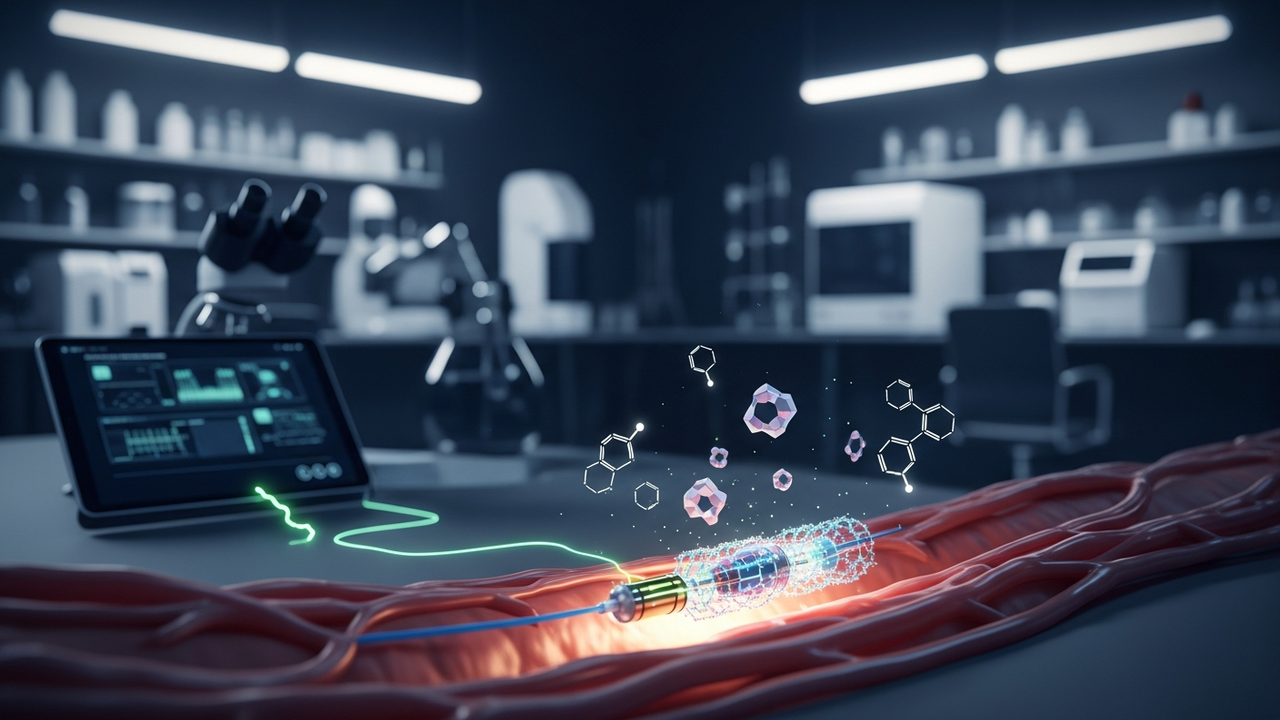
A review article published on July 23, 2026, in MDPI’s ‘Biosensors’ provides a comprehensive examination of electrochemical aptamer-based (EAB) sensors enabling in vivo pharmacokinetic (PK) monitoring of anthracycline chemotherapeutics. The review delves into the sensor’s mechanisms of action, long-term stability challenges, and clinical translation prospects. It particularly emphasizes advancements in flexible electrodes, such as laser-induced graphene and metal-organic framework (MOF)-derived porous carbons patterned on polyimide substrates. These technologies are suggested to conform to tissue surfaces and reduce biofouling, thereby facilitating long-term drug monitoring.
Technical and Clinical Details
EAB sensors measure real-time drug concentrations by detecting changes in electrical signals associated with the binding and dissociation of aptamers (synthetic nucleic acids) specifically immobilized on the electrode surface, which bind to target drug molecules. This review analyzes the design principles and performance of EAB sensors specifically for continuous monitoring of anthracycline drugs (e.g., doxorubicin) in the bloodstream. Traditional blood sampling for PK measurements is intermittent and often struggles to capture detailed drug concentration fluctuations. EAB sensors offer the potential for continuous observation of pharmacokinetic aspects, such as the lag in drug concentration between plasma and interstitial fluid, providing crucial information for optimizing personalized drug dosages. The use of flexible electrode materials enhances biocompatibility and facilitates implantation in various body sites, contributing to long-term functional integrity.
Background and Industry Context
In cancer chemotherapy, appropriate drug dosing is essential for maximizing therapeutic efficacy while minimizing side effects. However, individual patient metabolism and disease state can significantly vary drug PK, often making uniform dosing suboptimal. Real-time in vivo PK monitoring is a critical step towards realizing personalized medicine, and EAB sensors are emerging as a promising candidate technology. Research in this field is driven by the convergence of advanced biosensor technologies and biocompatible materials science, forming an indispensable component for the advancement of precision medicine.
Strategic Significance and Outlook
EAB sensor technology holds the potential for application beyond anthracycline chemotherapeutic monitoring, extending to PK monitoring of other chemotherapy drugs, immunosuppressants, and antibiotics. The review identifies challenges for accelerating the clinical translation of EAB sensors, including ensuring long-term in vivo stability, further suppressing biofouling, improving multiplex monitoring capabilities, and integrating wireless data transmission with AI-driven data analysis. If these challenges are overcome, EAB sensors could become powerful tools for advancing patient-centric personalized treatment across various disease areas, including cancer therapy.
Source: https://www.mdpi.com/2673-3293/7/3/20
Get our weekly technology intelligence — free
Receive an infographic that lets you judge at a glance whether each field’s analysis report is worth reading.
Subscribe Free — Weekly Tech Intelligence
By subscribing, you’ll receive Troy-Technical’s weekly technology intelligence newsletter.
- Your email and selected fields are used only to deliver the newsletter.
- We never share your information with third parties.
- You can unsubscribe anytime via the link in each email.
See our Privacy Policy for details.
Takes about a minute · Unsubscribe anytime







Comments