Key Findings
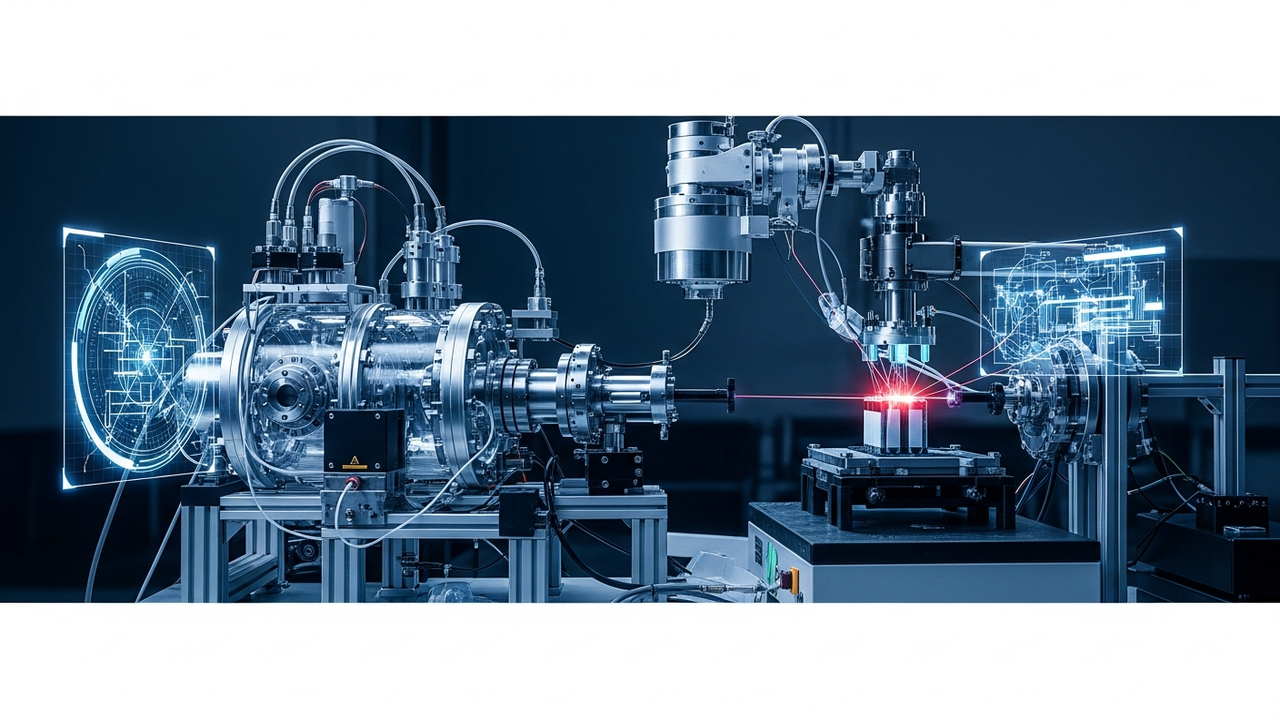
The integration of In-situ DEMS (Differential Electrochemical Mass Spectrometry) technology has dramatically accelerated the safety validation processes for both all-solid-state and hybrid batteries. This advanced analytical method enables high-precision, real-time measurement of gas species and quantities evolved during battery charge-discharge cycles. Specifically, evaluations using DS-SPE (Dual Solid-State Polymer Electrolyte) systems have confirmed a complete absence of CO2 and O2 evolution, a critical finding that suggests extremely stable battery operation with minimal thermal runaway risk.
Technical and Clinical Details
In-situ DEMS directly couples an electrochemical cell with a mass spectrometer, allowing for on-the-spot analysis of trace gases generated at the electrode-electrolyte interface during battery operation. This capability enables real-time identification of reaction gas production under specific voltage or current conditions, which was previously unattainable with conventional off-line analysis. For all-solid-state/hybrid batteries, such as DS-SPE systems, the generation of volatile gases from liquid electrolytes has been a significant safety concern. However, detailed DEMS analysis has clearly demonstrated zero evolution of major thermal runaway-related gases like CO2 and O2 during cycling. This result scientifically substantiates the inherently high safety of these batteries. DEMS also contributes to elucidating changes in interfacial resistance and mechanisms of side reactions, aiding in identifying causes of battery degradation and formulating improvement strategies.
Background and Industry Context
With the widespread adoption of electric vehicles (EVs) and large-scale stationary energy storage systems, battery safety is becoming an increasingly critical issue. All-solid-state and hybrid batteries, in particular, are expected to offer superior safety compared to traditional lithium-ion batteries that use liquid electrolytes, necessitating high-precision tools for objective performance and safety evaluation. In-situ DEMS was developed to meet this need, providing the capability to nondestructively analyze battery internal behavior in detail. This technology is key to improving efficiency and reliability in material selection, cell design, and manufacturing process optimization during the research and development phase.
Strategic Significance and Outlook
The continued proliferation and evolution of In-situ DEMS technology will accelerate the development of safer, longer-lasting next-generation batteries. Real-time gas evolution monitoring will become a powerful tool for rapidly assessing the safety of new electrolyte and electrode materials, contributing to reduced development times. In the future, this technology is expected to be applied to quality control and safety checks on production lines, further enhancing the reliability of all-solid-state and hybrid batteries. This will drive innovation in battery technology across a wide range of sectors, including electric vehicles, renewable energy storage, and portable electronic devices, contributing to the realization of a sustainable society.
Source: https://www.azocleantech.com/article.aspx?ArticleID=2178
Get our weekly technology intelligence — free
Receive an infographic that lets you judge at a glance whether each field’s analysis report is worth reading.
Subscribe Free — Weekly Tech Intelligence
By subscribing, you’ll receive Troy-Technical’s weekly technology intelligence newsletter.
- Your email and selected fields are used only to deliver the newsletter.
- We never share your information with third parties.
- You can unsubscribe anytime via the link in each email.
See our Privacy Policy for details.
Takes about a minute · Unsubscribe anytime









Comments