Key Findings
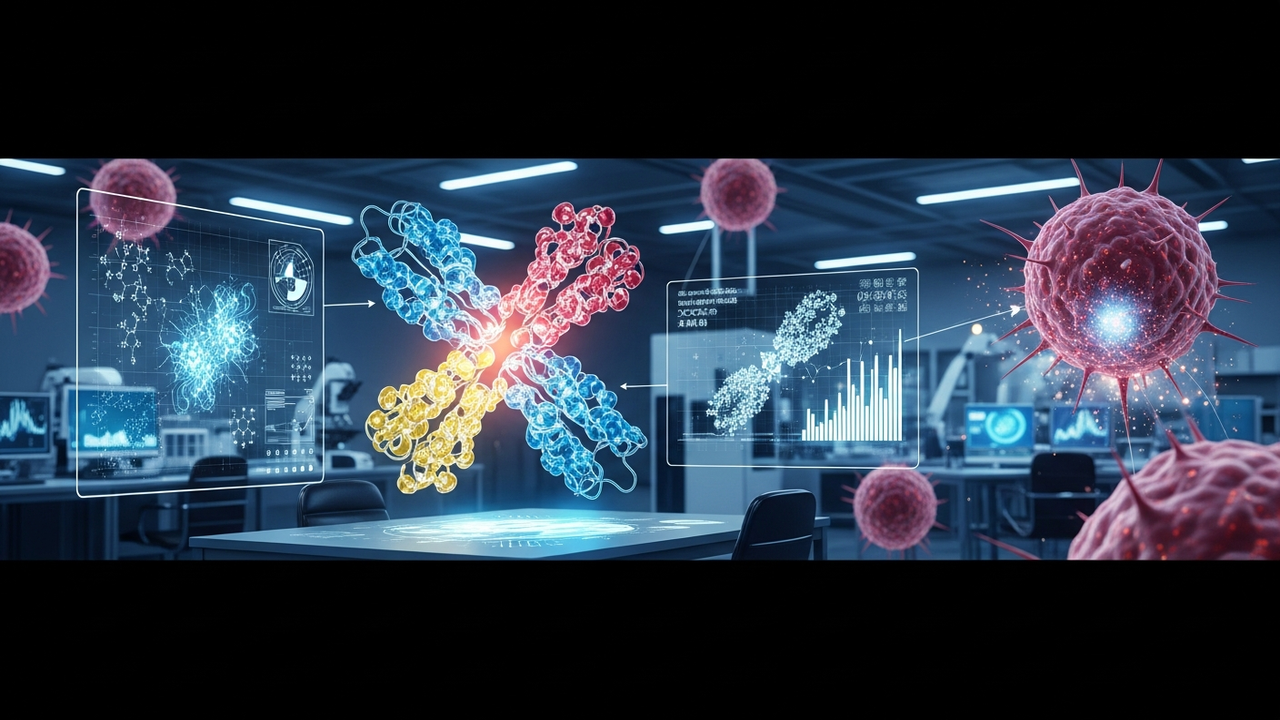
As Antibody-Drug Conjugates (ADCs) expand their clinical applications, improving tumor specificity and reducing systemic toxicity remain critical challenges. Research highlighted on Academia.edu demonstrates that computationally optimized bispecific antibodies (BsAbs) represent a promising new strategy to significantly enhance the tumor selectivity of ADCs. This approach is expected to restrict ADC payload delivery predominantly to tumor cells, thereby mitigating off-target toxic effects on healthy tissues.
Technical and Theoretical Details
Conventional ADCs target a single tumor-associated antigen. However, many of these antigens are expressed at low levels on normal tissues, posing a risk of off-target toxicity (on-target, off-tumor effects). Bispecific antibodies, with their ability to simultaneously bind two different antigens, can enhance binding specificity and avidity by recognizing multiple distinct targets co-expressed on cancer cells.
The study utilized computational models to illustrate that precise optimization of binding affinities for both targets in a bispecific antibody design is crucial for maximizing ADC tumor selectivity. Specifically, the models suggested that setting a high affinity for one target and a moderate affinity for the second target could achieve ‘avidity-driven selectivity.’ This enables highly efficient binding predominantly to tumor cells while minimizing binding to normal cells. The models incorporated factors such as antibody binding kinetics, antigen expression levels, and pharmacokinetics within the tumor microenvironment.
This strategy is particularly valuable for cancers that co-express multiple antigens, or those facing challenges of low single-antigen expression or antigen heterogeneity. Optimized bispecific ADCs are expected to improve drug delivery efficiency to cancer cells and concurrently reduce systemic side effects, thereby broadening the therapeutic window for these powerful agents.
Background and Industry Context
ADCs have rapidly evolved into one of the most promising modalities in cancer therapy, with several agents already approved and demonstrating clinical success. However, their efficacy is still limited by the inherent toxicity of their potent payloads. Severe adverse events due to off-target toxicity remain a major concern in ADC development. Bispecific antibody technology, originally developed to recruit immune cells to cancer cells, is now gaining attention as a platform to enhance the specificity and safety profile of ADCs.
Strategic Significance and Outlook
Computationally designed and optimized bispecific ADCs hold significant promise for advancing precision medicine in future cancer treatments. This approach could enable the development of safer and more effective ADCs, particularly improving patient outcomes in hard-to-treat solid tumors. Future work will involve further preclinical validation, exploration of optimal target combinations, and rigorous evaluation of efficacy and safety in actual clinical trials. This technology is poised to be key in maximizing the ‘magic bullet’ potential of ADCs.
Source: https://www.academia.edu/3071-2521/2/3/10.20935/AcadDrug8407
Get our weekly technology intelligence — free
Receive an infographic that lets you judge at a glance whether each field’s analysis report is worth reading.
Subscribe Free — Weekly Tech Intelligence
By subscribing, you’ll receive Troy-Technical’s weekly technology intelligence newsletter.
- Your email and selected fields are used only to deliver the newsletter.
- We never share your information with third parties.
- You can unsubscribe anytime via the link in each email.
See our Privacy Policy for details.
Takes about a minute · Unsubscribe anytime








Comments