Key Findings
Lipid nanoparticles (LNPs) represent the leading and most clinically validated platform for RNA drug delivery, demonstrating superior capabilities in protecting nucleic acids from enzymatic degradation and facilitating their effective cellular uptake. A critical factor determining therapeutic efficacy is the ability of LNPs to enable endosomal escape once internalized by cells, a process LNPs are now optimizing with increasing precision. This continuous refinement is expanding the therapeutic potential of RNA-based medicines across various disease areas.
Technical / Clinical Details
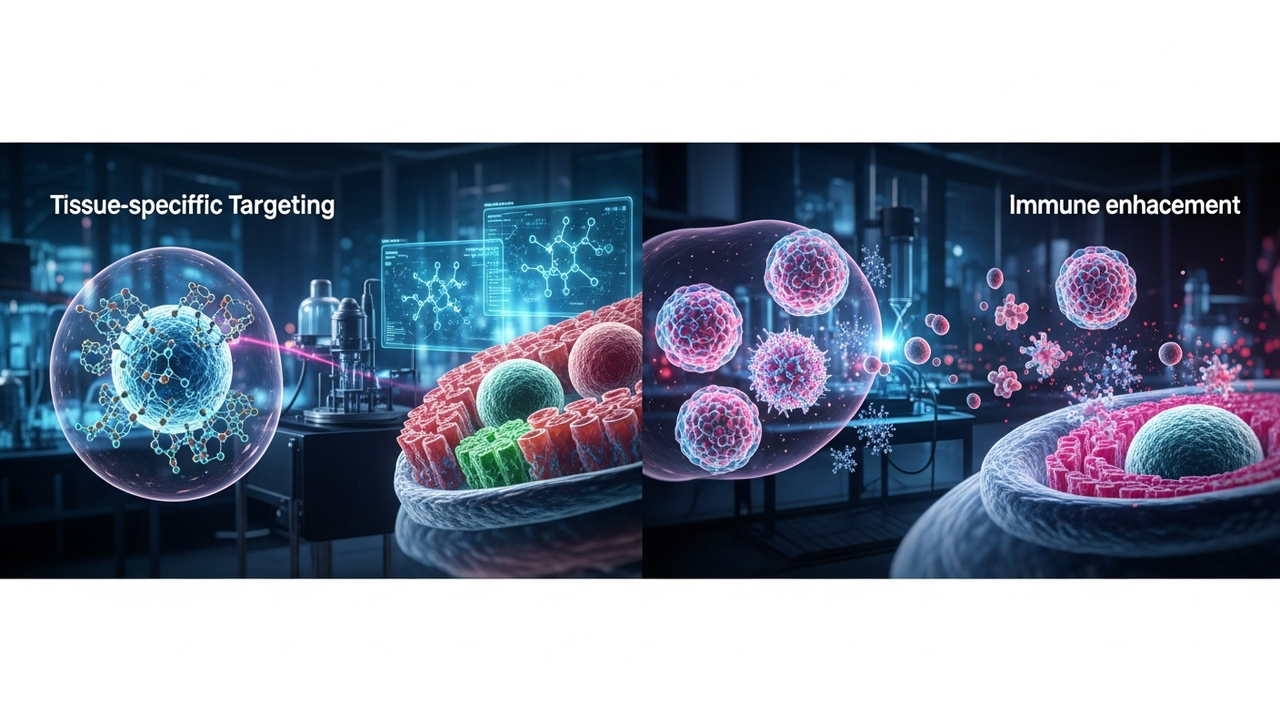
LNP formulations typically comprise ionizable lipids, helper lipids, cholesterol, and PEGylated lipids, with the precise composition dictating their stability, biodistribution, cellular uptake, and crucially, endosomal escape efficiency. Current research vigorously pursues enhancing endosomal escape by developing novel lipid chemistries, which in turn boosts RNA release into the cytoplasm and amplifies therapeutic effects. A significant area of focus is achieving tissue-specific targeting to organs beyond the liver—such as the lungs, spleen, brain, and solid tumors—through surface modifications and refined lipid compositions. This targeted delivery capability promises to unlock new applications for localized disease treatment and broaden systemic therapeutic interventions. Furthermore, efforts are underway to optimize the immunoprofile of LNPs, aiming to either suppress undesirable immune responses or strategically induce them for vaccine applications, thus fine-tuning their biological interactions.
Background & Context
The success of RNA therapeutics, particularly mRNA vaccines and siRNA therapies, has underscored the indispensable role of LNP technology. However, the current LNP delivery landscape is largely confined to highly efficient liver targeting, presenting a significant barrier for applications in other disease areas that require broader tissue distribution. Overcoming this limitation is a global priority, with substantial investments flowing into LNP innovation from both academic and industrial sectors. Diseases such as cancer, requiring precise tumor targeting, and neurodegenerative disorders, necessitating blood-brain barrier (BBB) penetration, represent high unmet medical needs where advanced LNP technology could be game-changing. The evolution of LNP technology is widely recognized as a critical determinant for the success of next-generation RNA therapeutics.
Strategic Significance & Outlook
The ongoing advancements in LNP technology are set to dramatically expand the therapeutic reach of RNA medicines, offering new hope for numerous challenging diseases. Successful improvements in endosomal escape and tissue-specific targeting could establish RNA therapeutics as standard-of-care across oncology, autoimmune disorders, and neurodegenerative conditions. The optimization of LNP immunoprofiles will further diversify therapeutic options, particularly for autoimmune diseases, by enabling the development of safer and more effective drugs. Looking ahead, the ability to deliver genome-editing technologies, like CRISPR-Cas9 mRNA, with cell specificity via LNPs holds promise for opening new frontiers in precision medicine and addressing genetic diseases at their root cause.
Source: https://insidetx.com/applications/nanoparticle-platforms/lipid-nanoparticles-lnps/
Get our weekly technology intelligence — free
Receive an infographic that lets you judge at a glance whether each field’s analysis report is worth reading.
Subscribe Free — Weekly Tech Intelligence
By subscribing, you’ll receive Troy-Technical’s weekly technology intelligence newsletter.
- Your email and selected fields are used only to deliver the newsletter.
- We never share your information with third parties.
- You can unsubscribe anytime via the link in each email.
See our Privacy Policy for details.
Takes about a minute · Unsubscribe anytime









Comments