
Key Findings
India’s semiconductor manufacturing ecosystem is undergoing a remarkable expansion in 2026, bolstered by a substantial government commitment of ₹1.275 trillion (approximately $15.36 billion USD) through the ‘Semicon 2.0’ program. This initiative has already seen 13 semiconductor-related projects either initiated or become operational domestically, notably including the launch of the first ATMP/OSAT (Assembly, Test, Marking, and Packaging / Outsourced Semiconductor Assembly and Test) facility in Rajasthan.
Technical & Business Details
The Indian government’s Semicon 2.0 program is designed to provide comprehensive support across the entire semiconductor supply chain, encompassing several key areas:
- **Chip Design and Manufacturing:** Strengthening domestic semiconductor design capabilities and supporting the establishment of advanced manufacturing facilities.
- **Display Fabrication:** Enhancing local manufacturing capacity for display panels used in smartphones and consumer electronics.
- **Advanced Packaging:** Promoting the development and implementation of cutting-edge packaging technologies, including 2.5D/3D, heterogeneous integration, and hybrid bonding.
- **Semiconductor Equipment and Special Materials:** Fostering domestic production capabilities for essential manufacturing equipment and specialized materials.
- **Research & Development and Talent Development:** Supporting R&D in semiconductor technologies and nurturing a highly skilled workforce of engineers and technicians.
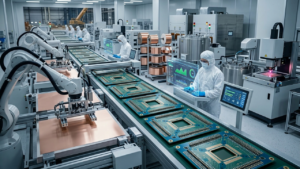
The operational ATMP/OSAT facility in Rajasthan represents a critical step for India in transforming from merely a semiconductor consumer to a hub for manufacturing and innovation. These facilities provide back-end services such as chip assembly, testing, marking, and packaging, addressing the needs of domestic semiconductor companies and the localization requirements of international firms.
Background & Context
The global trends of geopolitical realignment in semiconductor supply chains and the drive for greater resilience are key motivators for the Indian government’s prioritization of the semiconductor industry as a national strategic imperative. India possesses a vast domestic market and a rich pool of IT talent. By establishing a robust semiconductor ecosystem, the country aims to accelerate economic growth and enhance its technological self-reliance. The success of the Semicon India Mission is considered indispensable for India to solidify its position as a digital economic powerhouse and a significant player in the global technology race.
Strategic Significance & Outlook
The Semicon 2.0 program and its accompanying large-scale investments are expected to provide sustained momentum for the growth of India’s semiconductor industry. Strengthening domestic manufacturing, particularly in advanced packaging, will enhance India’s competitiveness in emerging technology sectors such as AI, IoT, and 5G. With multiple semiconductor projects underway, India is anticipated to significantly increase its importance in the global semiconductor supply chain over the coming years. This will enable domestic supply of advanced semiconductor products, leading to reduced import dependence and strengthened economic security.
Get our weekly technology intelligence — free
Receive an infographic that lets you judge at a glance whether each field’s analysis report is worth reading.
Subscribe Free — Weekly Tech Intelligence
By subscribing, you’ll receive Troy-Technical’s weekly technology intelligence newsletter.
- Your email and selected fields are used only to deliver the newsletter.
- We never share your information with third parties.
- You can unsubscribe anytime via the link in each email.
See our Privacy Policy for details.
Takes about a minute · Unsubscribe anytime








Comments