Key Findings
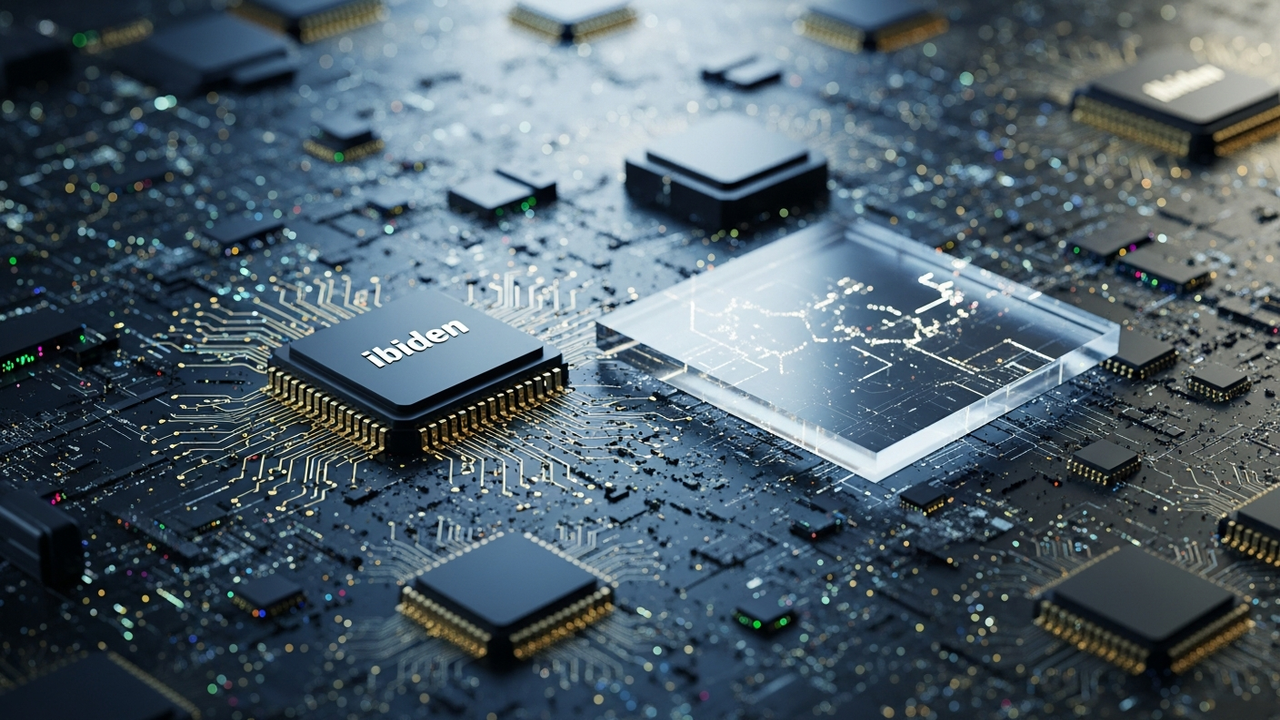
The advanced package substrate market, a critical component determining the performance of Artificial Intelligence (AI) semiconductors, is witnessing intense activity driven by massive investments and technological competition. Japan’s Ibiden maintains a dominant leadership position with approximately 35% market share, committing about 500 billion JPY (around $3.2 billion USD) over three fiscal years (FY2026-2028) to boost its production capacity for high-performance IC package substrates for AI servers. In response, Samsung Electro-Mechanics is challenging Ibiden with next-generation glass substrates, while significant technical hurdles for these new materials are becoming evident.
Technical & Market Details
As AI chip performance continues to advance, advanced packaging substrates integrating CPUs, GPUs, and High-Bandwidth Memory (HBM) demand higher wiring density, superior electrical characteristics, and enhanced thermal management capabilities. In the current market, Japan’s Ibiden holds a leading share of approximately 35%, followed by Shinko Electric Industries at about 18%, and Taiwan’s Unimicron at approximately 14%, with these top-tier companies driving market trends. To meet the surging demand, Ibiden plans to invest a total of approximately 500 billion JPY over three years (FY2026-2028) into increasing its production capacity for high-performance IC package substrates for AI servers. This investment will primarily focus on enhancing the performance and expanding the production capacity of FC-BGA (Flip Chip-Ball Grid Array) substrates.
Meanwhile, South Korea’s Samsung Electro-Mechanics is aggressively pursuing a larger presence in this market, challenging Ibiden not only with high-performance FC-BGA products but also by focusing on next-generation glass substrate technology. Glass substrates offer several advantages over organic substrates, including superior dimensional stability, a lower coefficient of thermal expansion (CTE), and lower dielectric loss, making them highly promising for larger AI chips and high-density wiring. Samsung Electro-Mechanics and Shinko Electric Industries are accelerating their technological development and market entry in this glass substrate segment.
However, significant barriers still exist for the practical implementation of glass substrate technology. Ibiden predicts that technical challenges related to Through-Glass Vias (TGV) will not be resolved until 2030, making the full-scale commercialization of CoPoS (Chip on Package on Substrate) using glass interposers difficult before then. Furthermore, as AI chip package sizes increase, warpage issues in conventional organic substrates are becoming severe, primarily due to CTE mismatches between materials like ABF (Ajinomoto Build-up Film) and silicon wafers.
- **Ibiden’s Investment:** Approximately $3.2 billion over three years for AI server IC package substrates, strengthening FC-BGA capacity.
- **Samsung Electro-Mechanics’ Challenge:** Competing with Ibiden using FC-BGA and next-generation glass substrates.
- **Glass Substrate Technical Hurdles:** Predicted immaturity of TGV technology and delayed CoPoS commercialization.
- **Organic Substrate Limits:** Increasing warpage issues in substrates due to larger AI chip packages.
Background & Context
The continuous performance enhancement of AI chips constantly pushes the boundaries of packaging technology. Traditional packaging methods are becoming inadequate to address the heat, signal loss, and power efficiency issues arising from the integration of AI accelerators and HBM. Consequently, the evolution of organic substrates and the transition to new materials like glass substrates have become urgent challenges for the entire industry. Japanese and Korean companies are particularly competitive in leading this technological race, and their movements significantly impact the global semiconductor supply chain.
Strategic Significance & Outlook
Ibiden’s substantial investment is expected to maintain its dominance in the FC-BGA substrate market for the foreseeable future. Concurrently, the development race for glass substrate technology, spearheaded by Samsung Electro-Mechanics, could reshape the packaging market landscape in the medium to long term. Once challenges in glass substrate technologies like TGV and CoPoS are overcome, AI chip performance will further improve, offering new design freedoms. The industry will continue to navigate the balance between the limitations of organic substrates and the potential of new materials to find optimal packaging solutions that meet the demands of the AI era. This competition will be a driving force for AI technology evolution and the sustainable growth of the semiconductor industry.
Source: https://www.mk.co.kr/en/business/12101118
Get our weekly technology intelligence — free
Receive an infographic that lets you judge at a glance whether each field’s analysis report is worth reading.
Subscribe Free — Weekly Tech Intelligence
By subscribing, you’ll receive Troy-Technical’s weekly technology intelligence newsletter.
- Your email and selected fields are used only to deliver the newsletter.
- We never share your information with third parties.
- You can unsubscribe anytime via the link in each email.
See our Privacy Policy for details.
Takes about a minute · Unsubscribe anytime





Comments