
Key Findings
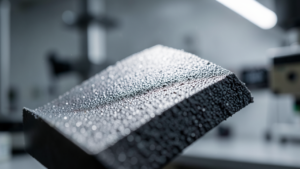
Researchers at The University of Texas at Austin have developed a groundbreaking 3D-printable material that replicates the human body’s tissue capabilities to recognize, sort, and filter specific molecules. This flexible and highly responsive new material holds diverse potential applications, including self-healing properties, the construction of advanced soft robots, and the recovery of critical minerals.
Technical / Clinical Details
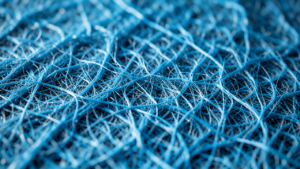
The new 3D-printable material is primarily composed of hydrogel-based polymers that react to specific chemical stimuli and physical changes in an aqueous environment. Its structure is engineered to mimic the extracellular matrix of biological tissues, enabling it to selectively bind to or alter its permeability for specific molecules, such as proteins, ions, or contaminants. For instance, when applied to a damaged site, its self-healing properties allow microscopic cracks to automatically repair, maintaining the material’s integrity. In the medical field, this material can serve as a scaffold for growing new tissues and organs, promoting cell proliferation and differentiation. For soft robotics, its flexibility and responsiveness can be leveraged to construct artificial muscles or grippers that mimic the movements of human skin or muscle. Furthermore, its ability to selectively adsorb specific metal ions suggests applications in systems for efficiently recovering critical minerals like lithium, cobalt, and rare earth elements from wastewater or the environment.
Background & Context
Modern materials science is evolving from single-function materials to ‘smart materials’ that possess multiple functionalities. Biomimetic materials, in particular, draw inspiration from nature’s efficient and adaptive systems to drive innovation in medicine, robotics, and environmental engineering. Previous materials often struggled to simultaneously achieve a combination of properties like flexibility, strength, responsiveness, and biocompatibility, but this new material overcomes these challenges. Its compatibility with 3D printing technology further extends its applicability, allowing for rapid fabrication of complex shapes and customized structures, which is a major advantage over traditional manufacturing methods.
Strategic Significance & Outlook
This multi-functional 3D-printable material has the potential to revolutionize medical technology, robotics, and environmental protection. In medicine, it will accelerate the development of personalized regenerative medicine and drug delivery systems, improving patient treatment outcomes. Soft robots built with this material will enable safer human-robot interaction and are particularly promising for delicate tasks or operations in hazardous environments. Moreover, the recovery of critical minerals is of paramount importance for resource sustainability and national economies, and this technology will contribute to achieving a circular economy. The research team plans further studies toward scaling up and commercializing this material, anticipating a broad impact on global resource management and advanced technological development.
Get our weekly technology intelligence — free
Receive an infographic that lets you judge at a glance whether each field’s analysis report is worth reading.
Subscribe Free — Weekly Tech Intelligence
By subscribing, you’ll receive Troy-Technical’s weekly technology intelligence newsletter.
- Your email and selected fields are used only to deliver the newsletter.
- We never share your information with third parties.
- You can unsubscribe anytime via the link in each email.
See our Privacy Policy for details.
Takes about a minute · Unsubscribe anytime







Comments