Key Findings
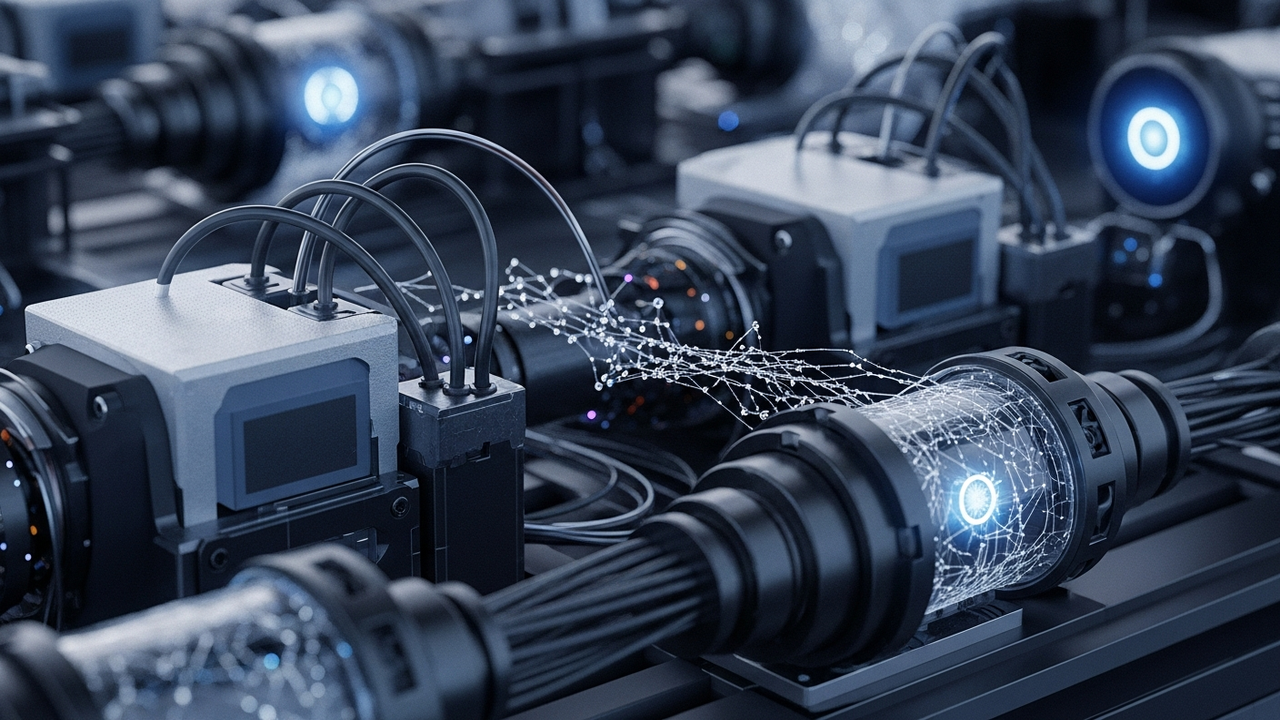
An article in EDN raises a fundamental challenge for physical AI systems: why they can ‘see’ (visually perceive) everything but ‘feel’ (sense touch and pressure) nothing. The article attributes this ‘missing sense’ primarily to the limitations of piezoelectric materials. While piezoelectric materials excel in vibration detection, their inability to accurately measure static forces is identified as a major factor hindering the reliability and interaction capabilities of physical AI.
Technical / Clinical Details
Piezoelectric materials exploit the piezoelectric effect, generating an electrical charge when mechanical stress is applied, and conversely, deforming when an electric field is applied. This property is widely used in vibration sensors, actuators, and ultrasonic devices. However, piezoelectric materials are ill-suited for long-term static pressure measurements because the charge generated by a constant (static) force is either transient or very weak, due to a phenomenon known as ‘charge leakage’ over time. Consequently, it is challenging to obtain precise static sensory feedback—such as the pressure a robot exerts when ‘gripping’ an object or the subtle contact forces a soft robot experiences during environmental interaction—using piezoelectric materials alone. The article emphasizes that overcoming this challenge requires a multidisciplinary integration of new material development, more sophisticated signal processing techniques, AI-driven data interpretation, and holistic system engineering.
Background & Context
While artificial intelligence (AI) has made tremendous strides in ‘seeing’ and ‘hearing’ capabilities like image and speech recognition, tactile information (‘touching’ and ‘feeling’) is indispensable for robotics and IoT devices that interact directly with the physical world. For safe and effective physical interaction in collaborative robots in manufacturing, surgical assistance robots in healthcare, or smart home devices, highly sensitive and reliable tactile sensors are essential. Current physical AI systems, which predominantly rely on visual data, risk unexpected collisions with obstacles, damage to objects, or imprecise operations due to the lack of tactile feedback. Therefore, an interdisciplinary approach spanning materials science, sensor technology, AI, and robotics is an urgent priority for the development of next-generation physical AI systems, seeking to bridge the gap between perception and physical interaction.
Strategic Significance & Outlook
Overcoming the limitations of piezoelectric materials and imparting ‘touch’ to physical AI systems is key to significantly enhancing the versatility and safety of robotics. In the future, new types of sensor materials (e.g., capacitive sensors, resistive sensors, combinations of fiber optic and piezoelectric sensors) capable of accurately measuring a wider range of forces (both dynamic and static) are expected to advance. AI will play a crucial role in integrating data from multiple sensors and interpreting contextual tactile information, enabling robots to perform more delicate and intelligent physical interactions. This progress will open the door to automated manufacturing lines, remote surgery, search-and-rescue robots, and more natural human-robot interaction (HRI), leading to a future where physical AI is deeply integrated into all aspects of our lives, not just by ‘seeing’ but also by ‘feeling,’ ultimately making these systems more intuitive and safe for human-centric environments.
Source: https://www.edn.com/missing-sense-why-physical-ai-can-see-everything-and-feel-nothing/
Get our weekly technology intelligence — free
Receive an infographic that lets you judge at a glance whether each field’s analysis report is worth reading.
Subscribe Free — Weekly Tech Intelligence
By subscribing, you’ll receive Troy-Technical’s weekly technology intelligence newsletter.
- Your email and selected fields are used only to deliver the newsletter.
- We never share your information with third parties.
- You can unsubscribe anytime via the link in each email.
See our Privacy Policy for details.
Takes about a minute · Unsubscribe anytime





Comments