Background
China, being the dominant force in the electric vehicle (EV) and battery manufacturing industries, is at the forefront of the global race to develop and commercialize solid-state batteries (SSBs). SSBs promise a transformative leap over conventional lithium-ion technology, offering superior energy density, enhanced safety, and extended cycle life. However, translating these laboratory-scale successes into GWh-scale mass production presents formidable technical and manufacturing challenges. The China International Battery Fair (CIBF) 2026 served as a critical platform to showcase the latest advancements and identify the remaining bottlenecks in China’s pursuit of solid-state battery dominance.
Key Findings / Results
The CIBF2026 event underscored that while China’s solid-state battery industry is making substantial strides, it is still in a critical testing phase, particularly concerning mass production scalability. Key developments reported include:
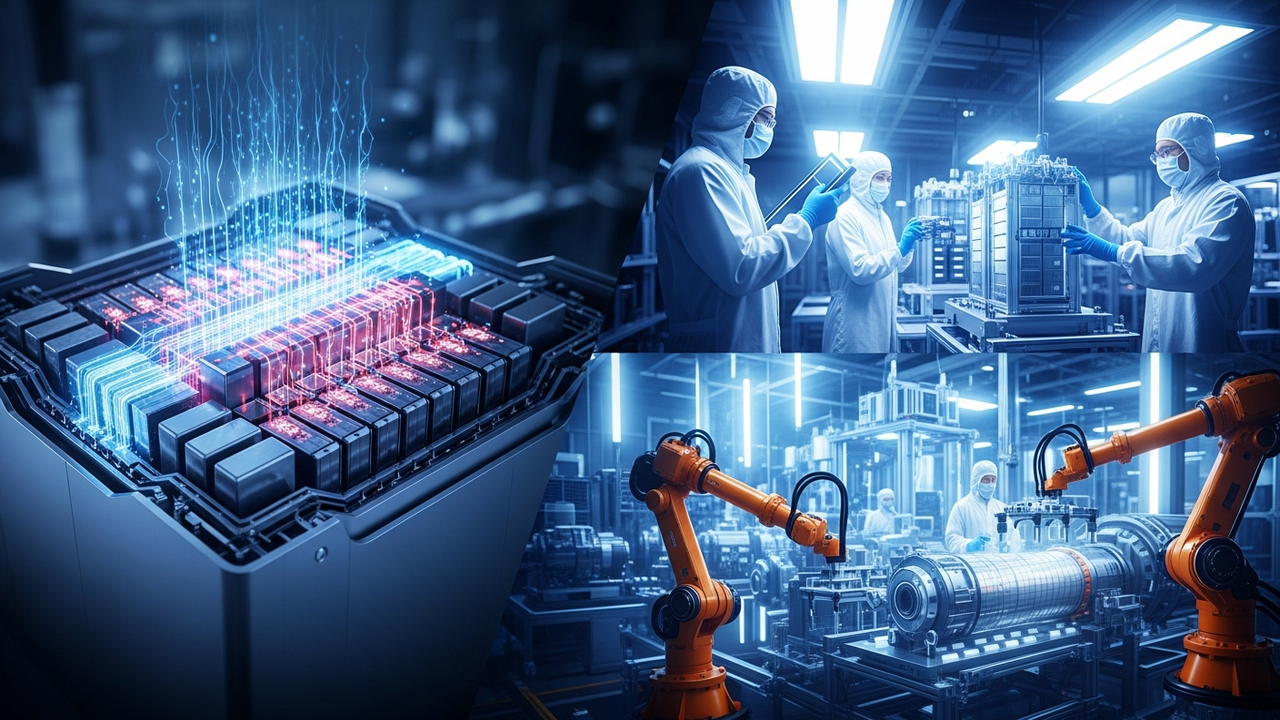
- Pure Lithium New Energy: This company has successfully established a 500 MWh (megawatt-hour) production line, signifying an important transition from pilot-scale to initial commercial manufacturing capabilities for solid-state batteries. This capacity is a crucial step towards understanding the complexities of scaling up production.
- Gotion High-Tech: Gotion’s hybrid solid-liquid (semi-solid) batteries have achieved design approvals from several automotive manufacturers. This semi-solid approach is seen as a pragmatic interim solution, bridging the gap between liquid-electrolyte and full solid-state technologies. However, the report indicates that GWh-scale production for pure solid-state cells remains a significant challenge for Gotion.
- Sinoma Science & Technology: A notable innovation came from Sinoma, which unveiled a 20µm (micrometer) sulfide solid electrolyte film designed for compatibility with existing liquid lithium-ion battery production lines. This is a game-changer for manufacturing process compatibility, potentially reducing the massive capital investment typically required for entirely new SSB production infrastructure and accelerating adoption by leveraging existing facilities.
- Industry-Wide Challenges: The exhibition highlighted common industry challenges, including the high cost of solid electrolyte materials, the need to reduce interfacial resistance between electrodes and electrolytes, and ensuring consistent quality and stability in large-scale production.
Technical Significance & Outlook
The CIBF2026 report demonstrates China’s aggressive push to lead the commercialization of solid-state batteries. The establishment of initial production capacities by companies like Pure Lithium New Energy and the market acceptance of Gotion’s semi-solid solutions illustrate tangible progress in bringing these technologies closer to market. Sinoma Science & Technology’s breakthrough in developing a sulfide solid electrolyte film compatible with existing production lines is particularly significant. This innovation has the potential to drastically lower the barriers to entry for SSB manufacturing, making mass production more economically viable and faster to implement. From a materials perspective, this emphasizes the need for solid electrolyte formulations that not only offer high performance but also integrate seamlessly with industrial manufacturing processes, potentially driving down costs associated with new capital expenditure. The coming years will see intensified efforts in optimizing material synthesis, developing robust interface engineering, and standardizing production techniques to achieve the GWh-scale output necessary for widespread adoption in the EV market.


Comments