Background
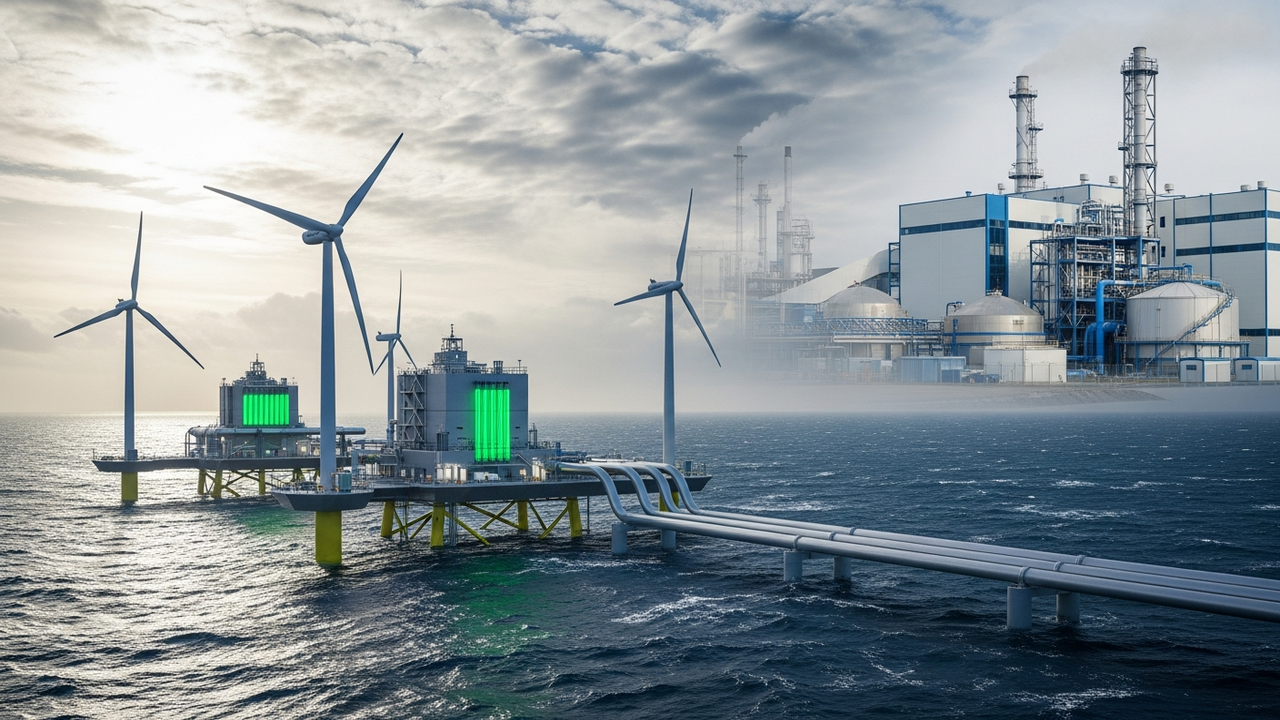
Offshore hydrogen production is rapidly gaining traction as a strategic solution to mitigate land-use constraints for renewable energy installations and address the logistical complexities of transporting hydrogen from remote onshore production sites. The PosHYdon project serves as a crucial testbed for the transition of existing oil and gas infrastructure to support the burgeoning hydrogen economy, particularly vital in regions with abundant offshore wind resources such as the North Sea. Similarly, Waste-to-Hydrogen (W2H) technology, as demonstrated by the Htwo Energy Cheongju plant, presents an innovative solution to the dual global challenges of escalating waste generation and increasing energy demand. This approach is particularly promising for urban centers, offering sustainable infrastructure for the rapidly growing fleet of fuel cell electric vehicles (FCEVs). The European Commission continues to support energy infrastructure development through its Hydrogen Mechanism, with a call for interest for its next round due by September 7, 2026, indicating sustained policy drive for hydrogen integration.
Key Findings
The PosHYdon pilot project, a global pioneer integrating offshore wind power, natural gas infrastructure, and offshore hydrogen production, has successfully initiated green hydrogen production on the Q13a-A platform in the North Sea, operated by Eni Energy Netherlands. This marks a significant milestone in repurposing existing offshore infrastructure for clean energy production. Simultaneously, Hyundai Motor Group has launched Htwo Energy Cheongju in South Korea, an integrated waste-to-hydrogen (W2H) production and refueling facility, marking a major stride in circular economy applications for hydrogen.
Technical Details
The PosHYdon project employs an advanced Proton Exchange Membrane (PEM) electrolysis system to convert desalinated seawater into green hydrogen, powered directly by dedicated offshore wind turbines. This innovative configuration establishes a viable model for decarbonizing existing oil and gas infrastructure by repurposing assets for clean hydrogen production, thereby optimizing resource utilization. In South Korea, Hyundai Motor Group’s Htwo Energy Cheongju facility utilizes cutting-edge Waste-to-Hydrogen (W2H) technology. This process involves gasifying urban waste at high temperatures to produce syngas, from which high-purity hydrogen is extracted. The facility is designed to process approximately 3,000 tons of urban waste annually, yielding about 500 tons of high-purity hydrogen—enough to fuel approximately 1,200 fuel cell electric vehicles per year. This dual benefit simultaneously addresses critical challenges in waste management and clean energy supply.
Strategic Implications and Outlook
The successful operation of the PosHYdon project conclusively validates the technical and operational feasibility of large-scale green hydrogen production offshore, poised to accelerate the formation of critical hydrogen hubs in wind-rich maritime regions. Concurrently, Hyundai’s Htwo Energy Cheongju facility establishes a pioneering paradigm for resource circulation, effectively converting urban waste into valuable clean energy and contributing significantly to a more sustainable societal model. These parallel technological advancements fundamentally diversify the hydrogen supply chain, providing crucial impetus to the global energy transition. The concurrent progress across both offshore and waste-derived hydrogen production pathways is critically important for the widespread societal implementation and long-term economic viability of the emerging hydrogen economy, offering multiple robust avenues for achieving ambitious decarbonization goals.
Get our weekly technology intelligence — free
Receive an infographic that lets you judge at a glance whether each field’s analysis report is worth reading.
Subscribe Free — Weekly Tech Intelligence
By subscribing, you’ll receive Troy-Technical’s weekly technology intelligence newsletter.
- Your email and selected fields are used only to deliver the newsletter.
- We never share your information with third parties.
- You can unsubscribe anytime via the link in each email.
See our Privacy Policy for details.
Takes about a minute · Unsubscribe anytime







Comments