Key Findings
The biopharmaceutical manufacturing industry is rapidly transitioning to continuous bioprocessing, a paradigm shift poised to dramatically enhance productivity, slash manufacturing costs, and substantially reduce facility footprints. This innovative approach is yielding significant gains, particularly in the production of monoclonal antibodies (mAbs), offering numerous advantages over traditional batch processes.
Technical / Clinical Details
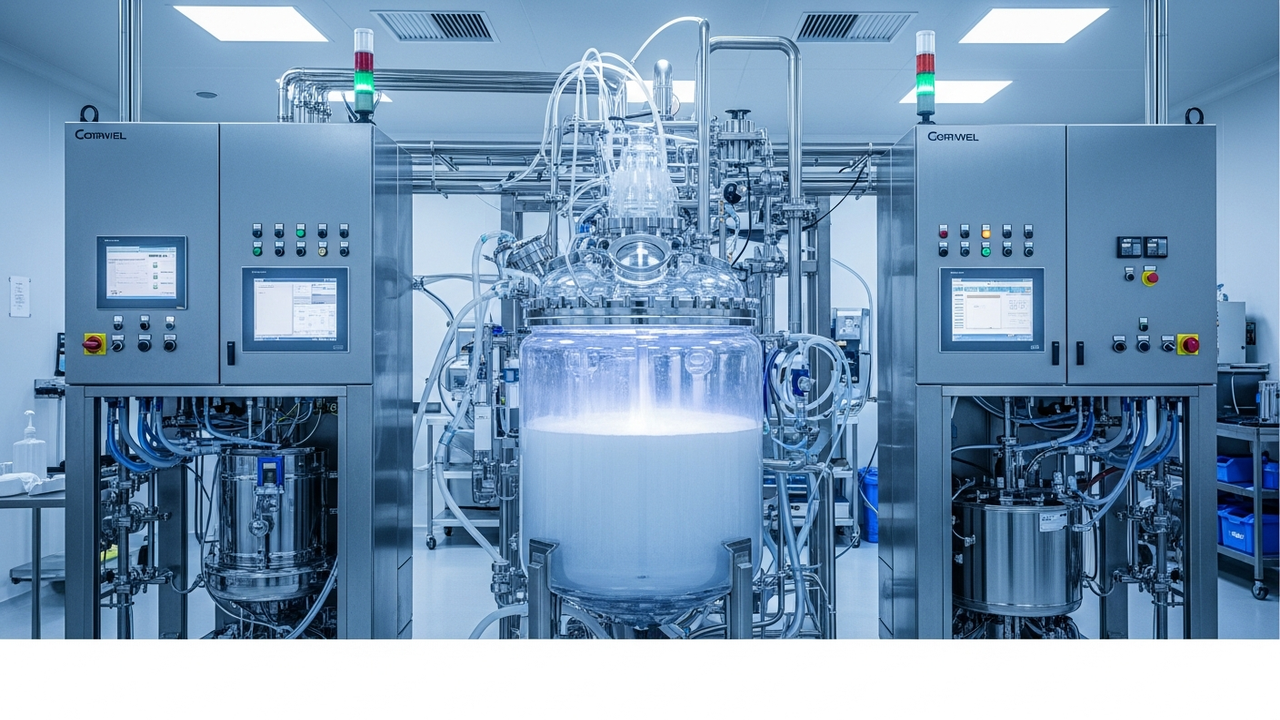
Continuous bioprocessing integrates upstream cell culture and downstream purification operations into a seamless, uninterrupted workflow. A highlight is the enhanced continuous bioprocess (ICB) mAb platform, which combines a 500-liter single-use perfusion bioreactor with a fully continuous downstream process. In this system, cells are cultured at high densities within the bioreactor, with continuous media supply and product removal, leading to significantly higher volumetric productivity compared to batch cultures. The adoption of single-use technologies eliminates the need for complex cleaning and sterilization, reducing turnaround times and mitigating cross-contamination risks. Perfusion culture, by enabling prolonged high-density cell cultivation, dramatically boosts yields, allowing for equivalent or greater production volumes in smaller facilities, thus cutting capital expenditure.
Background & Context
The global biologics market is expanding rapidly, with biologics becoming increasingly critical therapeutic options for various diseases, including cancer and autoimmune conditions. Concurrently, intense biosimilar competition is pressuring the industry to reduce manufacturing costs and improve efficiency. Against this backdrop, the International Council for Harmonisation (ICH) Q13 guideline provides a global framework for continuous manufacturing concepts and quality management, offering a clear pathway for pharmaceutical companies to adopt continuous bioprocesses. Traditional batch manufacturing has historically faced limitations in flexibility and has been associated with time-consuming and costly scale-up processes.
Strategic Significance & Outlook
The widespread adoption of continuous bioprocessing is set to fundamentally transform biopharmaceutical manufacturing efficiency, enabling faster market entry for new drugs and cost reductions for existing ones. This will ideally lead to broader patient access to high-quality biologics at more affordable prices. In the future, integration with AI and digital twin technologies promises further optimization, making fully automated, smart biomanufacturing facilities a tangible reality. This technological revolution will also impact the business models of Contract Development and Manufacturing Organizations (CDMOs), requiring more flexible and efficient manufacturing solutions. Investors are keenly observing continued technological investment and market expansion in this dynamic sector.
Get our weekly technology intelligence — free
Receive an infographic that lets you judge at a glance whether each field’s analysis report is worth reading.
Subscribe Free — Weekly Tech Intelligence
By subscribing, you’ll receive Troy-Technical’s weekly technology intelligence newsletter.
- Your email and selected fields are used only to deliver the newsletter.
- We never share your information with third parties.
- You can unsubscribe anytime via the link in each email.
See our Privacy Policy for details.
Takes about a minute · Unsubscribe anytime






Comments