Key Findings
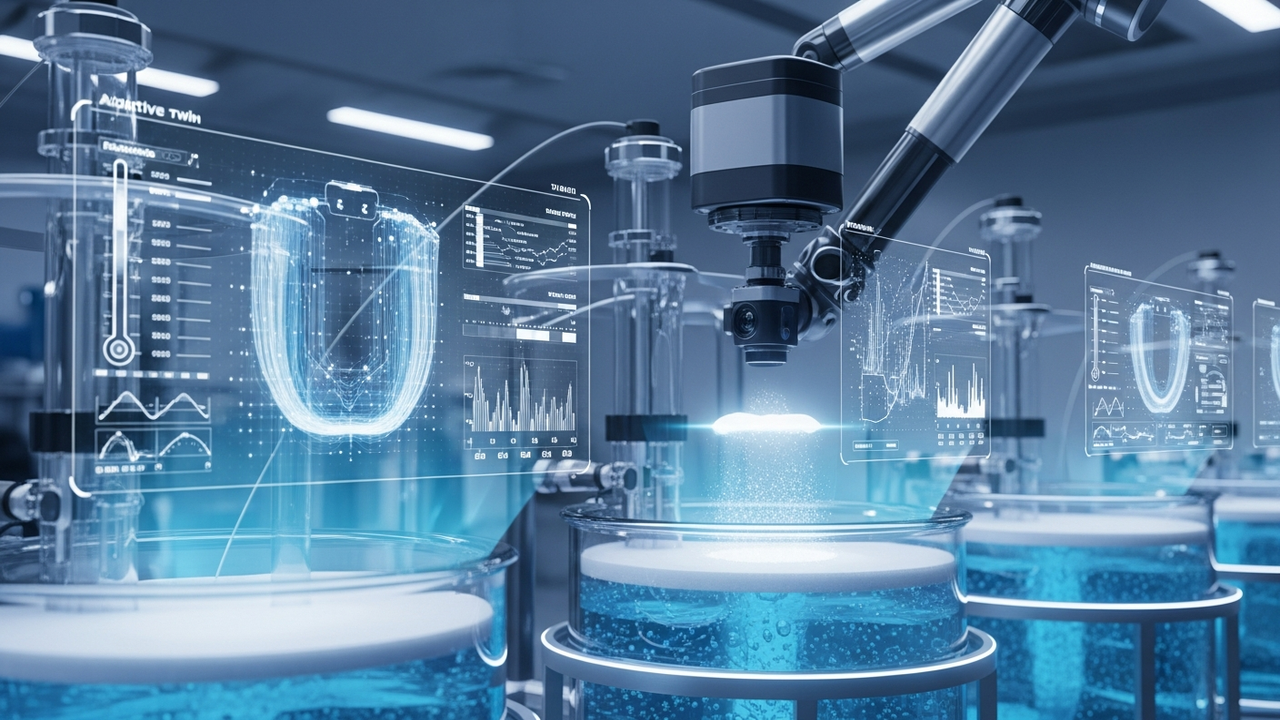
A4BEE has unveiled a proof-of-concept (PoC) for an adaptive digital twin and a computer vision technology enabling non-invasive foam management in bioreactor control. These innovations mark a significant step towards achieving autonomous control in bioprocesses, opening new frontiers for data-driven bioprocess optimization.
Technical / Clinical Details
The technologies presented by A4BEE aim to address multiple challenges in bioprocess manufacturing:
- Adaptive Digital Twin: This digital twin acts as a virtual replica that mimics the behavior of a physical bioreactor in real-time. It autonomously learns from process data, continually improving its predictive capabilities. This allows operators to simulate various scenarios in a virtual environment, identify optimal operating conditions, and proactively predict potential issues such as yield reductions or contamination. Integrating Process Analytical Technology (PAT), the digital twin serves as a powerful tool for gaining deeper insights into complex bioprocess dynamics.
- Computer Vision for Non-Invasive Foam Management: Foaming within bioreactors is a common problem in cell culture processes, potentially leading to reduced bioreactor capacity, sensor fouling, and physical stress on cells. Traditional antifoam agents can have adverse effects on downstream processes. A4BEE’s computer vision technology non-invasively monitors foam levels in real-time, using image recognition algorithms to accurately quantify foam. This enables more precise and efficient foam control, allowing for defoaming measures to be applied only when necessary.
These technologies contribute to enhancing the autonomy and robustness of bioprocess manufacturing, thereby improving the consistency of product quality and yield.
Background & Context
Biopharmaceutical manufacturing is a complex process demanding high levels of expertise and stringent control. Traditional manufacturing processes often involve significant manual intervention, leading to process variability and risks of human error. With increasing pressure to accelerate drug development and reduce costs, the industry is pushing for automation and digitalization, seeking more efficient and reliable manufacturing solutions. Advanced technologies such as AI, digital twins, and computer vision are crucial components for realizing this transformation and are considered indispensable for building next-generation ‘smart factories.’
Strategic Significance & Outlook
The adaptive digital twin and computer vision technologies presented by A4BEE represent a crucial step towards bioprocess autonomy and have the potential to significantly impact the biopharmaceutical manufacturing industry. As these technologies further develop and are widely adopted, process optimization will accelerate, reducing product development lead times and costs. In the future, they are expected to contribute to the realization of ‘self-driving labs’ and ‘smart factories,’ where AI fully autonomously manages bioprocesses with minimal human intervention. Investors are keen on the disruptive impact these innovative technologies can have on the entire industry and the new market opportunities they will create, including stabilizing the supply of biopharmaceuticals and accelerating the market entry of novel therapies.
Source: https://a4bee.com/agents/
Get our weekly technology intelligence — free
Receive an infographic that lets you judge at a glance whether each field’s analysis report is worth reading.
Subscribe Free — Weekly Tech Intelligence
By subscribing, you’ll receive Troy-Technical’s weekly technology intelligence newsletter.
- Your email and selected fields are used only to deliver the newsletter.
- We never share your information with third parties.
- You can unsubscribe anytime via the link in each email.
See our Privacy Policy for details.
Takes about a minute · Unsubscribe anytime







Comments