Key Findings
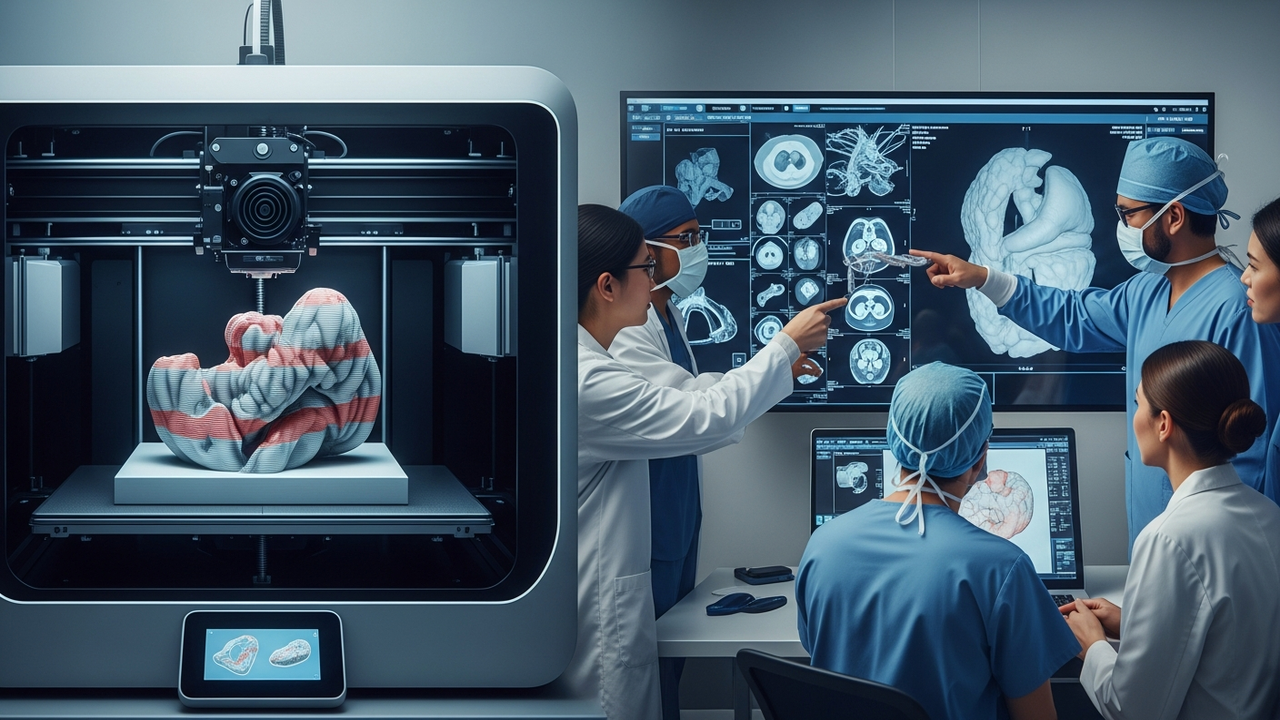
The 3D medical printing systems market is undergoing rapid growth, driven by two powerful forces: increasing demand for personalized medicine and the imperative for more efficient surgical planning. The market’s expansion is particularly propelled by hospitals’ rising investments in in-house 3D printing labs and manufacturers’ scaling up of additive manufacturing for complex, patient-specific medical devices.
Technical & Clinical Details
This market growth is supported by the following specific advancements:
- Proliferation of In-House 3D Printing Labs: Many hospitals and medical centers are adopting their own 3D printing facilities to rapidly create highly accurate anatomical models for surgeons to pre-plan complex surgeries. This is expected to lead to shorter operation times, reduced risks, and improved patient outcomes. In dentistry, the production of custom-made dentures and orthodontic appliances is also accelerating.
- Additive Manufacturing of Patient-Specific Devices: Manufacturers are expanding the production of 3D-printed medical devices such as implants, prostheses, and surgical guides, all designed to match individual patient anatomical features. A variety of materials, including titanium alloys, cobalt-chrome alloys, and biocompatible polymers (e.g., PEEK, PMMA), are being utilized, enabling the creation of devices with complex geometries and internal structures.
- Advancements in Personalized Medicine: In various fields like cancer treatment and orthopedic surgery, there is a growing demand for therapies tailored to individual patient needs. 3D printing has become an indispensable technology for realizing this personalized medicine, particularly demonstrating its advantages in improving implant fit and precision in drug delivery systems.
Through these technological advancements, 3D printing is elevating its status beyond a prototyping tool in research and development to become a central component in actual clinical workflows.
Background & Context
The adoption of 3D printing in the medical field has progressed dramatically over the past few years. Traditionally, custom device manufacturing was challenging due to high costs and long lead times. However, advancements in 3D printing technology and materials science have made it possible to provide patient-specific solutions more affordably, rapidly, and precisely. Regulatory agencies are also beginning to clarify approval pathways for 3D-printed medical devices, which boosts market confidence and expansion. An aging population and an increase in chronic diseases further fuel the demand for personalized medical solutions.
Strategic Significance & Outlook
The 3D medical printing systems market is expected to see continued growth. Particularly, the development of new biomaterials, faster and more precise printing technologies, and integration with AI and machine learning will drive further market innovation. Trends in telemedicine and distributed manufacturing are also likely to support the proliferation of point-of-care 3D printing. This technology holds the potential to improve the quality of healthcare delivery and fundamentally transform the patient treatment experience, remaining an attractive frontier for researchers, engineers, and investors.
Source: https://www.openpr.com/news/4584574/3d-medical-printing-systems-market-size-share-2026-industry
Get our weekly technology intelligence — free
Receive an infographic that lets you judge at a glance whether each field’s analysis report is worth reading.
Subscribe Free — Weekly Tech Intelligence
By subscribing, you’ll receive Troy-Technical’s weekly technology intelligence newsletter.
- Your email and selected fields are used only to deliver the newsletter.
- We never share your information with third parties.
- You can unsubscribe anytime via the link in each email.
See our Privacy Policy for details.
Takes about a minute · Unsubscribe anytime








Comments