Key Findings
A significant clinical trial, NCT07034248, has been newly registered on ClinicalTrials.gov, focusing on an electrochemical biosensor designed for early breast cancer diagnosis and monitoring. This novel sensor is based on lectin-functionalized nitrogen and sulfur-doped graphene quantum dots (GQDs) decorated with gold nanoparticles (AuNPs). This trial marks a crucial step in bridging advanced nanomaterials research with practical clinical applications, holding substantial promise for enhancing diagnostic precision and enabling earlier intervention in breast cancer management.
Technical / Clinical Details
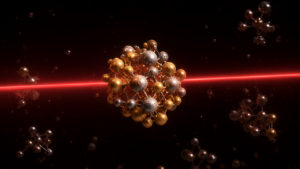
The electrochemical biosensor operates by converting specific biochemical interactions on its surface into quantifiable electrical signals. The core of its enhanced performance lies in the sophisticated use of nanomaterials. Nitrogen and sulfur co-doping of graphene quantum dots provides superior conductivity and a high surface area for biomolecule attachment. Further functionalization with gold nanoparticles not only improves biocompatibility but also significantly amplifies the electrochemical signal. A key feature is the integration of lectins as biorecognition elements, which selectively bind to specific glycans overexpressed on breast cancer cell surfaces, ensuring high specificity. This multi-component architecture is engineered to detect very low concentrations of cancer biomarkers, offering the potential for ultra-sensitive detection of breast cancer at stages traditionally difficult to identify with existing methods.
Background & Context
Breast cancer remains one of the most common cancers globally, and early detection is paramount for successful treatment outcomes. Current diagnostic methods, including mammography, ultrasound, MRI, and biopsy, each present limitations in terms of invasiveness, cost, sensitivity, or specificity. Electrochemical biosensors offer a compelling alternative as non-invasive, rapid, and cost-effective platforms capable of high-sensitivity detection. Advances in nanomaterials science have dramatically boosted the performance of biosensors, enabling the detection of target molecules in complex biological matrices. Clinical trials such as NCT07034248 are essential for validating these promising laboratory-scale innovations for real-world patient care.
Strategic Significance & Outlook
The successful outcome of the NCT07034248 clinical trial could usher in a new era for breast cancer diagnosis. The ability to achieve earlier detection would significantly improve patient prognoses and reduce the burden of advanced-stage treatments. Furthermore, a non-invasive ‘liquid biopsy’ approach, if validated, could enhance compliance with regular screening protocols, benefiting a larger population. Beyond breast cancer, the foundational technology from this biosensor could potentially be adapted for diagnosing and monitoring other cancers and various diseases, contributing broadly to the advancement of personalized medicine and precision diagnostics.
Source: https://clinicaltrials.gov/study/NCT07034248
Get our weekly technology intelligence — free
Receive an infographic that lets you judge at a glance whether each field’s analysis report is worth reading.
Subscribe Free — Weekly Tech Intelligence
By subscribing, you’ll receive Troy-Technical’s weekly technology intelligence newsletter.
- Your email and selected fields are used only to deliver the newsletter.
- We never share your information with third parties.
- You can unsubscribe anytime via the link in each email.
See our Privacy Policy for details.
Takes about a minute · Unsubscribe anytime