Key Findings
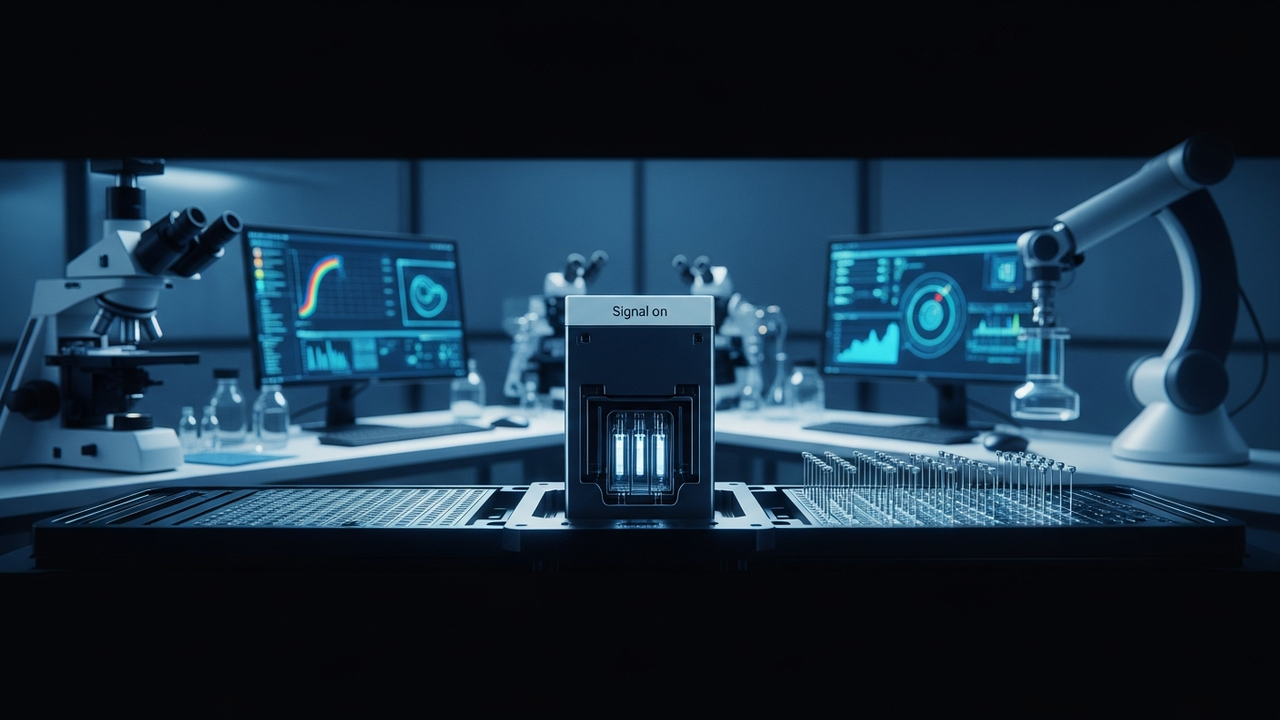
Recent groundbreaking research has led to the development of an innovative “signal-on” electrochemical sensor capable of rapid and highly sensitive detection of hyaluronidase (HAase) activity in both biologics and urine samples. This novel sensor utilizes a mechanism wherein HAase-induced hydrogel degradation releases electrochemically active methylene blue (MB). The subsequent release of MB manifests as a measurable increase in current, thus operating as a “signal-on” detection system. The developed sensor demonstrated a robust linear relationship with HAase activity across a broad range of 0.78 U/mL to 90 U/mL and achieved an excellent limit of detection (LOD) of just 0.48 U/mL. This breakthrough has the potential to significantly enhance the precision of both pharmaceutical quality control and disease monitoring.
Technical / Clinical Details
The core of this electrochemical sensor relies on a hyaluronic acid (HA)-based hydrogel, specifically degraded by HAase. The electrode surface of the sensor is modified with this HA hydrogel, which incorporates methylene blue (MB). In the presence of HAase, the hydrogel degrades, releasing the encapsulated MB into the solution. The liberated MB then undergoes redox reactions at the electrode surface, leading to an increase in the measured current. This “signal-on” mechanism offers distinct advantages over traditional “signal-off” sensors by being less susceptible to background noise, thereby enabling more reliable and sensitive detection. HAase activity in urine is a known biomarker for certain conditions such as bladder cancer and rheumatoid arthritis. For quality control of biologics (specifically hyaluronidase formulations), ensuring stable enzymatic activity is crucial. This sensor demonstrated superior performance in terms of speed, specificity, and sensitivity compared to existing analytical methods (e.g., colorimetric assays, gel electrophoresis) for both applications.
Background & Context
Hyaluronidase is a class of enzymes that degrades hyaluronic acid, a key component of the extracellular matrix, and its activity is implicated in numerous physiological and pathological processes. For instance, changes in HAase activity are observed in cancer progression, inflammatory diseases, autoimmune disorders, and bacterial infections. Furthermore, hyaluronidases used as biopharmaceuticals are widely employed to facilitate the diffusion of other drugs, necessitating stringent activity measurements for quality control. Conventional methods for measuring HAase activity are often time-consuming, involve complex procedures, and lack high sensitivity. Against this backdrop, there has been a strong demand for the development of rapid, simple, and highly sensitive detection methods. The sensor developed in this research offers an innovative solution to these challenges.
Strategic Significance & Outlook
The success of this “signal-on” electrochemical sensor will play a significant role in greatly streamlining the quality control processes for biologics and ensuring their safety. In particular, the capability for near real-time rapid analysis is expected to facilitate applications in in-line quality control during manufacturing. In clinical diagnostics, its potential as a rapid screening tool for urinary HAase activity could contribute to the early detection of bladder cancer and other diseases. This is anticipated to lead to earlier therapeutic intervention and improved prognoses for patients. In the future, this sensor platform holds the potential to be generalized for detecting other enzyme activities and biomarkers, thereby significantly contributing to the advancement of personalized medicine and precision diagnostics.
Source: https://pubmed.ncbi.nlm.nih.gov/42401449
Get our weekly technology intelligence — free
Receive an infographic that lets you judge at a glance whether each field’s analysis report is worth reading.
Subscribe Free — Weekly Tech Intelligence
By subscribing, you’ll receive Troy-Technical’s weekly technology intelligence newsletter.
- Your email and selected fields are used only to deliver the newsletter.
- We never share your information with third parties.
- You can unsubscribe anytime via the link in each email.
See our Privacy Policy for details.
Takes about a minute · Unsubscribe anytime