Key Findings
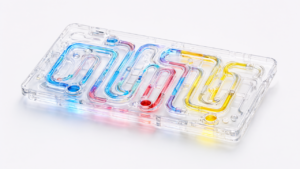
A recent study featured in ACS Analytical Chemistry reports the development of an innovative microfluidic chip capable of multiplexed detection of breast cancer-specific microRNA (miRNA) and protein biomarkers found on exosomes. This advanced platform integrates two distinct signaling methodologies into a single device, offering a powerful ‘liquid biopsy’ approach for earlier and more precise diagnosis of breast cancer.
Technical / Clinical Details
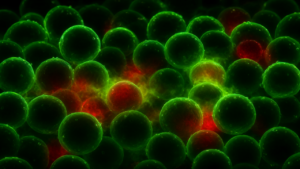
The developed microfluidic chip stands out by efficiently combining two complementary detection signals: alkaline phosphatase (ALP)-driven chemiluminescence and nanobeacon-based fluorescence. This dual-signal integration allows for robust and highly sensitive detection of multiple breast cancer-specific biomarkers simultaneously from exosomes, which are stable and abundant in bodily fluids like blood. Exosomes, as extracellular vesicles, carry vital molecular information from their parent cells, including cancer cells, making them ideal targets for non-invasive liquid biopsies. The microfluidic architecture facilitates precise sample handling, mixing, and reaction kinetics within a miniaturized environment, leading to enhanced analytical performance and reduced sample volume requirements. By leveraging these two orthogonal detection principles, the platform achieves superior specificity and sensitivity, enabling a more comprehensive molecular profiling of breast cancer and potentially overcoming limitations of single-biomarker approaches.
Background & Context
Breast cancer remains one of the most prevalent cancers among women, where early detection and accurate diagnosis are paramount for improving patient outcomes. Current screening methods, such as mammography, have limitations in sensitivity and specificity, particularly in certain demographics, and are often invasive or uncomfortable. Liquid biopsy, which involves analyzing cancer-related biomarkers from readily accessible bodily fluids, has emerged as a highly promising, non-invasive alternative or complement. The ability to detect multiple biomarkers simultaneously (multiplexing) is crucial for addressing the inherent heterogeneity of cancer and improving diagnostic accuracy. This research addresses key technical challenges in the field, moving towards more comprehensive and sensitive diagnostic platforms that can revolutionize breast cancer screening paradigms worldwide.
Strategic Significance & Outlook
The development of this microfluidic chip for multiplexed breast cancer biomarker detection holds significant promise for the future of cancer diagnostics. Its non-invasive nature and high detection capability could lead to improved patient compliance for regular screening, thereby increasing early detection rates and facilitating timely therapeutic interventions. Future research will likely focus on extensive clinical validation of the chip using a large cohort of patient samples, aiming to demonstrate its real-world performance and generalizability. The potential to apply this technology not only to breast cancer but also to other cancer types and diseases positions it as a key enabler for personalized medicine based on liquid biopsies. Furthermore, its suitability for point-of-care integration could make advanced diagnostics accessible in resource-limited settings, ultimately contributing to a global reduction in cancer mortality and enhancing the quality of life for millions.
Source: https://pubs.acs.org/doi/10.1021/acs.analchem.6c02416
Get our weekly technology intelligence — free
Receive an infographic that lets you judge at a glance whether each field’s analysis report is worth reading.
Subscribe Free — Weekly Tech Intelligence
By subscribing, you’ll receive Troy-Technical’s weekly technology intelligence newsletter.
- Your email and selected fields are used only to deliver the newsletter.
- We never share your information with third parties.
- You can unsubscribe anytime via the link in each email.
See our Privacy Policy for details.
Takes about a minute · Unsubscribe anytime