Key Findings
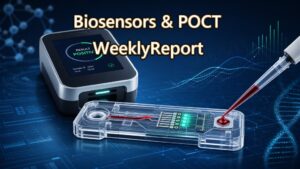
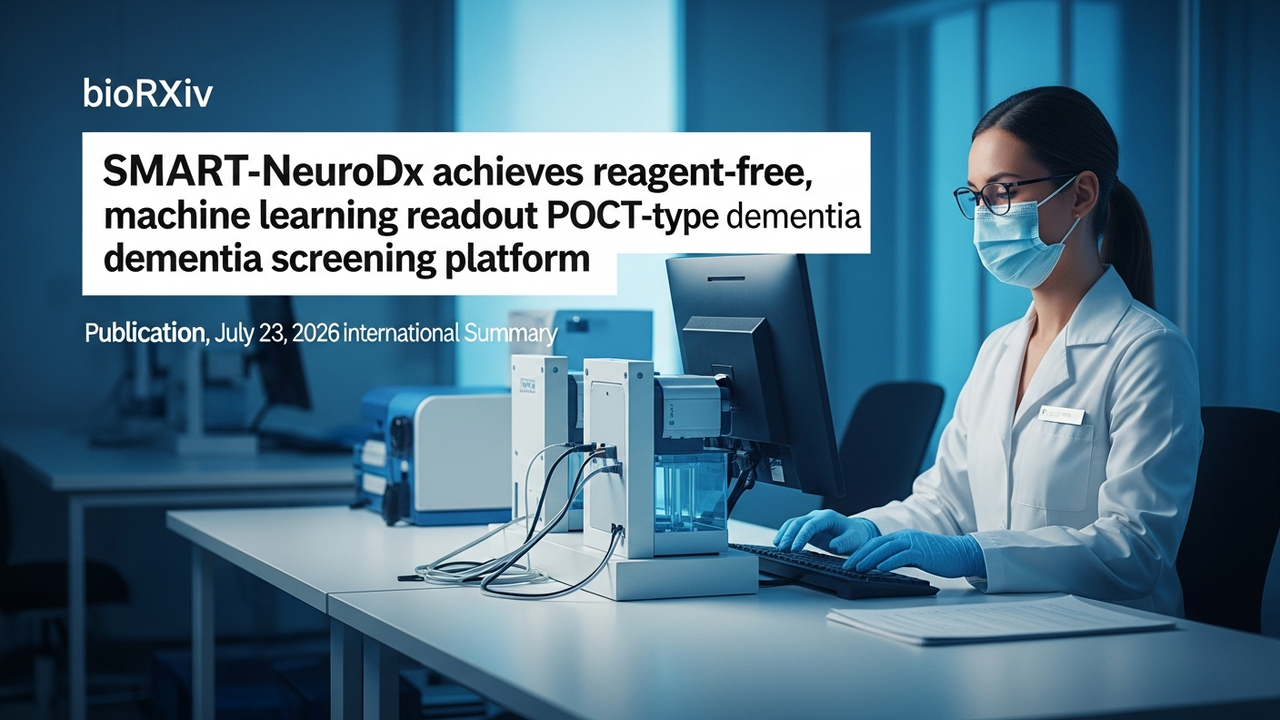
A groundbreaking research preprint published on bioRxiv introduces the SMART-NeuroDx, a novel reagent-free, multianalyte biosensor platform equipped with a machine-learning readout, specifically designed for point-of-care (POCT) dementia screening. This system promises to revolutionize early and accessible diagnosis of dementia by providing a rapid, non-invasive, and cost-effective method for biomarker detection.
Technical / Clinical Details
The SMART-NeuroDx platform is built around a four-channel printed circuit board (PCB)-based sensor array. Each channel is functionalized with a unique synthetic receptor matrix engineered to selectively capture and detect a comprehensive panel of key neurological biomarkers. These biomarkers include phosphorylated tau 217 (pTau217), glial fibrillary acidic protein (GFAP), phosphorylated tau 181 (pTau181), and neurofilament light chain (NfL), all of which are crucial indicators for Alzheimer’s disease and other neurodegenerative conditions. The distinctive feature of SMART-NeuroDx is its ‘reagent-free’ operation, which eliminates the need for costly and cumbersome reagents typically required for immunoassays. The electrical signals generated by the sensor array upon biomarker binding are then processed and interpreted by sophisticated machine-learning algorithms. This allows for the integration of multiple biomarker signals, providing a more robust and nuanced assessment of dementia risk and type directly from plasma and serum samples. The selective detection capabilities ensure high accuracy even in complex biological matrices, positioning it as a powerful diagnostic tool for primary care settings.
Background & Context
Dementia, with its rapidly increasing global prevalence, represents a critical public health challenge. Early and accurate diagnosis is paramount for effective intervention and potentially slowing disease progression. However, current diagnostic methods often involve expensive and invasive procedures such as brain imaging (PET, MRI) and cerebrospinal fluid (CSF) analysis, limiting access and increasing patient burden. Blood-based biomarkers offer a highly attractive, less invasive alternative for screening, but the challenge has been developing POCT solutions that can detect multiple biomarkers simultaneously with sufficient sensitivity and specificity. SMART-NeuroDx addresses this unmet need by combining advanced biosensing with AI, aligning with global trends in digital health and personalized diagnostics aiming for more equitable access to healthcare.
Strategic Significance & Outlook
The SMART-NeuroDx platform has the potential to profoundly transform dementia screening paradigms. Its reagent-free and POCT capabilities mean it can be readily deployed in remote areas, primary care clinics, and even home settings, dramatically improving diagnostic accessibility. Future research will focus on validating the platform in larger clinical cohorts, assessing its ability to differentiate between various types of dementia (e.g., Alzheimer’s, vascular dementia), and further optimizing sensor stability and reproducibility. If commercialized, this technology could play a vital role in facilitating earlier intervention strategies, enhancing the quality of life for patients and their families worldwide, and significantly reducing the diagnostic bottleneck in neurodegenerative disease management. The integration of machine learning further paves the way for increasingly intelligent and autonomous diagnostic systems.
Source: https://www.biorxiv.org/content/10.64898/2026.07.22.740043v1.full.pdf
Get our weekly technology intelligence — free
Receive an infographic that lets you judge at a glance whether each field’s analysis report is worth reading.
Subscribe Free — Weekly Tech Intelligence
By subscribing, you’ll receive Troy-Technical’s weekly technology intelligence newsletter.
- Your email and selected fields are used only to deliver the newsletter.
- We never share your information with third parties.
- You can unsubscribe anytime via the link in each email.
See our Privacy Policy for details.
Takes about a minute · Unsubscribe anytime