Key Findings
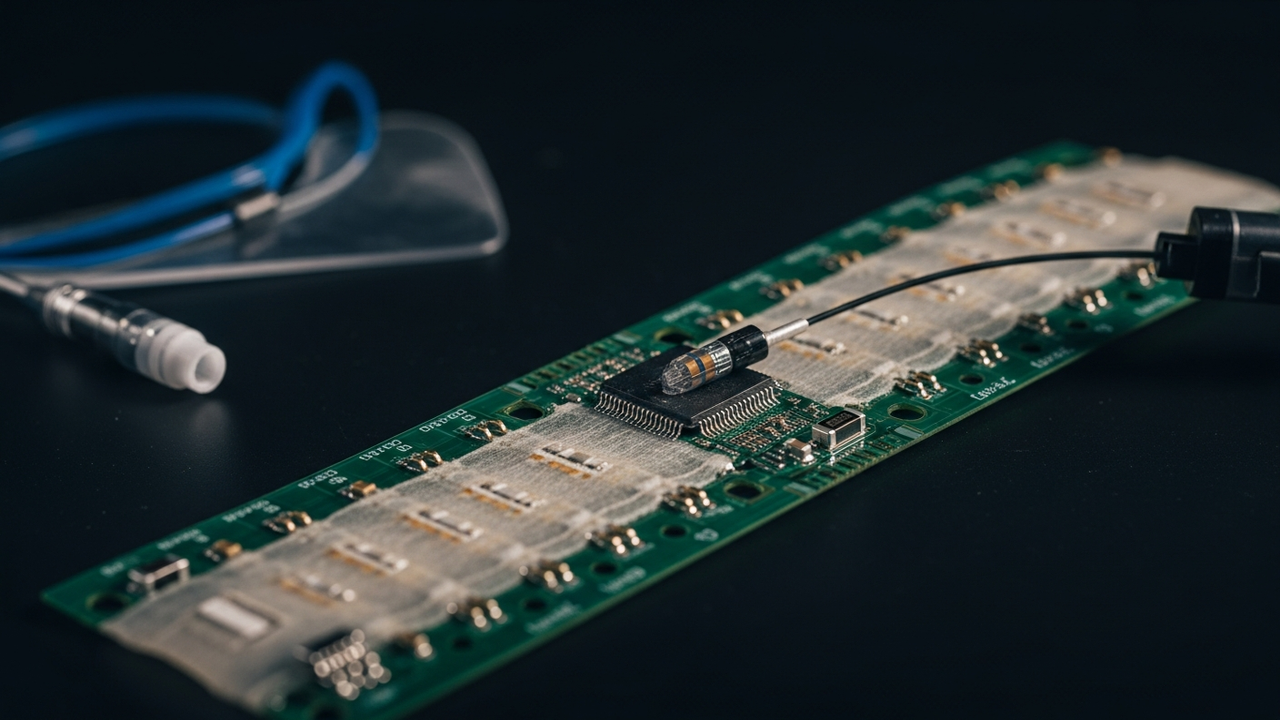
A research team at the University of Cambridge has achieved a notable breakthrough in the field of biodegradable and biohybrid wearable technology, demonstrating the successful integration of functional electronic components directly onto textile substrates. This pioneering work is set to pave the way for a new generation of electronics that are inherently more sustainable and environmentally friendly.
Technical / Clinical Details
- In early research dating back to 2019, the researchers successfully developed flexible and washable solid-state capacitors by using graphene ink on polyester fabric. These capacitors were designed for direct integration into clothing, illustrating a novel pathway for wearable electronic devices.
- This breakthrough diverges significantly from conventional rigid, non-biodegradable electronic components, as it aims to minimize environmental impact at the end of the product’s life cycle. By utilizing biodegradable and biohybrid materials (combinations of biological and non-biological components), the research prioritizes sustainability across the entire lifecycle of electronics.
- A core technical challenge involves ensuring the stable functionality of electronic components while preserving the inherent flexibility, breathability, and washability of textile materials. Two-dimensional materials like graphene are considered ideal candidates for such applications due to their exceptional conductivity and flexibility.
Background & Context
The rapid advancement and widespread adoption of electronic devices in modern society have led to a critical environmental challenge: the proliferation of electronic waste (E-waste). As the market for wearable devices continues to expand, the associated waste problem is projected to grow exponentially. The research conducted at the University of Cambridge directly addresses this environmental concern, simultaneously fulfilling the dual need for more comfortable and sustainable next-generation wearable devices.
Strategic Significance & Outlook
The University of Cambridge plans to announce further demonstrations of biodegradable and biohybrid wearables within the next 12 to 24 months, a timeline that is expected to accelerate the transition from fundamental research to practical application. The ultimate goal is to realize devices capable of reliable operation in real-world settings, coupled with clear end-of-life pathways such as composting or recycling. This initiative aims for a future where eco-friendly, high-performance wearable technologies become ubiquitous across diverse sectors, including healthcare, sports, and fashion, revolutionizing how we interact with technology and the environment.
Source: https://cambridgereview.uk/articles/biodegradable-electronics-cambridge-research
Get our weekly technology intelligence — free
Receive an infographic that lets you judge at a glance whether each field’s analysis report is worth reading.
Subscribe Free — Weekly Tech Intelligence
By subscribing, you’ll receive Troy-Technical’s weekly technology intelligence newsletter.
- Your email and selected fields are used only to deliver the newsletter.
- We never share your information with third parties.
- You can unsubscribe anytime via the link in each email.
See our Privacy Policy for details.
Takes about a minute · Unsubscribe anytime