Key Findings
Researchers at Tohoku University’s Advanced Institute for Materials Research (AIMR) have developed a novel ‘closed-loop’ research system that seamlessly integrates AI models, automated experimental apparatus, and continuous feedback, dramatically accelerating the discovery process for energy materials. This innovative framework holds the potential to significantly reduce the time and cost associated with conventional trial-and-error approaches in material development, particularly for next-generation batteries and hydrogen storage solutions.
Technical / Clinical Details
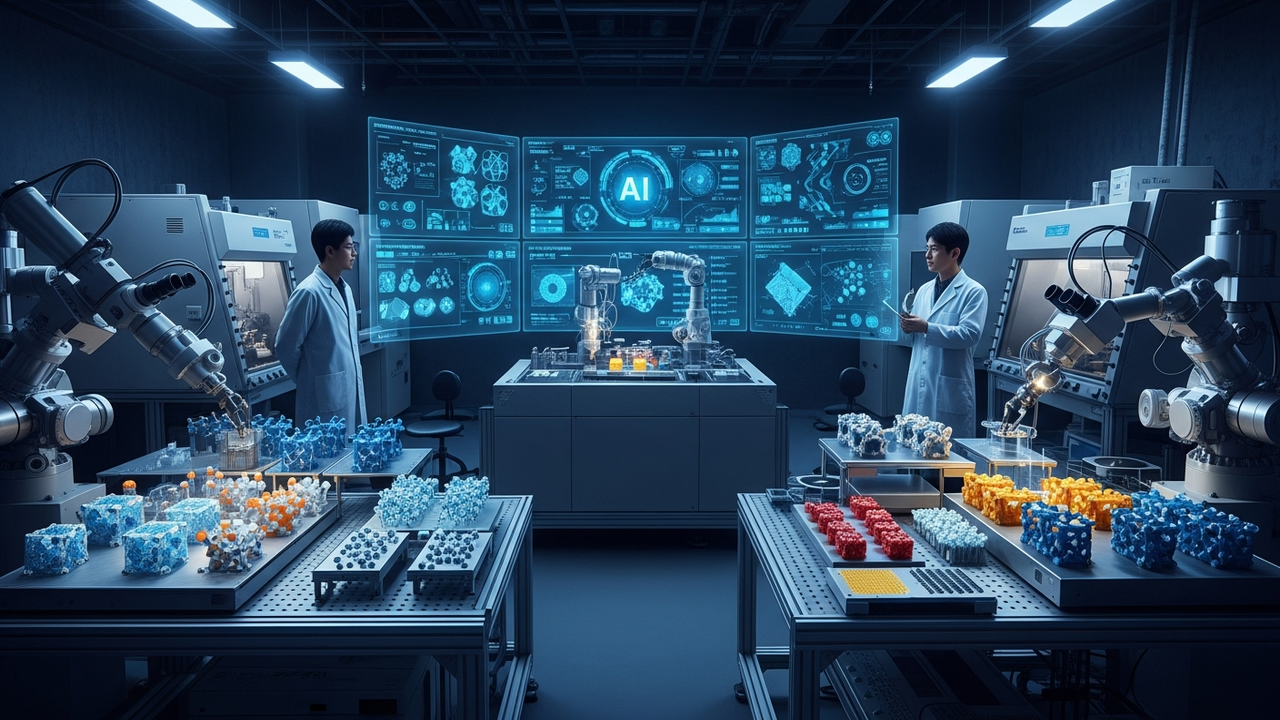
The system is built upon a foundation of large material databases, with machine learning interatomic potentials (MLIPs), large language models (LLMs), and autonomous AI agents at its core. These AI components intelligently explore design spaces, predict candidate materials, and optimize experimental conditions. Following AI directives, automated lab workflows, including robotic arms, perform physical synthesis and characterization. The results are then fed back into the AI models, enabling a rapid, iterative learning cycle that can complete material discovery and optimization with minimal human intervention.
Background & Context
The discovery and development of energy materials are critical challenges for achieving a sustainable society, yet these processes are notoriously time-consuming and expensive. Traditional material development heavily relies on human intuition and extensive experimentation, often taking decades for new high-performance materials to reach practical application. The emerging field of materials informatics, which merges materials science with AI, aims to shorten these development timelines.
Strategic Significance & Outlook
The introduction of this closed-loop system could revolutionize the energy materials sector. The accelerated development cycles and reduced costs are expected to fast-track the commercialization of numerous clean energy technologies, including advanced batteries, fuel cells, and hydrogen storage systems. In the long term, this autonomous research platform could be applied to various material fields, establishing a new paradigm for materials innovation across industries such as pharmaceuticals, aerospace, and electronics.
Get our weekly technology intelligence — free
Receive an infographic that lets you judge at a glance whether each field’s analysis report is worth reading.
Subscribe Free — Weekly Tech Intelligence
By subscribing, you’ll receive Troy-Technical’s weekly technology intelligence newsletter.
- Your email and selected fields are used only to deliver the newsletter.
- We never share your information with third parties.
- You can unsubscribe anytime via the link in each email.
See our Privacy Policy for details.
Takes about a minute · Unsubscribe anytime