Key Findings
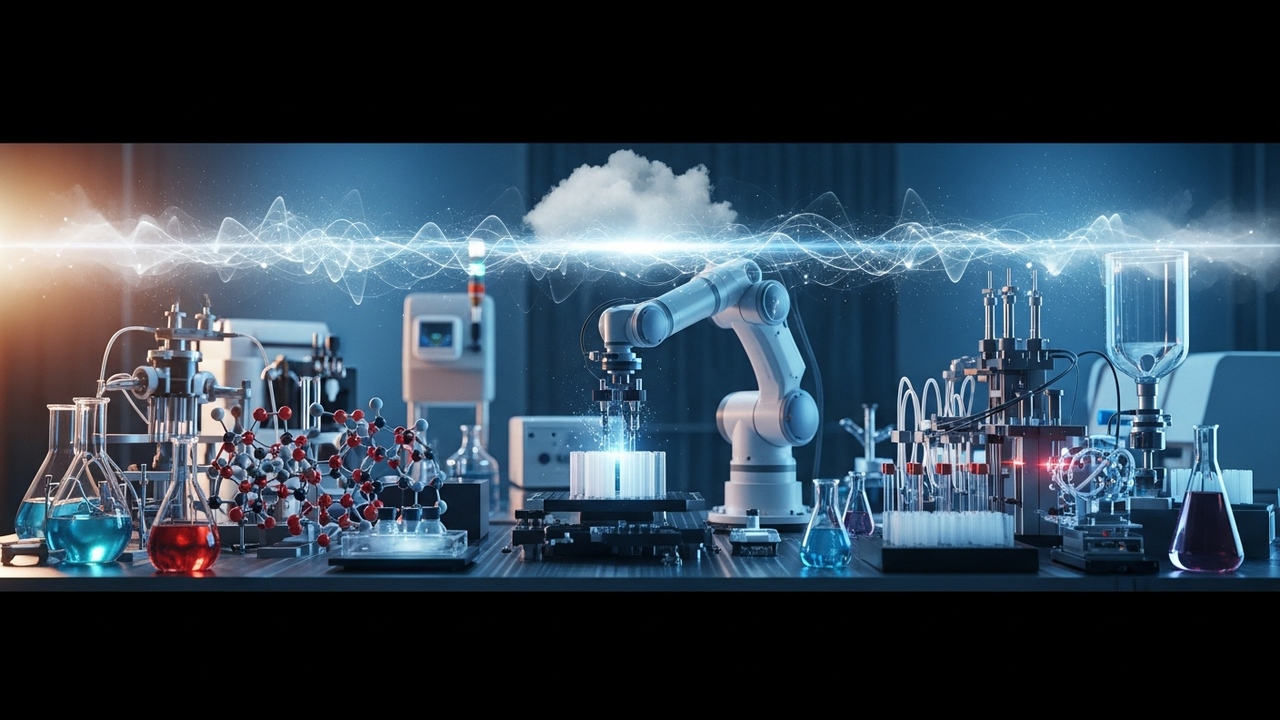
The University of California, Santa Barbara (UCSB), has been awarded a significant $20 million grant from the U.S. National Science Foundation (NSF) to establish ‘COAST PCL’ (Cloud-Accessible Open-source Automated Soft-matter and Polymer CLoud Lab). This pioneering project will create a national resource for automated polymer and soft material research. By integrating instrumentation, robotics, software, data systems, and artificial intelligence (AI) into a cloud-accessible laboratory, COAST PCL aims to revolutionize the entire materials research process. Researchers will design experiments remotely, autonomous systems will execute them, and AI will recommend the next optimal experiments, realizing a closed-loop research cycle.
Technical Details
The core of COAST PCL is built upon the integration of cutting-edge technologies:
- Integrated Instrumentation and Robotics: Advanced instruments for polymer and soft material synthesis, processing, and characterization will operate in conjunction with precision robotic arms and automated dispensing systems. This enhances experimental reproducibility and enables high-speed execution of complex experimental protocols without human intervention.
- Cloud-Based Access: Researchers globally will be able to access COAST PCL’s facilities via the internet. This democratizes access to state-of-the-art research equipment, breaking down geographical barriers and expanding research opportunities.
- AI-Driven Experimental Design and Optimization: AI algorithms will learn from vast amounts of experimental data and simulation results to propose new polymer compositions and processing conditions. Furthermore, AI will analyze experimental results in real-time and optimize subsequent experimental steps, maximizing the efficiency of material discovery. This significantly shortens the time required for material exploration compared to traditional trial-and-error approaches.
- Comprehensive Data System: All experimental data (e.g., synthesis conditions, measured values, image data) will be automatically collected, stored, and organized in standardized formats. This ensures data transparency and reusability, preserving valuable information often lost in polymer science.
This system is poised to accelerate the discovery of new materials across a wide range of soft material applications, including biomedical materials, elastomers for smart devices, sustainable plastics, and high-performance adhesives. For instance, it is anticipated that polymers with specific biocompatibility or mechanical properties can be screened and optimized in less than one-tenth of the time previously required.
Background and Industry Context
Polymers and soft materials play indispensable roles in virtually every aspect of modern society, from healthcare and electronics to energy and consumer goods. However, their vast chemical space and complex synthesis and characterization processes have historically been major bottlenecks in material development. The advent of Materials Informatics (MI) has brought data-driven approaches to the forefront, but platforms that fully integrate MI with automated experimentation are still limited. The U.S. National Science Foundation (NSF) is promoting the establishment of such national lab networks as a strategic investment to strengthen U.S. scientific and technological leadership and discover next-generation materials. UCSB’s COAST PCL is a core component of this national initiative, specifically addressing the soft materials domain.
Future Outlook
COAST PCL will not only transform how materials research is conducted but also contribute to nurturing the next generation of researchers. By providing open-source software tools and a data-sharing platform, it is expected to foster innovation across the entire materials science community and establish new standards. In the future, this platform is expected to evolve to support more complex multi-scale material design and predict material behavior under dynamic environmental conditions. This will pave the way for breakthrough soft materials to be discovered and commercialized at an unprecedented pace, contributing to a more sustainable society.
Source: https://biopacificmip.org/news/all/2026/ucsb-lead-national-cloud-laboratory-advanced-materials
Get our weekly technology intelligence — free
Receive an infographic that lets you judge at a glance whether each field’s analysis report is worth reading.
Subscribe Free — Weekly Tech Intelligence
By subscribing, you’ll receive Troy-Technical’s weekly technology intelligence newsletter.
- Your email and selected fields are used only to deliver the newsletter.
- We never share your information with third parties.
- You can unsubscribe anytime via the link in each email.
See our Privacy Policy for details.
Takes about a minute · Unsubscribe anytime