Key Findings
Sila Nanotechnologies, a battery materials company based in Moses Lake, Washington, announced it has completed a $300 million funding round to expand its manufacturing facility. This investment is specifically aimed at meeting the surging demand from AI-powered drones, spacecraft, and wearables, and will be directed towards capital expenditures to accelerate the mass production of its silicon anode technology.
Technical / Clinical Details
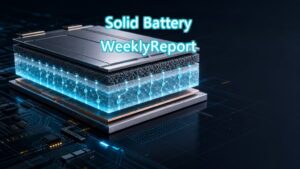
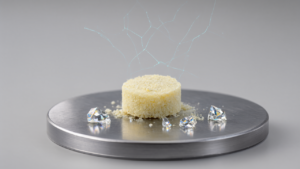
Sila Nanotechnologies’ silicon anode materials are capable of increasing the energy density of existing lithium-ion batteries by up to 20% compared to traditional graphite anodes. This enables devices to store more energy within the same volume and weight, leading to extended flight times for drones, increased payload capacity for spacecraft, and smaller, longer-lasting wearable devices. The recent $300 million funding will facilitate a significant expansion of the Moses Lake factory’s production capacity, moving from pilot scale to a level capable of supplying tens of thousands of electric vehicles annually. Crucial to this scale-up will be the establishment of efficient manufacturing processes and robust quality control systems.
Background & Context
The convergence of AI advancements and the proliferation of IoT devices has created an explosive demand for compact, high-energy-density batteries. In applications such as drones requiring extended operational periods, spacecraft with stringent weight limitations, and always-on wearable devices, battery performance is a critical factor determining device functionality and market competitiveness. Sila Nanotechnologies’ silicon anode technology offers a promising solution to these escalating demands and is gaining recognition as a viable next-generation anode material to succeed graphite. This latest funding round signifies a pivotal moment for the company, transitioning its technology beyond initial development into the commercialization and large-scale production phases.
Strategic Significance & Outlook
The expansion of Sila Nanotechnologies’ Moses Lake facility will significantly boost its supply capacity for the AI and high-performance device markets. This, in turn, is expected to lead to the widespread adoption of products powered by Sila’s silicon anode materials, fostering new technological innovations. This funding will serve as a powerful impetus for Sila to establish leadership in the next-generation battery market, with a clear eye on eventual full-scale entry into the electric vehicle (EV) sector. The proliferation of lighter, longer-lasting batteries is anticipated to enable novel product development and service offerings across diverse industries, contributing to global digitalization and sustainability efforts.
Source: https://www.timesofsf.com/articles/sila-300m-battery-expansion
Get our weekly technology intelligence — free
Receive an infographic that lets you judge at a glance whether each field’s analysis report is worth reading.
Subscribe Free — Weekly Tech Intelligence
By subscribing, you’ll receive Troy-Technical’s weekly technology intelligence newsletter.
- Your email and selected fields are used only to deliver the newsletter.
- We never share your information with third parties.
- You can unsubscribe anytime via the link in each email.
See our Privacy Policy for details.
Takes about a minute · Unsubscribe anytime