Key Findings
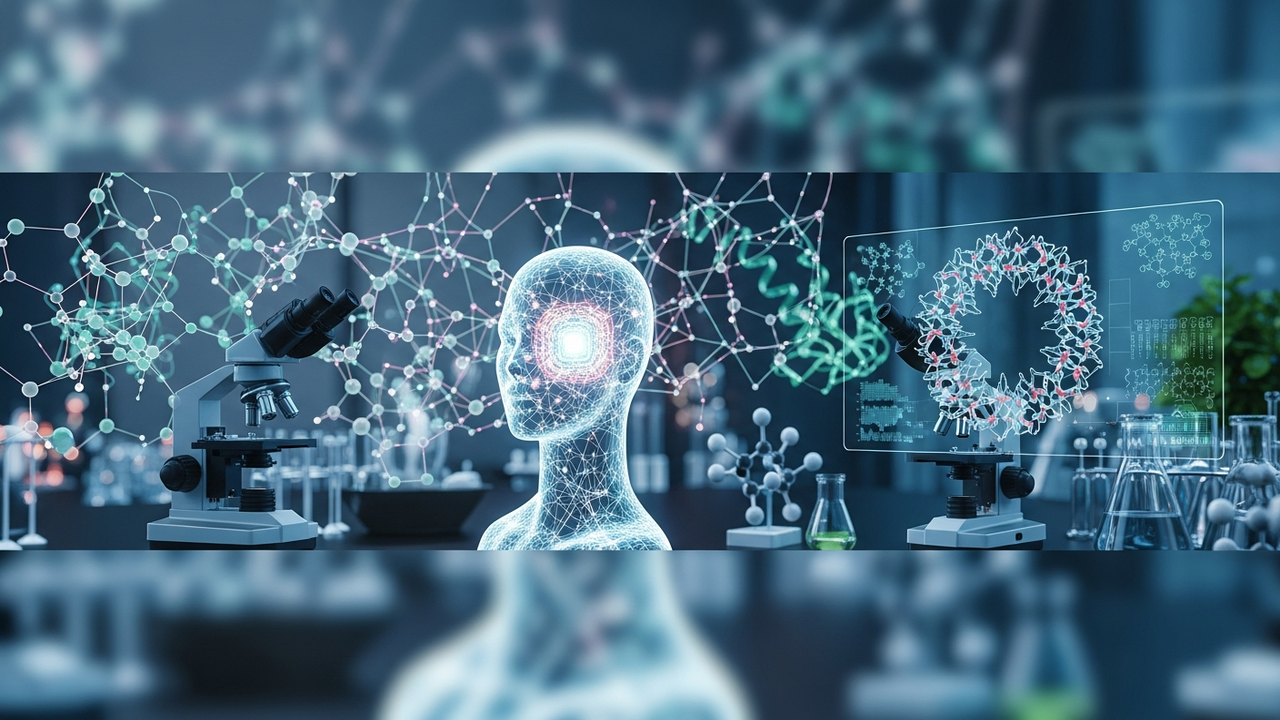
Artificial intelligence is profoundly transforming drug discovery and development, accelerating the design of next-generation medicines across the entire pipeline, from protein structure prediction to the optimization of clinical trials. Predictive models like AlphaFold and generative models such as RFdiffusion and ProteinMPNN are now enabling the de novo design of novel protein structures engineered for specific therapeutic functions, marking a significant leap forward in early-stage discovery.
Technical / Clinical Details
AI’s impact spans critical early-stage drug discovery processes, including target identification, hit generation, and lead optimization. Generative AI, for instance, can design molecules with entirely new structures, or proteins with high affinity for specific disease mechanisms, a feat impractical with traditional trial-and-error methods. These AI models are trained on vast chemical and biological datasets, allowing them to predict and generate optimal candidate molecules while considering physicochemical properties, pharmacokinetics, and toxicity profiles. This substantially reduces the time and cost associated with laboratory synthesis and screening.
AstraZeneca has integrated AI into a ‘build-measure-learn’ cycle, which iteratively generates, prioritizes, and optimizes candidate molecules. This AI-driven approach is expected to lead to a higher success rate for molecules progressing into clinical development compared to traditional methods. Furthermore, explainable AI (XAI) is being explored for its utility in clinical studies, particularly in complex areas like lung cancer, to enhance decision-making and transparency.
Background & Context
The conventional drug discovery process is notoriously inefficient, often taking over a decade and costing billions of dollars, with a high attrition rate. The early stages, from compound identification to preclinical testing, have historically been resource-intensive bottlenecks. AI addresses these challenges by rapidly identifying more promising candidates, thereby improving overall R&D productivity and accelerating the delivery of new drugs to patients. This shift is crucial for addressing unmet medical needs more effectively.
Strategic Significance & Outlook
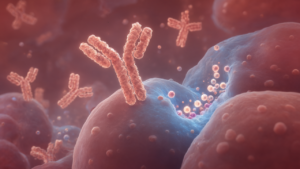
The full potential of AI in drug discovery is still unfolding. Future applications are expected to include more sophisticated modeling of complex disease pathways, personalized medicine approaches for patient-specific drug design, and further optimization of clinical trial designs. The synergy between AI and wet-lab experimentation is poised to fundamentally reshape the future of drug discovery, expediting the identification of groundbreaking therapies. Additionally, AI’s contributions to biopharmaceutical development, such as antibody design and gene therapy vector optimization, will become increasingly vital on a global scale, enhancing competitiveness and innovation.
Source: https://sitech.ge/en/blog/ai-drug-discovery-2026/
Get our weekly technology intelligence — free
Receive an infographic that lets you judge at a glance whether each field’s analysis report is worth reading.
Subscribe Free — Weekly Tech Intelligence
By subscribing, you’ll receive Troy-Technical’s weekly technology intelligence newsletter.
- Your email and selected fields are used only to deliver the newsletter.
- We never share your information with third parties.
- You can unsubscribe anytime via the link in each email.
See our Privacy Policy for details.
Takes about a minute · Unsubscribe anytime