Key Findings
Shanghai Henlius Biotech announced the successful first-in-human (FIH) dosing of a patient with HLX3902, a trispecific T-cell engager (TCE) designed to target STEAP1×CD3×CD28. This innovative trispecific antibody is currently under evaluation in clinical trials in China and Australia for its safety, tolerability, pharmacokinetics, and preliminary anti-tumor activity in patients with metastatic castration-resistant prostate cancer (mCRPC) and other advanced solid tumors.
Technical / Clinical Details
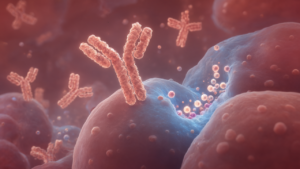
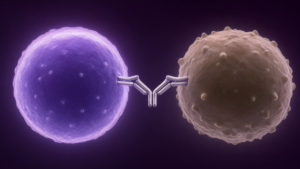
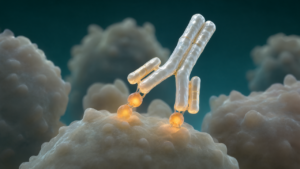
HLX3902 is engineered to simultaneously bind to three distinct targets: STEAP1 antigen expressed on cancer cells, CD3 for T-cell activation, and CD28 to provide a crucial co-stimulatory signal to T-cells. While conventional bispecific TCEs typically bridge cancer cells and T-cells (via CD3) to activate T-cells, HLX3902’s unique trispecific design provides an additional co-stimulatory signal through CD28. This comprehensive engagement significantly enhances T-cell activation, proliferation, and cytotoxic function.
Preclinical studies have demonstrated that HLX3902 exhibits more potent T-cell activation, proliferation, and survival-promoting effects compared to traditional CD3-based bispecific TCEs. The CD28-mediated co-stimulation is particularly important for mitigating T-cell exhaustion and inducing more durable anti-tumor responses. This multi-target approach holds the potential to overcome cancer cell immune evasion mechanisms and enhance therapeutic efficacy.
Background & Context
T-cell engagers (TCEs) represent a promising new class of immunotherapies that redirect T-cells to cancer cells and activate their anti-tumor activity. However, achieving sufficient T-cell activation and durable anti-tumor responses has sometimes been challenging with only a single co-stimulatory signal. Trispecific antibodies like HLX3902 aim to overcome these limitations by enabling simultaneous binding to multiple targets, thereby enhancing T-cell function and persistence. Metastatic castration-resistant prostate cancer (mCRPC) is a disease with a poor prognosis, where novel treatment options are urgently needed.
Strategic Significance & Outlook
The initiation of the FIH study for HLX3902 marks a crucial step in the evolution of trispecific antibody technology and further expands the potential of TCE therapies for solid tumors. In subsequent clinical development, the safety and efficacy of HLX3902 are expected to be confirmed in patients with mCRPC and other advanced solid tumors. If this innovative approach proves successful, it could significantly enhance the effectiveness of TCE therapeutics and potentially transform the cancer treatment paradigm. Trispecific antibody technology is also expected to find applications in other intractable diseases, positioning it as a key area driving the development of next-generation biologics globally.
Source: https://www.henlius.com/en/NewsDetails-6064-26.html
Get our weekly technology intelligence — free
Receive an infographic that lets you judge at a glance whether each field’s analysis report is worth reading.
Subscribe Free — Weekly Tech Intelligence
By subscribing, you’ll receive Troy-Technical’s weekly technology intelligence newsletter.
- Your email and selected fields are used only to deliver the newsletter.
- We never share your information with third parties.
- You can unsubscribe anytime via the link in each email.
See our Privacy Policy for details.
Takes about a minute · Unsubscribe anytime