Key Findings
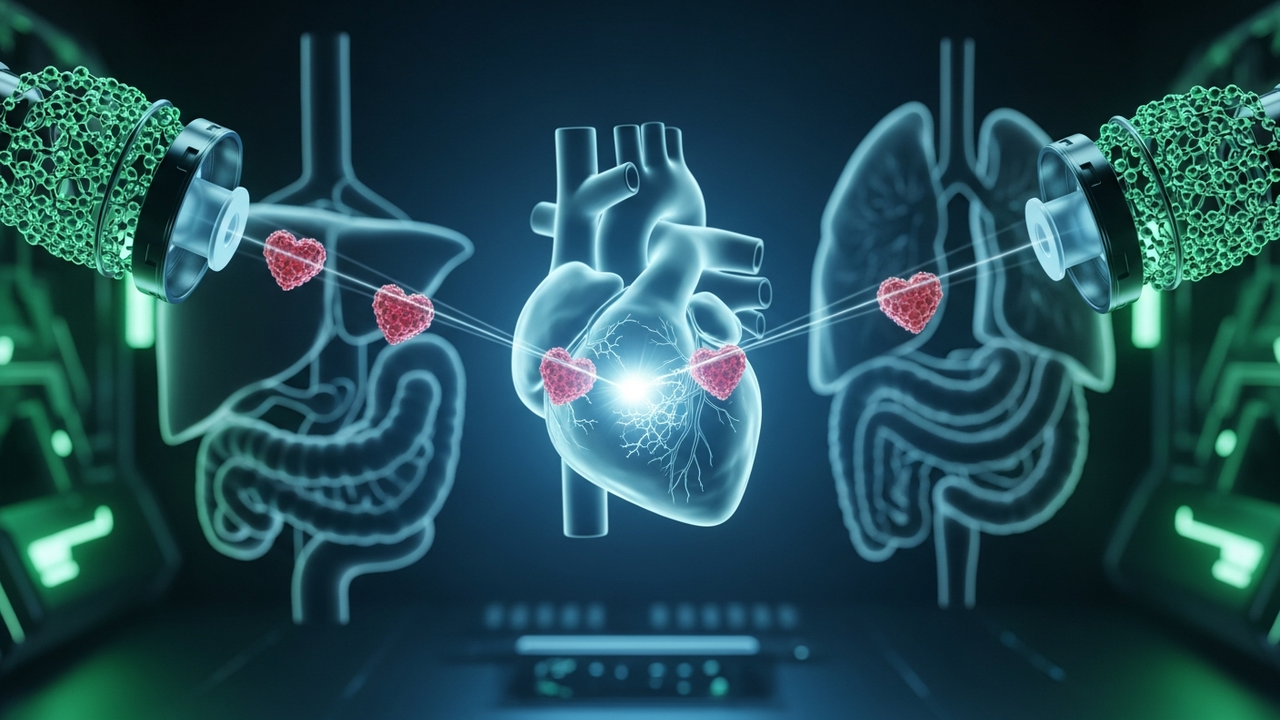
Lipid nanoparticles (LNPs) are clinically validated non-viral vectors for delivering a variety of therapeutics, including small molecules, mRNA, and siRNA. However, achieving heart-specific drug delivery using LNPs for the treatment of cardiac conditions like myocardial infarction (MI) remains a significant challenge. Conventional LNPs typically exhibit substantial accumulation in the liver after systemic administration and lack inherent tropism for the heart, making it difficult to maximize therapeutic effects. While effective LNP delivery to other organs such as the lungs and spleen has been achieved through specific lipid engineering strategies, heart-targeted LNP formulations have yet to be successfully reported.
Technical/Clinical Details
Myocardial infarction is a severe condition caused by ischemic necrosis of myocardial cells, driving active development of novel therapies, including regenerative medicine and gene therapy. LNPs are highly anticipated as carriers for these therapeutic modalities due to their excellent nucleic acid protection and intracellular delivery efficiency. However, the biodistribution of LNPs is determined by multiple factors, including their lipid composition, size, surface charge, and degree of PEGylation. It is well-established that intravenously administered LNPs are efficiently taken up by liver endothelial cells and macrophages (Kupffer cells).
- Challenges of Conventional LNPs: While high liver tropism is advantageous for treating liver diseases, it limits drug delivery to the heart and other non-hepatic target organs. This poses a major barrier to delivering therapeutic nucleic acids or drugs to damaged myocardial cells and fibroblasts after MI.
- Advances in Non-Hepatic Targeted LNPs: Recent reports highlight successful targeting of LNPs to non-hepatic organs (particularly the lungs and spleen) through the design of specific ionizable lipids or the conjugation of specific ligands (e.g., aptamers, peptides) to their surface. These successes demonstrate that lipid engineering is a powerful tool for modifying LNP biodistribution.
However, the heart is a complex organ with unique vascular structures and blood flow characteristics. Achieving efficient and specific LNP delivery to cardiomyocytes requires even more sophisticated lipid design and targeting strategies. Currently, clinically meaningful heart-specific LNP formulations remain in the developmental stage.
Background & Context
Myocardial infarction is a leading cause of mortality globally, and even after acute treatment, complications such as heart failure and cardiac remodeling dictate patients’ long-term prognoses. Conventional pharmacotherapy and interventional treatments have their limitations, increasing the demand for gene and cell therapies aimed at promoting myocardial regeneration. The successful clinical translation of these advanced therapies is contingent upon safe and efficient delivery systems, with LNPs being a prime candidate. Therefore, achieving heart-specific delivery is a critical research priority at the forefront of bioengineering.
Strategic Significance & Outlook
To unlock the true potential of LNPs in MI treatment, the development of innovative DDS that can selectively deliver drugs to cardiac tissue, particularly damaged cardiomyocytes, is indispensable. This will involve designing novel lipid scaffolds, discovering heart-cell-specific ligands, or exploring hybrid delivery systems that combine LNPs with physical stimuli such as ultrasound or electric fields. Should these technological breakthroughs be achieved, they could lead to revolutionary treatments that accelerate cardiac function recovery after MI and improve the prognosis for many patients. International research institutions and pharmaceutical companies are actively pursuing these challenging objectives, with future breakthroughs highly anticipated, transforming the global landscape of cardiovascular care.
Source: https://www.ahajournals.org/doi/10.1161/ATVBAHA.126.324247
Get our weekly technology intelligence — free
Receive an infographic that lets you judge at a glance whether each field’s analysis report is worth reading.
Subscribe Free — Weekly Tech Intelligence
By subscribing, you’ll receive Troy-Technical’s weekly technology intelligence newsletter.
- Your email and selected fields are used only to deliver the newsletter.
- We never share your information with third parties.
- You can unsubscribe anytime via the link in each email.
See our Privacy Policy for details.
Takes about a minute · Unsubscribe anytime