Key Findings
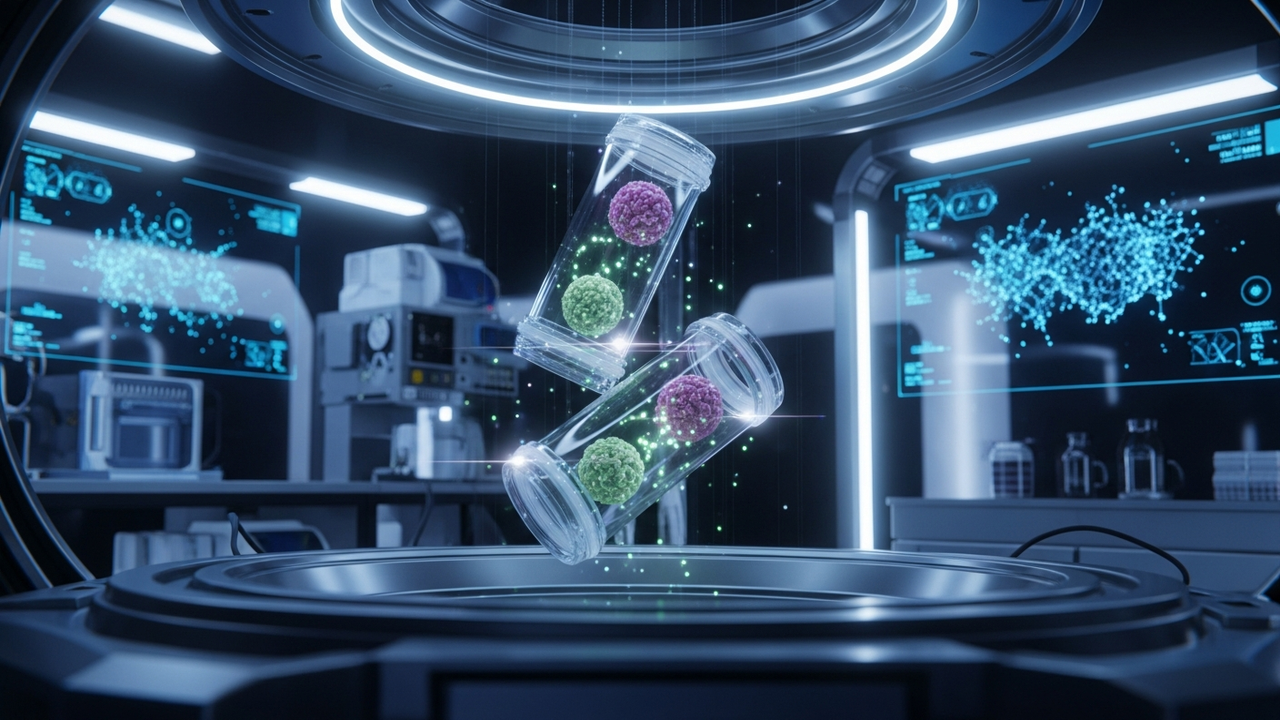
Space oncology is rapidly emerging as a new frontier in scientific research, focusing on understanding how microgravity and space radiation impact cancer cell behavior, tumor modeling, drug discovery, and therapeutic responses. The unique environment of space provides an unparalleled platform to investigate the fundamental mechanisms of cancer biology, particularly aspects like metastasis, treatment resistance, and radiation response that are difficult to observe and manipulate under terrestrial gravity.
Technical Details
In microgravity, cancer cells exhibit different growth patterns, often forming more realistic 3D tumor models that are difficult to replicate in conventional 2D cell cultures or animal models on Earth. This yields more accurate insights into cancer progression and drug responses. Additionally, the space environment enhances protein crystallization efficiency, enabling higher-resolution structural analysis of target molecules for cancer drugs. Further applications include optimizing drug delivery systems and addressing astronaut-specific health challenges, such as increased cancer risk from space radiation.
Background & Context
Traditional cancer research has been constrained by Earth’s gravitational environment; space oncology offers an entirely new perspective and means of investigation. Microgravity influences cell shape, gene expression, and cell-to-cell interactions, providing a unique opportunity to directly observe how these factors affect cancer characteristics. Advances in this field are crucial not only for accelerating the development of treatments for intractable cancers on Earth but also for providing essential knowledge for astronaut health management during future long-duration space missions.
Strategic Significance & Outlook
The development of space oncology holds the potential to improve drug development efficiency, lead to more precise cancer diagnostics, and ultimately enable personalized cancer therapies. Data and models derived from space environments are expected to drive discoveries impossible in Earth-bound laboratories, contributing to the development of novel anticancer agents and optimizing existing treatments. Increased investment and international collaboration in this field could be the key to unlocking the next breakthrough in humanity’s fight against cancer.
Source: https://www.drishtiias.com/daily-updates/daily-news-analysis/space-oncology-and-cancer-treatment
Get our weekly technology intelligence — free
Receive an infographic that lets you judge at a glance whether each field’s analysis report is worth reading.
Subscribe Free — Weekly Tech Intelligence
By subscribing, you’ll receive Troy-Technical’s weekly technology intelligence newsletter.
- Your email and selected fields are used only to deliver the newsletter.
- We never share your information with third parties.
- You can unsubscribe anytime via the link in each email.
See our Privacy Policy for details.
Takes about a minute · Unsubscribe anytime