Key Findings
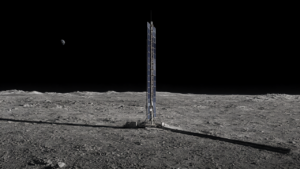
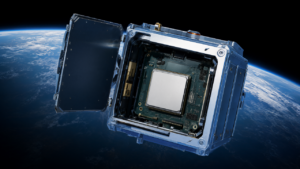
UK startup Perpetual Atomics is developing advanced radioisotope power systems, including Radioisotope Heater Units (RHU) and Radioisotope Thermoelectric Generators (RTG), utilizing Americium-241 (Am-241). These systems are designed to enable long-duration operations for lunar, Mars, and deep-space missions, providing a reliable, sunlight-independent energy source. They are specifically engineered to maintain the operation of scientific instruments even in permanently shadowed regions of the Moon or during intense Martian dust storms.
Technical Details
Perpetual Atomics’ Am-241 based RTGs offer advantages over traditional Pu-238 RTGs, primarily due to the more stable and long-term availability of the Am-241 supply chain. These systems generate electricity from the natural decay heat of radioisotopes, providing stable, low-level power (from watts to kilowatts) for decades. RHUs primarily function as heat sources, preventing equipment from freezing in extreme cold environments. Concurrently, the company is developing small reactor concepts in the 1kW to 10kW range, envisioned to meet the larger power demands of lunar bases and human Mars missions. Commercial solutions are projected to be available after 2027.
Background & Context
For deep-space exploration and human missions to the Moon and Mars, solar power alone is often insufficient, making a continuous and reliable power source indispensable. The scarcity of Plutonium-238 has been a challenge for the U.S. space nuclear program for decades. Am-241, a byproduct of the nuclear fuel cycle, is expected to be more abundant, making it an attractive alternative for next-generation radioisotope power systems. The UK’s entry into this field will stimulate international competition in space nuclear technology development and ensure diverse supply sources.
Strategic Significance & Outlook
The Am-241 based nuclear power systems developed by Perpetual Atomics will significantly enhance the feasibility of future lunar bases, Mars rovers, deep-space probes, and even missions to the icy moons of Jupiter and Saturn. They are particularly expected to revolutionize scientific observations in extreme, sunless environments, such as the exploration of potential water ice resources at the lunar South Pole. The planned commercial availability from 2027 will establish the UK’s presence in the space nuclear market and further accelerate technological innovation and competition in the global space industry. This technology is poised to be key in expanding humanity’s frontier in solar system exploration.
Source: https://www.youtube.com/watch?v=_zW4VueSza0
Get our weekly technology intelligence — free
Receive an infographic that lets you judge at a glance whether each field’s analysis report is worth reading.
Subscribe Free — Weekly Tech Intelligence
By subscribing, you’ll receive Troy-Technical’s weekly technology intelligence newsletter.
- Your email and selected fields are used only to deliver the newsletter.
- We never share your information with third parties.
- You can unsubscribe anytime via the link in each email.
See our Privacy Policy for details.
Takes about a minute · Unsubscribe anytime