Key Findings
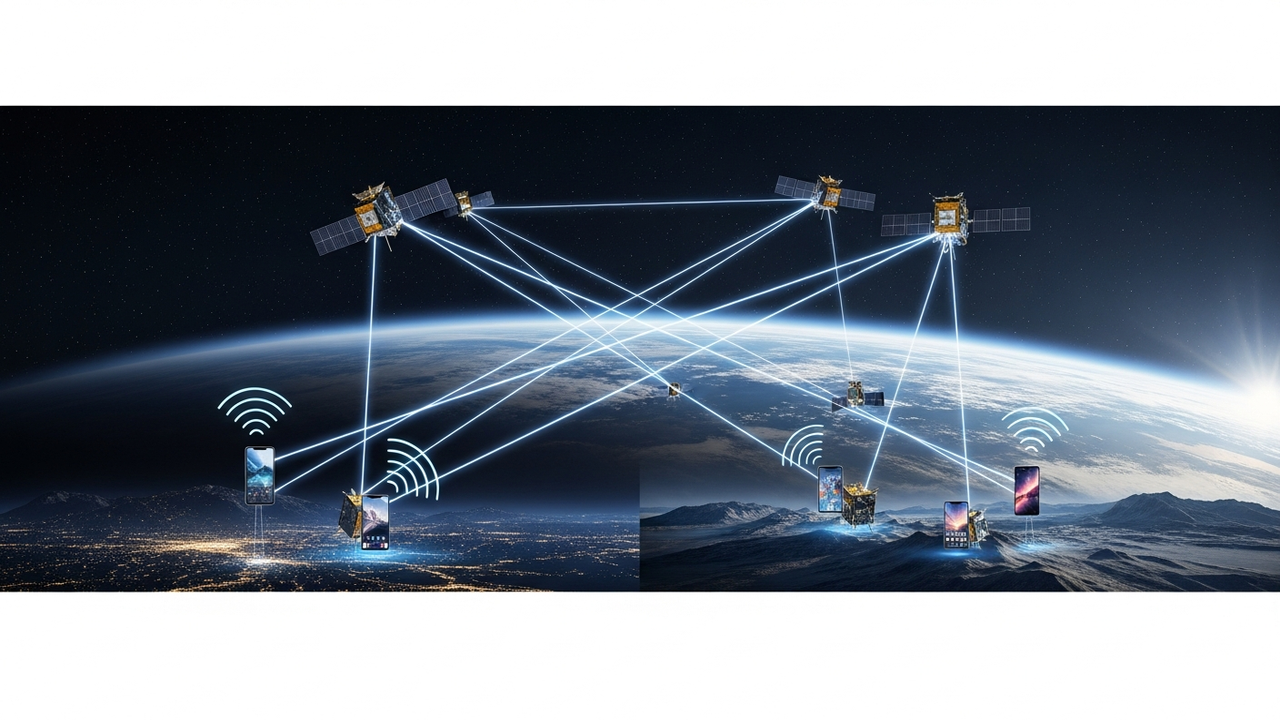
Amazon Leo has filed an application for the deployment of its Direct-to-Device (D2D) system. These D2D-enabled Leo satellites are slated to be equipped with optical intersatellite links (laser connections) to facilitate intelligent traffic routing directly in orbit. This innovative approach is expected to dramatically enhance overall performance by processing and relaying signals directly from space, bypassing the need for traditional terrestrial ground stations.
Technical Details
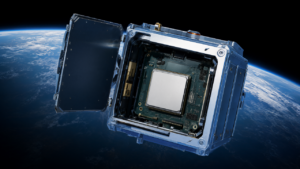
Amazon Leo’s D2D satellites employ a groundbreaking architecture that distinguishes them from conventional satellite broadband services. The optical intersatellite links enable terabit-scale high-speed data transmission between satellites, forming a robust mesh network in space. This allows data to intelligently select and route through the most efficient path before ever reaching a ground gateway. Furthermore, utilizing digital beamforming and beam-hopping techniques, the system can precisely transmit and receive concentrated signals exactly where and when needed, maximizing coverage. This integrated approach promises low latency, high bandwidth, and exceptional reliability, ensuring seamless connectivity even in regions with limited terrestrial infrastructure.
Background & Context
The satellite internet market has been growing rapidly with pioneers like Starlink, driven by the increasing need to provide high-speed broadband to every corner of the Earth. However, traditional satellite systems have often been dependent on extensive ground infrastructure or plagued by latency issues in remote areas. Amazon Leo’s combined D2D and optical intersatellite link approach aims to overcome these challenges, offering a significant competitive advantage by providing direct-to-user device services, especially in areas lacking communication infrastructure or during emergencies. This accelerates the trend of space communication evolving from a merely supplementary service to a primary global connectivity solution.
Strategic Significance & Outlook
The introduction of Amazon Leo’s D2D system is poised to profoundly impact the global internet connectivity market and fundamentally alter satellite communication usage models. If direct connectivity to smartphones and IoT devices becomes pervasive, it will advance the democratization of communication infrastructure and significantly contribute to bridging the digital divide. Moreover, the high-precision beamforming and intelligent routing capabilities will foster the development of next-generation applications requiring low latency and high reliability, such as autonomous driving, telemedicine, and precision agriculture. This technological innovation is expected to further expand the space economy and bring new value to life and industry on Earth.
Get our weekly technology intelligence — free
Receive an infographic that lets you judge at a glance whether each field’s analysis report is worth reading.
Subscribe Free — Weekly Tech Intelligence
By subscribing, you’ll receive Troy-Technical’s weekly technology intelligence newsletter.
- Your email and selected fields are used only to deliver the newsletter.
- We never share your information with third parties.
- You can unsubscribe anytime via the link in each email.
See our Privacy Policy for details.
Takes about a minute · Unsubscribe anytime