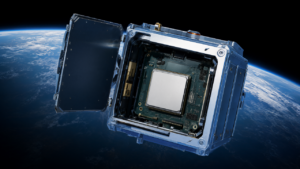
Commercial in-space manufacturing is rapidly emerging as a transformative sector, driving a new orbital economy by leveraging microgravity to produce materials and provide services that are either superior to or impossible to create under Earth’s gravitational pull. The absence of convection and sedimentation in microgravity allows for the growth of highly uniform, pure crystals and the creation of advanced materials with unique properties, fundamentally changing industries from pharmaceuticals to electronics.
Key Findings and Corporate Traction
Varda Space Industries stands at the forefront of pharmaceutical manufacturing in low Earth orbit (LEO). The company has successfully established a business model for processing pharmaceutical compounds in orbit and returning them to Earth using its proprietary re-entry capsules. Following its inaugural flight in June 2023, which demonstrated the successful crystallization of the anti-HIV drug Ritonavir in microgravity, Varda has systematically expanded its operational cadence, completing its sixth in-orbit manufacturing mission by May 2026. This consistent performance underscores the increasing reliability and scalability of space-based pharmaceutical production. Varda’s vertically integrated “W-Series” vehicles, encompassing pharmaceutical processing payloads, re-entry capsules, C-PICA heat shields, and satellite buses, enable a seamless, end-to-end manufacturing and return process.
Redwire Corporation is a pioneer in commercial manufacturing on the International Space Station (ISS). Leveraging the ISS as an in-orbit laboratory and production facility, Redwire has achieved significant milestones, including the successful manufacturing of ZBLAN optical fiber. ZBLAN fiber, produced in microgravity, exhibits superior uniformity and fewer defects compared to its Earth-manufactured counterparts, promising enhanced performance for next-generation telecommunications and sensing applications. Furthermore, Redwire has successfully bioprinted human cardiac tissue samples, exploring the profound implications of microgravity for regenerative medicine and drug discovery. To further solidify its leadership, Redwire opened a new 30,000-square-foot state-of-the-art research and microgravity payload development facility in Georgetown, Indiana, on July 26, 2026, aiming to become a global hub for pharmaceutical and biotech innovation in space.
In the domain of on-orbit services, Northrop Grumman’s SpaceLogistics marked a critical advancement with the launch of its Mission Robotic Vehicle (MRV) on July 21, 2026. The MRV is designed to extend the lifespan, maneuver, repair, and inspect existing satellites, dramatically improving the operational efficiency and sustainability of space assets. This capability is pivotal not only for mitigating space debris but also for enabling more complex future space missions and fostering a robust in-space economy.
Technical and Industry Context
The burgeoning field of in-space manufacturing overcomes the inherent physical limitations of terrestrial production processes, particularly the pervasive effects of gravity. Microgravity facilitates the creation of ultra-pure semiconductor crystals, high-performance alloys, specialized protein crystals, and cellular tissues that are either challenging or impossible to produce on Earth. For instance, protein crystals grown in space exhibit larger, more perfect structures, which are invaluable for understanding disease targets and accelerating drug discovery. Similarly, the uniform crystal growth in semiconductor manufacturing promises to yield next-generation high-performance electronic devices, crucial for AI and quantum computing advancements.
This technological frontier is propelled by declining launch costs and breakthroughs in automation and robotics. The rise of private space companies has made access to orbit more affordable and frequent, catalyzing the commercialization of space manufacturing. As in-orbit manufacturing and assembly capabilities mature, they are expected to enable the construction of self-sufficient space infrastructure, such as large telescopes and space-based solar power satellites, reducing dependency on Earth and fostering true economic autonomy in space.
Strategic Significance and Outlook
The in-space manufacturing market is poised for a significant shift from research and development to full-scale commercial production in the coming years. In pharmaceuticals, it holds the promise of accelerating drug discovery and development cycles. For advanced materials, it could underpin the next wave of AI and quantum computing technologies. On-orbit servicing will continue to grow as a critical enabler for the sustainability of the entire space economy. Governmental space agencies, including NASA, ESA, and JAXA, are actively collaborating with private entities to foster this nascent industry, transforming space from merely a frontier for exploration into a dynamic arena for economic activity.
Source: https://isdc.nss.org/latest-news/in-space-manufacturing-and-the-coming-orbital-economy/
Get our weekly technology intelligence — free
Receive an infographic that lets you judge at a glance whether each field’s analysis report is worth reading.
Subscribe Free — Weekly Tech Intelligence
By subscribing, you’ll receive Troy-Technical’s weekly technology intelligence newsletter.
- Your email and selected fields are used only to deliver the newsletter.
- We never share your information with third parties.
- You can unsubscribe anytime via the link in each email.
See our Privacy Policy for details.
Takes about a minute · Unsubscribe anytime