Key Findings
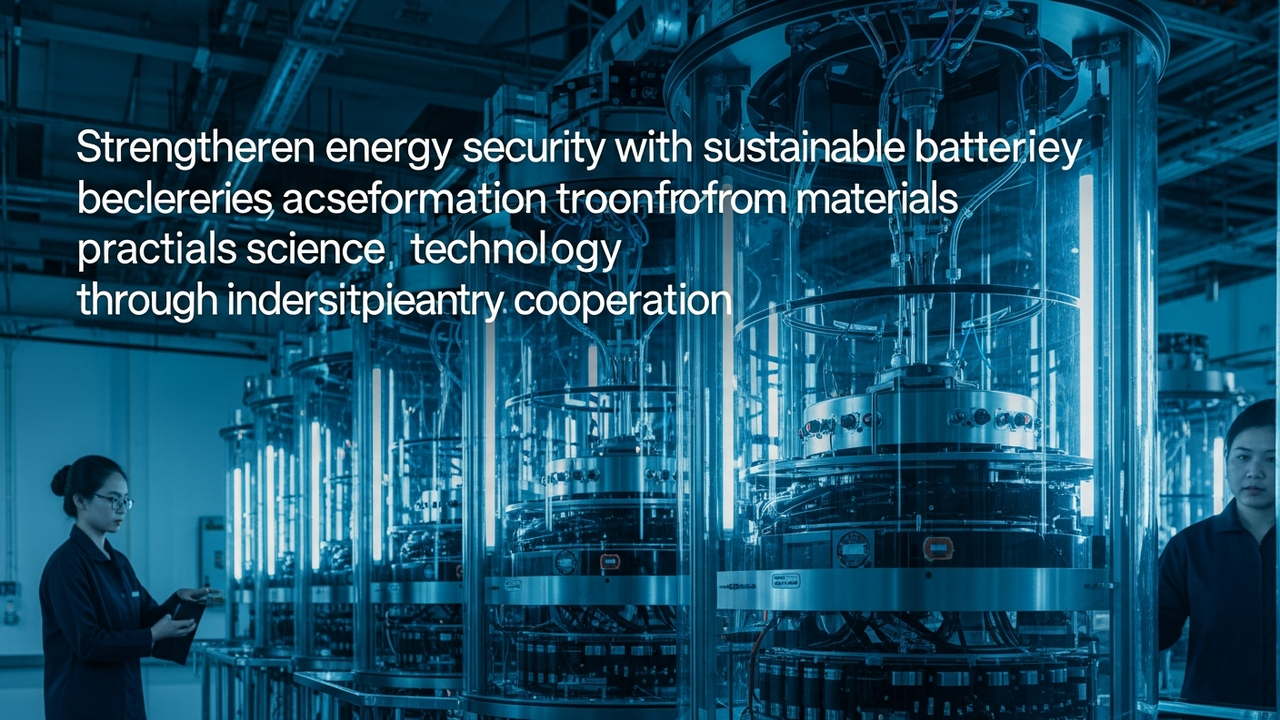
Mirage News reports on the pivotal role that sustainable battery technologies are poised to play in enhancing global energy security. The article strongly underscores the necessity of interdisciplinary teamwork to efficiently bridge the gap between scientific discovery and tangible, practical technological applications. It points out that solving the intricate challenges inherent in battery development requires a collaborative approach spanning multiple scientific and engineering disciplines, including material scientists, chemists, mechanical engineers, and chemical engineers, rather than isolated efforts.
Technical and Business Details
Modern battery technology faces multifaceted challenges that extend beyond mere energy density or power output improvements, encompassing raw material sustainability, reduction of environmental impact during manufacturing, and end-of-life recyclability. These challenges are interconnected, demanding an integrated understanding from various scientific and engineering fields to formulate comprehensive solutions. For instance, the journey from discovering a novel electrode material (materials science) to optimizing its synthesis process (chemistry), refining cell design and manufacturing techniques (mechanical engineering), and ensuring efficient, factory-scale production (chemical engineering) requires seamless collaboration. This interdisciplinary approach directly contributes to shorter development cycles, cost reductions, and improvements in the final product’s performance and sustainability.
From a business perspective, sustainable batteries are crucial for mitigating supply chain risks, meeting evolving environmental regulations, and responding to growing consumer demand for eco-friendly products. Interdisciplinary R&D serves as a catalyst for generating new market opportunities and accelerating technological innovation.
Background and Industry Context
As global awareness of climate change and the drive for energy independence intensify, the expansion of renewable energy sources and the concomitant importance of energy storage technologies are growing. Batteries have become indispensable to virtually every aspect of modern society, powering electric vehicles (EVs), stationary energy storage systems (ESS), and portable electronics. However, the uneven distribution of critical resources like lithium and cobalt, coupled with the environmental and social issues associated with their extraction, pose significant challenges to the overall sustainability of the battery industry. Consequently, there is an urgent need to develop new-generation batteries using more abundant and sustainable materials, alongside establishing efficient recycling technologies for existing batteries.
Strategic Significance and Outlook
Strengthening interdisciplinary collaboration will be a critical factor in shaping the future of battery development. By fostering deeper partnerships among research institutions, industry, and government, the “valley of death” from basic research to commercialization can be navigated more effectively, enabling quicker market entry for sustainable battery solutions. This approach is expected to enhance energy security, accelerate the transition to a decarbonized society, and foster the creation of new industrial ecosystems. Moving forward, the promotion of open innovation and collaborative research will be key to achieving further breakthroughs in battery technology and realizing a sustainable future.
Source: #
Get our weekly technology intelligence — free
Receive an infographic that lets you judge at a glance whether each field’s analysis report is worth reading.
Subscribe Free — Weekly Tech Intelligence
By subscribing, you’ll receive Troy-Technical’s weekly technology intelligence newsletter.
- Your email and selected fields are used only to deliver the newsletter.
- We never share your information with third parties.
- You can unsubscribe anytime via the link in each email.
See our Privacy Policy for details.
Takes about a minute · Unsubscribe anytime