Key Findings
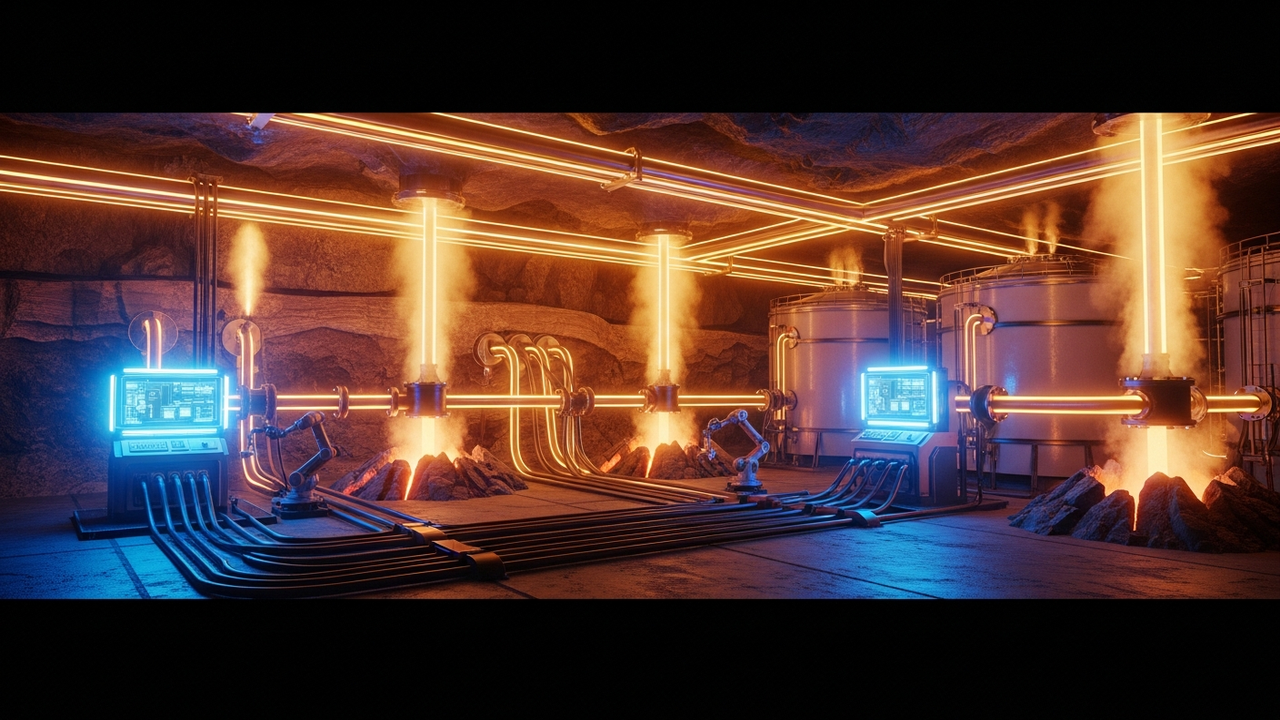
The U.S. Department of Energy (DOE) is actively promoting Underground Thermal Energy Storage (UTES), a geothermal technology that stores thermal energy underground, as a vital long-duration energy storage solution for future energy infrastructure. The DOE particularly emphasizes the potential of “Cold UTES” systems to efficiently manage peak cooling demands from energy-intensive facilities such as data centers.
Technical & Commercial Details
UTES utilizes heat exchangers and underground aquifers or rock formations to store and release thermal energy on seasonal or diurnal cycles. In a Cold UTES system, cold water is injected and stored underground during cooler periods, such as winter or nighttime. This stored cold water is then extracted during summer or daytime peak cooling demands to cool facilities. This significantly reduces electricity consumption from the grid and lowers energy costs associated with cooling. Data centers require substantial cooling power year-round, and their energy consumption is steadily increasing. Cold UTES offers an innovative solution that can reduce the cooling load for such facilities, combining it with power from renewable energy sources to lessen reliance on the grid and optimize operational costs. This technology is expected to relieve stress on traditional power grids and enhance overall grid stability and efficiency.
Background & Industry Context
As global energy demand rises, the cooling loads of energy-intensive infrastructures like data centers pose significant challenges to electricity grids. Concurrently, the increasing integration of renewable energy sources amplifies the need for long-duration energy storage due to their intermittency. Geothermal energy storage is one of the few technologies capable of providing large-scale, long-duration energy storage, ranging from several hours to many months. The DOE aims to diversify energy sources and enhance energy security through the development and deployment of clean energy technologies, and UTES is positioned as a core element of this strategy. Particularly in the U.S., with its abundant geothermal resources, the potential of geothermal technology is vast and is expected to contribute to national energy self-sufficiency.
Future Outlook
Further research, development, and demonstration projects for UTES technology are essential to enhance its commercial viability. Continued DOE support will contribute to improving system efficiency, reducing installation costs, and expanding applicability across a wider range of regions. In the future, Cold UTES could be utilized for cooling demand management in diverse sectors beyond data centers, including large commercial buildings, district heating and cooling systems, and agricultural facilities. Furthermore, combining it with Hot UTES systems, which store high-temperature heat, could stabilize overall regional energy supply and further reduce reliance on fossil fuels. UTES is expected to expand its role as a critical technology for maximizing the utilization of renewable energy and building a more sustainable and resilient energy future, offering a strategic pathway to decarbonization.
Source: https://www.energy.gov/hgeo/geothermal/geothermal-energy-storage
Get our weekly technology intelligence — free
Receive an infographic that lets you judge at a glance whether each field’s analysis report is worth reading.
Subscribe Free — Weekly Tech Intelligence
By subscribing, you’ll receive Troy-Technical’s weekly technology intelligence newsletter.
- Your email and selected fields are used only to deliver the newsletter.
- We never share your information with third parties.
- You can unsubscribe anytime via the link in each email.
See our Privacy Policy for details.
Takes about a minute · Unsubscribe anytime