Key Findings
Rigetti Computing has announced a significant expansion of its collaboration with Hewlett Packard Enterprise (HPE) and the Pittsburgh Supercomputing Center (PSC) to construct an innovative hybrid quantum-classical supercomputing testbed named TangleLab. Central to this project is Rigetti’s provision of a 9-qubit Novera™ quantum computing system to PSC’s new facility, a venture supported by a $5 million grant from the National Science Foundation (NSF). This initiative is poised to accelerate the integration of quantum computing with classical high-performance computing (HPC), fostering solutions for increasingly complex scientific and industrial problems.
Technical / Clinical Details
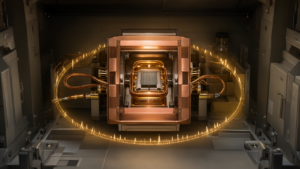
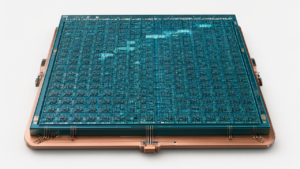
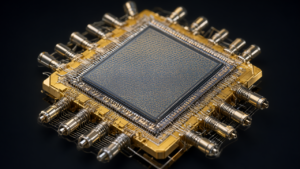
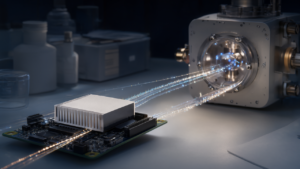
The TangleLab system will feature a hybrid architecture, combining Rigetti’s 9-qubit Novera™ superconducting quantum processor with HPE’s high-performance classical computing infrastructure. This integration enables a workflow where the quantum computer efficiently handles specific computationally intensive tasks, with the classical counterpart then analyzing and extending these quantum results. The Novera™ system embodies Rigetti’s latest advancements in chip design and fabrication processes, offering enhanced fidelity and stability. This hybrid model leverages the strengths of both classical supercomputers and quantum computers to establish a powerful platform capable of tackling problems that are intractable for either system alone.
Background & Context
Quantum computers are currently in their nascent stages, and large-scale, fault-tolerant systems are still some time away from widespread practical deployment. Consequently, hybrid quantum-classical approaches are gaining traction as a pragmatic pathway to harness the potential of quantum computing with existing technology. Rigetti and HPE have been strategic partners in this domain, and this expanded collaboration with PSC further accelerates their commercialization strategy. The NSF grant underscores robust governmental support for quantum technology research and development, playing a crucial role in bridging the gap between fundamental and applied research, and demonstrating a commitment to advancing the nation’s scientific infrastructure.
Strategic Significance & Outlook
The establishment of the TangleLab supercomputing testbed is expected to significantly enhance accessibility to quantum technology, promoting its application across diverse research fields. Researchers and engineers will be able to leverage this hybrid system to explore novel algorithms and applications in areas such as materials science, drug discovery, financial modeling, and artificial intelligence. Furthermore, the project will yield invaluable insights into the operation, management, and optimization of large-scale quantum computing systems. The tripartite collaboration between Rigetti, HPE, and PSC signals a future where hybrid quantum-classical computing may become a standard computational paradigm within data centers and research institutions, representing a vital step toward realizing practical and impactful quantum computing solutions globally.
Get our weekly technology intelligence — free
Receive an infographic that lets you judge at a glance whether each field’s analysis report is worth reading.
Subscribe Free — Weekly Tech Intelligence
By subscribing, you’ll receive Troy-Technical’s weekly technology intelligence newsletter.
- Your email and selected fields are used only to deliver the newsletter.
- We never share your information with third parties.
- You can unsubscribe anytime via the link in each email.
See our Privacy Policy for details.
Takes about a minute · Unsubscribe anytime