Key Findings
Researchers from Cleveland Clinic and IBM have achieved a groundbreaking success in immuno-oncology. They developed a quantum machine learning framework, ‘Quantum Convolutional HLA Immunogenic Peptide Prediction (Q-CHIPP),’ using quantum computing to predict which tumor mutations induce a strong immune response. This framework demonstrates superior accuracy compared to classical computing methods, even with limited datasets (just 150 samples), by integrating antigen presentation and immunotherapy response prediction into a unified model. A significant technical milestone was also achieved by extending the approach to full-length peptide modeling utilizing 46 qubits, paving the way for more realistic and complex simulations in drug discovery and personalized medicine.
Technical / Clinical Details
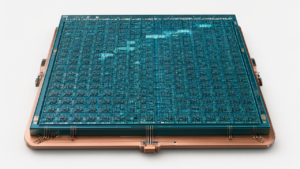
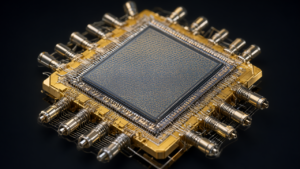
The Q-CHIPP framework applies principles of Quantum Convolutional Neural Networks (QCNNs) to predict the likelihood of tumor-derived neoantigens (cancer-specific mutated peptides) being presented by a patient’s HLA (Human Leukocyte Antigen) molecules to T-cells, thereby triggering an immune response. This process involves highly complex molecular interactions that can be computationally prohibitive or lack sufficient accuracy with classical algorithms. Quantum computing, leveraging phenomena like superposition and entanglement, can more efficiently explore such complex molecular spaces and identify relevant patterns. Specifically, the research team utilized a 46-qubit quantum processor, enabling the modeling of longer peptide sequences—a critical requirement for meeting realistic demands in drug discovery and personalized medicine. This technology holds the potential to identify more precise biomarkers for predicting immunotherapy responsiveness and selecting optimal treatment strategies.
Background & Context
Immuno-oncology, particularly cancer immunotherapy targeting neoantigens, represents one of the most promising areas in recent cancer treatment. However, identifying which specific tumor mutations, among the diverse patient-specific variations, actually induce an immune response has been extremely challenging. This constitutes a major bottleneck in developing personalized cancer vaccines and predicting the efficacy of immunotherapies. While classical machine learning methods have advanced, their predictive accuracy with limited clinical datasets often reaches a ceiling. Quantum machine learning is anticipated to overcome this, possessing the ability to understand complex molecular data and extract patterns more deeply, even in data-scarce scenarios. The collaboration between renowned institutions like Cleveland Clinic and IBM illustrates how quantum computing is beginning to contribute to specific, intractable problems at the forefront of life sciences.
Strategic Significance & Outlook
The success of the Q-CHIPP framework opens new avenues for diagnostic tools and therapeutic development in immuno-oncology. More accurate neoantigen prediction will accelerate the design of personalized cancer vaccines and optimize treatment strategies to maximize patient immune responses. This is expected to improve immunotherapy response rates, benefiting a greater number of patients battling cancer. In the future, this quantum machine learning approach could also be applied to understanding and treating other immune-mediated diseases, such as infectious diseases and autoimmune disorders. This research provides crucial evidence that quantum computing can offer powerful solutions to some of the most challenging problems in healthcare, particularly in the life sciences. The partnership between IBM and Cleveland Clinic is poised to play an integral role in shaping the future of quantum healthcare, driving innovation and precision in medical treatments.
Source: https://www.eurekalert.org/news-releases/1138124
Get our weekly technology intelligence — free
Receive an infographic that lets you judge at a glance whether each field’s analysis report is worth reading.
Subscribe Free — Weekly Tech Intelligence
By subscribing, you’ll receive Troy-Technical’s weekly technology intelligence newsletter.
- Your email and selected fields are used only to deliver the newsletter.
- We never share your information with third parties.
- You can unsubscribe anytime via the link in each email.
See our Privacy Policy for details.
Takes about a minute · Unsubscribe anytime